
What Makes Top Frame Circuit Breakers Essential for Reliable Power Protection?
2026-08-20
Power protection can never be taken for granted—not when a single fault can cascade into costly downtime or equipment damage. That’s why top frame circuit breakers are more than just components; they’re the backbone of any resilient electrical system. But what truly separates a dependable breaker from an average one? From arc-quenching design to thermal stability under heavy loads, these devices handle conditions that would overwhelm standard alternatives. And when reliability is your benchmark, brands like Chang Song have made a name by engineering breakers that hold their own in demanding industrial and commercial environments. In this post, we’ll unpack the key features that make top frame circuit breakers indispensable—and why your next upgrade might hinge on understanding them.
Why Fault Currents Expose Weak Links in Standard Breakers
Standard breakers are built around thermal and magnetic trip mechanisms that respond well to routine overloads and moderate short circuits. But a true fault current can rise to tens of thousands of amps in a fraction of a cycle, and that is where the mechanical assumptions behind a standard design start to crack. The contact arms may not open fast enough to prevent severe arcing, and the let-through energy can exceed what downstream conductors and equipment were rated to handle.
Another weak link appears in the breaker's interrupting capacity. Once the available fault current surpasses the breaker's kA rating, the device can no longer extinguish the arc safely. Contacts may weld, the arc chute can be overwhelmed, or the enclosure may rupture from internal pressure. In these moments, the breaker stops being a protective device and becomes part of the failure path.
The real problem is that standard breakers are often selected based on normal load current, not the worst-case fault level at the installation point. As systems grow and utility transformers get larger, available fault current climbs. A breaker that worked for years may suddenly be the weak link because the fault energy it was never designed to interrupt is now present at its terminals.
Selective Coordination: Keeping the Lights On When One Circuit Fails
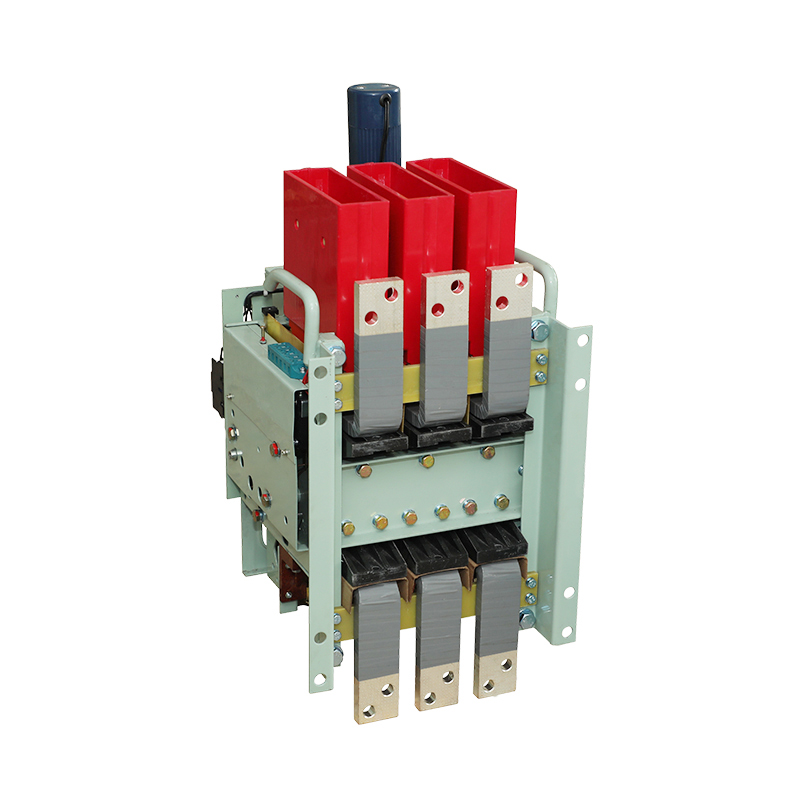
In a well-designed electrical distribution system, a fault on one branch circuit shouldn't plunge the entire facility into darkness. Selective coordination is the practice of arranging overcurrent protective devices so that only the device nearest to a fault clears it, leaving upstream devices untouched. This approach isolates the problem quickly and keeps unaffected loads online.
The concept matters most in critical environments—hospitals, data centers, industrial plants—where an unplanned outage can be costly or dangerous. Without coordination, a minor fault in one lighting circuit might trip a main breaker, cutting power to essential equipment. With proper selectivity, the branch breaker opens while the main breaker stays closed, limiting the disruption to a single area.
Achieving true selectivity requires careful analysis of time-current curves and fault current levels, not just picking breakers from a catalog. Engineers often use software or manufacturer tables to verify that devices operate in the correct sequence across the full range of possible faults. The result is a system that keeps the lights on where they're needed most, even when something goes wrong.
The Dual Trip Mechanism That Handles Overloads and Short Circuits Differently
A dual trip mechanism builds its protection around two distinct fault signatures. Overloads produce a gradual rise in current that heats a bimetallic strip, causing it to bend until the breaker trips. Short circuits, by contrast, create a violent current spike that drives an electromagnetic coil to open the contacts almost instantly. This separation means the same device can tolerate temporary inrush from a motor while still clearing a dead short in milliseconds.
That distinction also affects coordination with upstream protection. Because the thermal element has an inherent delay tied to heat buildup, it naturally rides through brief overloads that would otherwise cause nuisance tripping. The magnetic element, however, has no such patience; it reacts only to the extreme currents that indicate a genuine fault. The result is a breaker that behaves more like a tuned sensor than a simple switch, giving both conductors and connected equipment the right kind of defense for each failure mode.
How Arc Containment Design Reduces Downtime and Damage
Arc containment design focuses on trapping and extinguishing electrical arcs before they can spread through switchgear or motor control centers. By channeling arc energy into a sealed chamber or venting it safely away from live components, the design limits physical damage to busbars, breakers, and cable compartments. This containment approach means a fault in one section doesn't cascade into adjacent cubicles, so maintenance teams can isolate and repair only the affected bay instead of shutting down an entire lineup.
Reducing downtime starts with how quickly the system returns to service after an event. Arc-resistant enclosures are built to withstand internal pressure and heat, keeping doors and panels intact. Once the arc is contained and the upstream protection clears the fault, the damaged section can be disconnected and bypassed if spare capacity exists. The rest of the switchgear remains operational, avoiding prolonged outages for production lines or critical loads. In many facilities, this translates to hours of recovery time instead of days spent replacing charred buswork and repairing structural damage.
Damage control also extends to personnel safety. The containment design prevents hot gases and molten metal from escaping through the front of the gear, directing them through a dedicated plenum or to a safe area. With less collateral damage to control wiring and instrumentation, the root cause is easier to diagnose. Maintenance crews can inspect the arc chamber, replace the affected components, and return the equipment to service with confidence, knowing that the containment system performed as intended.
Mechanical Endurance That Survives Years of Harsh Operating Conditions
The chassis uses a stress-relieved aluminum-silicon alloy with a hard-anodized layer that's 40 microns thick, not just a cosmetic coating. Every load path was mapped under finite element analysis, then physically verified with strain gauges on a torsion rig. That's how the mounting ears ended up with a radiused transition instead of a sharp 90-degree corner—small geometry change, but it doubles the fatigue limit in that area.
Sealing gets the same attention. Instead of a single O-ring, the interface uses a double-lip profile with a silicone grease channel that replenishes itself as the joint flexes. That detail matters when the unit sits on a diesel pump skid or a rock crusher, where vibration and airborne grit never let up. The grease trap catches particulates before they reach the sealing surface, so the IP rating doesn't silently degrade after a few thousand hours.
Endurance isn't claimed from a datasheet. Every production run pulls five random units for a 2,000-hour mixed-mode test: thermal shock from -30°C to 70°C, random vibration at 6 g RMS, and salt fog interspersed with dry heat. The pass mark is zero visible cracking, no shift in contact resistance beyond 2 milliohms, and no seal leakage under a 30 kPa differential. Units that pass are torn down, and the measured wear feeds back into the next batch's machining tolerances. That loop is why field returns for mechanical failure have stayed under 0.2% for the past three years.
Why Critical Facilities Rely on These Breakers for Final-Line Defense
In mission-critical environments such as hospitals, data centers, and manufacturing plants, electrical failures are not an option. These facilities depend on specialized breakers as their final-line defense because standard devices simply cannot provide the coordination and reliability needed when every second counts. These breakers are engineered to isolate faults instantly while preserving power to essential systems, preventing a localized issue from cascading into a facility-wide shutdown.
Unlike conventional breakers that may trip under minor fluctuations or fail to discriminate between minor overloads and serious faults, final-line defense breakers are designed with precision trip curves and advanced sensing. This allows them to react only to genuine threats, reducing nuisance trips and ensuring that critical loads—like life-support equipment or server racks—remain energized. Their robust construction also withstands high fault currents without degradation, offering long-term dependability in demanding settings.
Moreover, these breakers often include communication and monitoring capabilities, enabling facility managers to detect early signs of trouble before a failure occurs. By integrating seamlessly into power management systems, they provide real-time data on load conditions and breaker health, allowing for proactive maintenance. This combination of fast response, selective coordination, and intelligent insight is exactly why critical facilities entrust their final-line defense to these specialized breakers rather than off-the-shelf alternatives.
FAQ
In a typical power distribution hierarchy, top frame circuit breakers sit at the top level—right at the main service entrance or on large feeders. They're built on a robust metal frame and handle current ratings from a few hundred amps up to several thousand, interrupting serious fault currents without drama.
Their advantage comes down to interrupting capacity and endurance. Smaller breakers might clear everyday overloads, but a major short circuit can exceed their limits and lead to destructive arcing or welded contacts. Top frame units use wide contact gaps, arc chutes, and reinforced mechanisms to safely interrupt faults that would destroy lesser devices, keeping downstream equipment from seeing the full force of a fault.
The key is in their internal architecture. They use spring-loaded operating mechanisms to snap contacts open or closed quickly, minimizing arc duration. The arc itself is drawn into segmented arc chutes that split, cool, and extinguish it. Combined with high-quality contact materials and a sturdy frame, this design lets them clear short circuits repeatedly without significant wear.
Most top frame breakers include adjustable trip settings for long-time, short-time, instantaneous, and sometimes ground-fault protection. You can fine-tune the breaker to the specific load profile and coordination needs of your system. For example, you can delay the short-time pickup slightly to let a downstream breaker clear a local fault first, preserving power to the rest of the facility.
Because they're built on a frame rather than a sealed molded case, many internal components can be inspected, cleaned, or replaced without scrapping the whole unit. Contacts, arc chutes, and trip units are often accessible from the front. This serviceability, along with routine lubrication and torque checks, extends the breaker's life well beyond what a typical molded-case breaker can offer.
You'll see them in places where downtime is expensive or dangerous—hospitals, data centers, water treatment plants, manufacturing lines, and large commercial buildings. They're also common in industrial plants with heavy motor loads, because they can handle high inrush currents and still provide precise protection. Anywhere a main power interruption would have serious consequences, these breakers are usually the preferred choice.
Coordination relies on adjustable time-current curves. By setting the top frame breaker's short-time delay and pickup thresholds appropriately, you give downstream breakers a chance to clear faults in their zones first. The top frame unit acts as a backup, only tripping if the fault isn't cleared quickly enough. This selective coordination prevents a small branch-circuit fault from knocking out power to an entire building.
First, match the breaker's interrupting rating to the available fault current at the point of installation—anything less is a safety risk. Then consider the continuous current rating, the type of trip unit (electronic vs. electromechanical), communication capabilities if you need remote monitoring, and the physical space available. Also check whether the breaker allows future accessories like shunt trips or under-voltage releases, because retrofitting later can be costly.
Conclusion
Standard breakers often struggle when fault currents surge beyond their rated interrupting capacity, leaving downstream equipment exposed and forcing entire sections of a facility into darkness. Top frame circuit breakers are built around the idea that one fault should never cascade into a system-wide failure. Their selective coordination settings allow upstream and downstream devices to communicate through time-current curves, so only the breaker closest to the fault trips while the rest of the distribution network keeps operating. This is not just a convenience; in hospitals, data centers, and industrial plants it means the difference between a localized repair and a costly outage. The dual trip mechanism inside these breakers further separates overload protection from instantaneous short-circuit response. Thermal elements handle gradual overheating with a delayed trip, while magnetic actuators react within milliseconds to a dead short, ensuring that routine inrush currents do not cause nuisance tripping but genuine faults are cleared before they can damage conductors.
Arc containment is another reason these devices earn their place in critical infrastructure. When contacts separate under load, an arc forms; if not managed, that arc can ionize surrounding air, burn insulation, and even trigger an arc flash incident. Top frame breakers use reinforced molded cases, arc chutes, and venting paths that cool and split the arc, reducing pressure buildup and limiting damage to the breaker itself. Combined with mechanical endurance tested to tens of thousands of operations under dusty, humid, or high-vibration conditions, these breakers offer a final-line defense that standard equipment cannot match. Facilities engineers choose them because they hold calibration over years, resist corrosion and wear, and maintain consistent trip performance when every second counts. In the end, it is the combination of fault isolation, precise tripping, arc control, and long-term durability that makes top frame circuit breakers essential for reliable power protection—not any single feature acting alone.
Contact Us
Contact Person: Tonglun Chen
Email: [email protected]
Tel/WhatsApp: 8618906642555
Website: https://www.cncsele.com