
Uniaxial Geogrid Company Insights: Innovations and Applications in Ground Reinforcement
2026-05-20
Ground reinforcement has come a long way, but few innovations match the quiet efficiency of uniaxial geogrids. From stabilizing steep slopes to strengthening road bases, these polymer grids are rewriting the rules of soil engineering. Yet the real game-changer lies in how leading manufacturers like WEN FENG STONE are pushing boundaries—blending advanced materials with smarter design to tackle challenges that once seemed insurmountable. Dive in to discover the breakthroughs and real-world applications that are reshaping the ground beneath our feet.
Material Evolution in Uniaxial Geogrids
Early uniaxial geogrids relied heavily on polypropylene and basic polyethylene grades, chosen for their ease of processing and decent chemical resistance. These materials, however, struggled with long‑term creep under sustained loads, often leading to excessive deformation in reinforced soil structures. As field feedback poured in, it became clear that tensile stiffness alone wasn’t enough—the inherent viscoelastic nature of these polymers demanded a closer look at molecular weight distribution and crystallinity to truly anchor performance.
A gradual shift toward high‑density polyethylene and specialty grades followed, with manufacturers experimenting with carbon black for UV stabilization and integrating processing aids to push the limits of durability. The real leap came when blends and co‑polymer technologies allowed engineers to fine‑tune creep behavior without sacrificing manufacturing speed. By tweaking side‑chain branching and introducing long‑chain molecules, geogrids began to maintain their initial stiffness far longer, even in aggressive alkaline soils where earlier generations would soften and sag.
Today, the conversation has moved toward ultra‑high‑molecular‑weight polyethylene and multi‑component systems that blur the line between raw polymer and engineered composite. Some producers now embed reinforcing fibers or use oriented nucleation to create a more uniform crystalline structure, drastically reducing strain‑rate sensitivity. There’s also a quiet push for post‑industrial recycled content, driven less by marketing and more by the practical need to lower raw material volatility. While still niche, these newer formulations hint at a future where geogrids are no longer just passive tensile elements but actively adapt to their environment through smart material design.
Rethinking Load Distribution with Innovative Designs
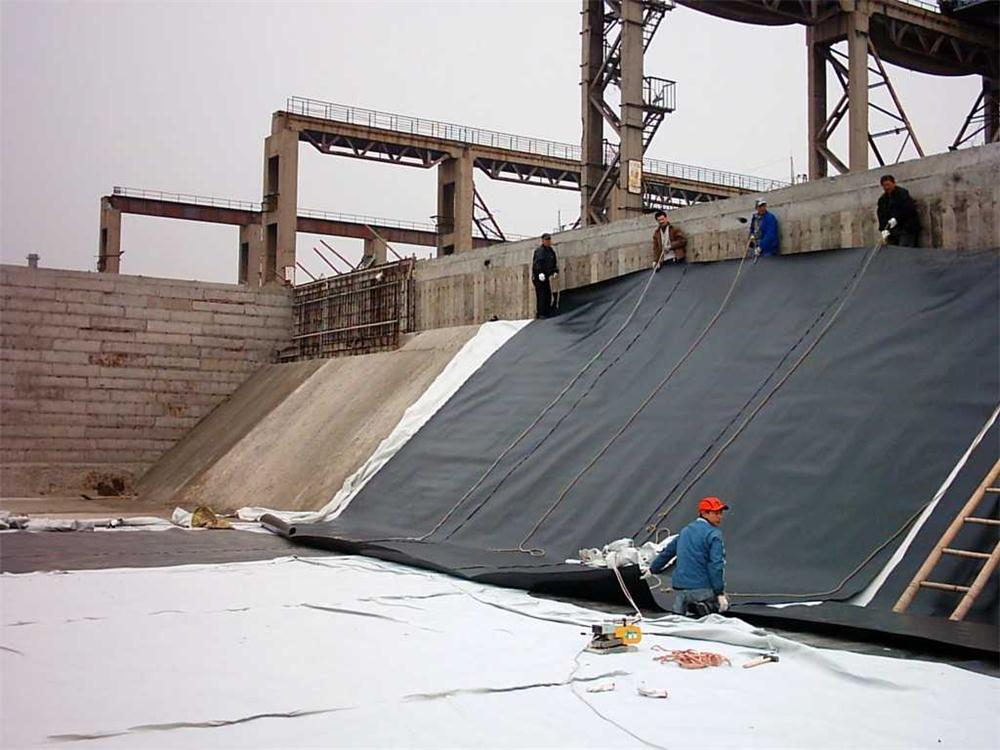
Traditionally, load distribution has relied on rigid frameworks and centralized support points, but this approach often creates stress concentrations and limits structural efficiency. By questioning these default assumptions, designers are now exploring layouts that mimic natural systems—like the webbing of a leaf or the spiral of a shell—where forces flow along continuous paths rather than being channeled into isolated anchors. This shift isn't just about swapping materials; it's about rewiring the entire logic of how weight and pressure travel through a system.
One breakthrough involves modular, interlocking components that redistribute force horizontally as well as vertically, turning potential failure points into cooperative junctions. Instead of a column bearing all the weight above it, a network of staggered supports shares the burden, allowing for thinner profiles and larger open spaces. Similarly, adaptable joints with limited degrees of freedom can react to changing loads in real time, much like a suspension bridge adjusting to wind, but on a scale small enough for everyday products—from lightweight furniture to portable shelters.
What makes these designs truly innovative is their ability to blend recovery, resilience, and efficiency without added complexity. For example, a floor panel that stiffens only under heavy foot traffic, or a shelving unit that compensates for uneven loads by subtly rocking back to level—these solutions emerge when load distribution is seen as a dynamic dialogue rather than a static assignment. The result is less material waste, longer lifespans, and a quiet elegance that belies the sophisticated engineering underneath.
From Concept to Project: Geogrids Tackle Real-World Ground Challenges
Geogrids start as a simple concept—a grid of synthetic material placed within soil to distribute loads and restrain movement. But the leap from design theory to on-site reality is where their true value emerges. When soft, unstable ground threatens to undermine a project, these geosynthetics step in to bridge the gap. They work by interlocking with aggregate, creating a mechanically stabilized layer that spreads stress wider. This prevents rutting, reduces differential settlement, and keeps roads, retaining walls, and slopes intact. The material itself might be polyester, polypropylene, or fiberglass, coated for durability, and formed into apertures that grab soil. What happens on paper becomes palpable when a geogrid-reinforced base withstands heavy traffic just days after a downpour, while unreinforced sections turn to mush.
Moving from specification to execution demands a clear-eyed approach. Variables like soil type, aperture size, and tensile strength matter enormously. A poorly chosen grid can be a waste—or worse, a failure waiting to happen. Engineers must balance short-term installation stresses with long-term creep behavior, factoring in the chemical environment and temperature swings. On site, the process is deceptively simple: roll out the geogrid, overlap edges, fill and compact in layers. But poor practice, like driving construction vehicles directly on the grid or using the wrong fill, negates its benefits. When done right, the payoffs ripple outward—thinner pavement sections, steeper slopes without concrete, and even building on marginal land once deemed unusable. It’s a quiet sort of strength, hidden beneath the surface, quietly holding everything together.
Real-world stories drive the point home. A coastal highway in the Carolinas was suffering from chronic base failure due to saturated clay subgrade. Geogrid installation allowed the road to handle a quintupled truck count without deteriorating. A mine haul road in Australia cut its maintenance costs by over 60% after reinforcing its running surface with geogrids, even under 400-ton trucks. These aren’t laboratory fantasies; they’re reminders that ground challenges aren’t obstacles to work around—they’re invitations to think differently. Geogrids let us answer that invitation, materially and methodically.
Pushing Boundaries in Extreme Environments
Operating on the seafloor miles beneath the surface requires technology that defies intuition. Here, pressure can exceed 15,000 pounds per square inch, crushing conventional equipment like a soda can. Yet teams are designing autonomous robots that navigate this alien landscape with the delicacy of a surgeon, allowing us to study deep-sea ecosystems without disturbing them. These machines are not just strong—they’re smart, using arrays of sensors to map terrain in real time and adapt their movements, turning a hostile abyss into a familiar environment.
In the frozen reaches of Antarctica, where temperatures plummet below minus 80 degrees Celsius, every breath can freeze on contact, and metals become brittle. Researchers push through by developing materials that remain pliable and lubricants that don’t seize up. More importantly, they are learning to work with the cold, using it as a tool—like employing thermally efficient shelters that harness natural temperature differentials for energy. It’s a mindset shift from survival to synergy, from fighting the extreme to leveraging its unique properties.
But the most profound boundary may be the human one: our psychological limits in isolation and constant danger. Astronauts aboard long-duration missions face not just radiation and microgravity, but a silent breakdown of morale. The countermeasure isn’t just training; it’s designing spaces that mimic Earth’s rhythms—variable lighting, natural sounds, even virtual windows. By weaving humanity back into the equation, we ensure that when the body endures, the mind does too, proving that resilience is as much about our inner world as the outer.
Streamlining Installation Without Cutting Corners
Getting a system up and running quickly shouldn’t mean settling for shaky results. We’ve found that the real trick is weaving efficiency into the design itself—think pre-aligned components that click into place, color-coded connectors that remove any guesswork, and packaging that doubles as a staging guide. It’s the kind of thoughtful detail that turns a potentially frustrating afternoon into a surprisingly smooth process.
The tools and techniques you choose matter just as much as the product. Instead of chasing shortcuts that weaken the final setup, we focus on methods that actually earn their speed: torque-limiting bits that prevent over-tightening, adhesive strips that set in seconds without messy residue, and step-by-step visuals that work better than a wall of text. None of it relies on fancy jargon—just practical choices that keep the pace without chipping away at durability.
When installation feels effortless, it’s rarely an accident. It’s the outcome of testing every step until the friction disappears, and refusing to ship something that leaves installers wrestling with loose tolerances or vague instructions. The payoff goes beyond the clock: structures that stay solid longer, fewer callbacks, and the quiet confidence that comes from knowing nothing was sacrificed for speed.
What’s Next for Geogrid Technology
Geogrids are quietly branching out from their traditional stronghold in road reinforcement. One promising frontier is coastal and hydraulic engineering, where manufacturers are tailoring products to resist saltwater corrosion and the relentless scouring of tides. These next-generation grids combine high-strength polymers with textured surfaces that lock into sand and silt, making them ideal for stabilizing seawalls, preventing beach erosion, and even anchoring artificial reefs. As climate change raises sea levels and intensifies storms, the demand for resilient shoreline protection is pushing geogrid innovation well beyond the pavement.
Another leap forward lies in material intelligence. Instead of passive reinforcement, imagine grids embedded with fiber-optic sensors that can monitor strain, temperature, and moisture in real time. This turns a simple mesh into an early-warning system for landslides, subsidence, or structural fatigue. Coupled with low-power wireless nodes, such grids could feed data directly into predictive models, allowing engineers to spot trouble before it becomes a disaster. Some research teams are even exploring self-healing polymers that can mend small cracks autonomously, dramatically extending the lifespan of buried infrastructure with minimal maintenance.
Beyond performance, sustainability is reshaping the geogrid landscape. The industry is starting to shed its reliance on virgin petrochemicals, turning instead to recycled plastics and bio-based resins. Carbon-negative manufacturing processes—using captured CO2 or plant-derived feedstocks—are inching toward commercial viability. There is also a push for fully circular designs: grids that can be easily recovered, reground, and remolded at the end of their service life. These shifts aren't just feel-good measures; they are driven by tightening regulations and the growing expectation that heavy construction can coexist with environmental goals. The next chapter of geogrid technology will be defined by how well it balances brute strength with ecological sensitivity.
FAQ
Uniaxial geogrids are engineered with high tensile strength in one primary direction, making them highly effective for retaining walls, steep slopes, and embankments where linear reinforcement is critical. Their design optimizes load distribution and soil interlock, reducing material use and long-term maintenance.
Advances in polymer technology and manufacturing have led to geogrids with higher junction strength, better creep resistance, and improved durability in aggressive soils. Some now feature integrated strain sensors or recycled materials without compromising structural integrity.
They excel in large retaining structures, landfill expansions, mining haul roads, and transportation corridors. Their ability to stabilize slopes and reinforce foundations in soft soils makes them indispensable for infrastructure built on challenging terrain.
By enabling steeper slopes and reducing the need for concrete or imported fill, they lower carbon footprint and land disturbance. Longer service life and potential use of recycled polymers further contribute to greener building practices.
Absolutely. Customizable roll lengths, widths, and strength grades allow engineers to tailor solutions for irregular geometries. Specialized connections and accessories also support integration with other reinforcement systems.
Regular monitoring for UV exposure, chemical degradation, and movement of the reinforced structure is key. Non-destructive testing, such as ground radar, helps assess internal integrity without excavation, and timely repair of any surface abrasion prevents progressive damage.
Selection hinges on soil properties, design life, load requirements, and environmental conditions. Advanced software models simulate soil–geogrid interaction, and manufacturers often provide technical support to match product grades to specific design codes.
One myth is that all geogrids perform similarly; in reality, factors like rib profile, aperture size, and polymer type dramatically affect soil interaction. Another is that installation is overly complex—trained crews can place them rapidly with standard equipment, yielding immediate structural benefits.
Conclusion
The evolution of uniaxial geogrid materials has moved far beyond simple plastics, embracing high-modulus polyester and hybrid polymer alloys that withstand aggressive soil chemistries and heavy cyclic loads. This material progress dovetails with a fundamental rethinking of load distribution: instead of relying on brute-force tensile strength, modern designs use optimized aperture shapes and multi-axial ribs that interlock with aggregate, creating a stronger composite mass while reducing the required fill depth. Such innovations have been put to the test in projects ranging from port container yards to mountainous access roads, where weak subgrades and steep terrain demanded reliable performance. Real-world case studies demonstrate how these geogrids not only improve bearing capacity but also minimize differential settlement, delivering long-term value even under punishing traffic and climatic conditions.
Extreme environments present another proof point. In permafrost zones and coastal areas, uniaxial geogrids have proved their mettle by resisting frost heave and salt corrosion without losing structural integrity. Meanwhile, installation efficiency has taken a leap forward thanks to lighter roll weights, printed guide marks, and improved flexibility that eliminates the need for heavy machinery in confined sites—all while adhering to rigorous quality standards. Looking ahead, the industry is exploring geogrids with integrated fiber-optic sensors and self-healing capabilities, as well as blends with recycled content, signaling a future where reinforcement systems actively communicate their condition and adapt to changing ground stresses. These converging trends point toward smarter, greener, and more resilient infrastructure, with uniaxial geogrids at the core of that transformation.
Contact Us
Contact Person: Jennifer LEE
Email: [email protected]
Tel/WhatsApp: 8618553418999
Website: https://vip.e-baixing.com/wenfengshitong