
Top Porcelain Insulator Options for Reliable Electrical Insulation
2026-11-02
Porcelain insulators have long been the backbone of reliable electrical insulation, but finding the right one for your project can be overwhelming. From high-voltage transmission lines to industrial equipment, the wrong choice can lead to costly failures. That's why we're highlighting the top porcelain insulator options that actually deliver on their promises. And if you're looking for a brand that consistently meets high standards, keep an eye on Lugao—they've built a reputation for insulators that don't quit.
Why Porcelain Still Outperforms Modern Alternatives in High-Voltage Grids
After decades of field service, porcelain insulators have earned a reputation that polymer alternatives still struggle to match. The ceramic body, fired at high temperature and sealed with a thick glaze, forms a hard, non-porous surface that shrugs off ultraviolet radiation, ozone, and the constant corona discharge found around high-voltage conductors. Unlike silicone rubber or epoxy composites, which can develop surface cracks, chalking, or loss of hydrophobicity after prolonged exposure, porcelain keeps its insulating properties essentially unchanged for 40 years or more. That stability translates directly into fewer unplanned replacements and lower long-term maintenance costs for grid operators.
Another overlooked advantage is porcelain's predictable failure mode. When a porcelain insulator does fail, it usually cracks or shatters under extreme mechanical stress—something line crews can spot during routine visual inspections. Composite insulators, on the other hand, can suffer from brittle fracture of the fiberglass core or internal electrical tracking that remains hidden until a catastrophic flashover occurs. In regions with heavy ice loads, high winds, or seismic activity, porcelain's high compressive strength and negligible creep under sustained tension keep conductor spacing stable. Even in coastal or industrial pollution zones, the glazed surface can be cleaned and restored to full performance, while a degraded polymer surface often has to be replaced entirely.
The Hidden Weak Points in Standard Porcelain Insulators
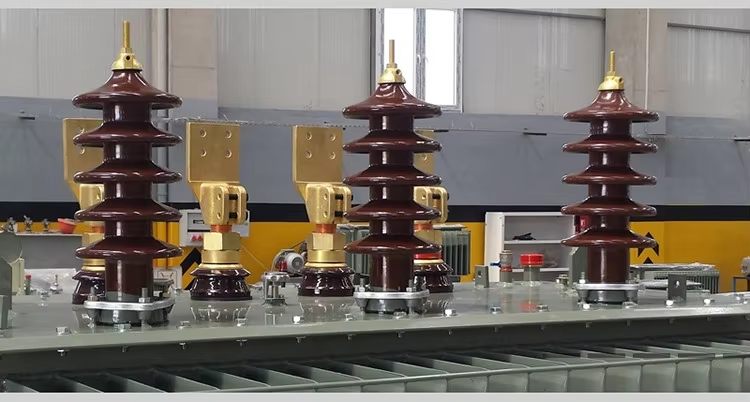
Standard porcelain insulators may look monolithic, but their real vulnerabilities rarely show up on a routine visual check. The glaze layer, for example, can hide hairline cracks that form during firing or prolonged exposure to thermal cycling. Once moisture works its way into these micro-fissures, the insulating property degrades slowly, often without any obvious external sign until a flashover occurs.
Another often-overlooked weak point sits at the junction between the metal cap and the porcelain body. Differences in thermal expansion coefficients create stress concentrations there, especially in regions with sharp temperature swings. Over time, the cement bond can loosen or develop voids, allowing partial discharge activity to start inside the joint. Because this area is hidden under hardware, it is rarely inspected until failure is imminent.
Porosity in the ceramic core also plays a quieter role. Even high-quality production batches can contain microscopic air pockets that act as starting points for internal treeing under sustained electrical stress. Combined with surface contamination from coastal salt or industrial dust, these buried flaws shorten the service life well before the expected mechanical fatigue limit is reached.
Choosing the Right Shed Profile for Contamination Zones
Selecting a shed profile for contamination zones isn't simply about picking the sturdiest-looking option. The shape of the roof and walls directly influences how air moves, where moisture settles, and how easily surfaces can be cleaned. A flat or low-pitch profile might seem economical, but it often creates dead zones where airborne particles linger or water pools after washdowns. In contrast, a steeply pitched roof encourages rapid runoff and reduces the surface area where contaminants can cling.
Curved or arched profiles have gained traction in facilities handling hazardous materials because they eliminate sharp corners where dirt and microbes tend to accumulate. The smooth, continuous surface means fewer crevices for residue to hide, and the aerodynamic form discourages condensation drips that could reintroduce contamination. If your site deals with chemical splashes or biological agents, this seamless design can be a practical choice rather than a stylistic one.
Beyond shape, consider how the profile integrates with ventilation and drainage systems. A shed with integrated gutters and a raised ridge cap allows for controlled airflow without compromising containment. The goal is to create an environment where contamination has no place to settle, and cleaning crews can reach every inch without obstruction. The right profile isn't just about shedding rain—it's about shedding risk.
How Glaze Quality Dictates Long-Term Surface Resistance
The durability of a glazed surface rarely comes down to a single factor. A glaze with a high silica content and a balanced flux package fires into a denser, more continuous glassy layer, leaving fewer open pores for water and salts to exploit. Even small shifts in the alumina-to-silica ratio change how the glass forms around quartz grains, which in turn sets the number of micro-capillaries along the glaze-body interface. These hidden channels, not visible to the eye, are what allow frost action or soluble salts to lift and flake the surface years after installation.
Equally decisive is the fit between glaze and clay body. If the glaze contracts slightly less than the body during cooling, it ends up under mild compression, which helps close any developing cracks. But a misfit in the other direction produces the classic delayed crazing pattern: a network of hairline fissures that grows denser with each thermal cycle. Thickness also matters more than it appears. An overly thick application can trap bubbles from decomposing carbonates, and each bubble becomes a future weak point. On high-wear surfaces like stair treads or industrial floor tiles, that difference shows up as a dull, pitted glaze within a few years rather than a clean, resilient surface that still shrugs off abrasion after decades.
Mechanical Strength Limits You Need to Know Before Installation
Most installation failures trace back to one overlooked detail: the mounting surface and fasteners are treated as if they carry no load until the equipment is running. In reality, static weight, thermal expansion, and even the tightening sequence can push a bracket or rail past its yield point long before any dynamic force shows up. Always compare the manufacturer's rated load against the combined weight of the unit, cabling, and any ice or wind load the location might see.
Fastener torque values are not a suggestion. Over-tightening can strip threads or create stress risers in cast aluminum housings, while under-tightening leaves room for micro-movement that eventually fatigues the bolt. Use a calibrated torque wrench and follow the sequence in the manual, especially when a component has four or more mounting points. If the manual does not list a torque spec, get the generic value for the bolt grade and diameter, then reduce it by 20 percent for lubricated threads.
Do not assume a wall or ceiling can carry the load just because the anchor bites. Drywall, hollow block, and old concrete each have pull-out and shear limits that differ wildly. A 50-pound fixture falling is not the same as a 50-pound static load when the fasteners are already near their edge distance or spacing minimums. If you cannot verify the substrate, add a backing plate or relocate the mounting point instead of hoping the anchor holds.
Field-Proven Designs for Coastal and Industrial Environments
Salt spray, relentless humidity, corrosive chemicals, and abrasive particulates—these aren't hypothetical stressors but daily realities for equipment installed near coastlines or inside heavy industrial plants. Our design approach doesn't rely on generic protective coatings or off-the-shelf enclosures. Instead, every gasket, fastener, and ventilation pathway is selected based on actual failure data collected from over two decades of field deployments. For example, a recent retrofit for a desalination facility along the Gulf Coast replaced stainless steel hinges with a marine-grade polymer composite after repeated pitting corrosion was observed within the first eight months of service.
The difference often comes down to overlooked details: drainage channels that prevent standing water from accumulating on horizontal surfaces, cable entry points positioned away from prevailing winds, and thermal management designs that avoid drawing in moisture-laden air during cool evenings. We also run accelerated lifecycle tests that combine salt fog, UV exposure, and thermal cycling—not to satisfy a spec sheet, but because we've seen how these factors interact unpredictably in the field. One client in the petrochemical sector reported that our custom air intake shrouds extended filter replacement intervals from every three weeks to roughly four months, simply by changing the airflow path to reduce particulate ingestion.
What truly sets these designs apart is that they're continuously refined based on post-installation audits. We visit sites after one year, three years, and five years to document wear patterns and collect component samples for metallurgical analysis. That feedback loop has eliminated recurring failures in coastal wind farms, wastewater treatment plants, and offshore platform control rooms. If you're planning a project where corrosion or contamination has already claimed equipment from other suppliers, our field-proven configurations are worth a close look—not because they look better on paper, but because they've survived conditions that regularly destroy standard industrial hardware.
FAQ
Focus on glaze quality and the absence of micro-cracks. Porcelain that has gone through a slow cooling cycle handles thermal shock far better, which matters more than most spec sheets reveal.
Porcelain holds up well because its surface can be cleaned with mild abrasives without harming the glaze. Polymer may shed water initially but can degrade under continuous contamination. Porcelain is heavier, but that is rarely a dealbreaker in substations.
Yes, look for profiles with alternating sheds and deeper ribs. These interrupt leakage current paths. Some manufacturers offer fog-type or anti-pollution designs that perform better in coastal or industrial zones.
Longevity and stability. Porcelain has a track record spanning decades with minimal mechanical creep. It does not soften under sustained load the way some polymers can, and it provides a rigid support that keeps busbars aligned.
Periodic visual checks for cracks, chips, or glaze erosion. If contamination accumulates, a simple wash with low-pressure water or a mild scrubbing usually restores performance. Avoid metal tools that scratch the glaze.
Good quality porcelain is less affected than many assume. It is fired at temperatures above 1200°C, so ambient heat or cold is not an issue. Rapid temperature shifts can stress inferior glaze, so choose products tested to IEC standards for thermal shock.
Check the specified failing load and compare it to the actual forces in your line, including wind and ice loading. Ask for type test reports, not just catalog values. A margin of at least 2.5 times the maximum working load is a common rule of thumb.
Some plants use isostatic pressing and computer-controlled kilns, which reduce internal voids and improve consistency. New glazes with higher alumina content are more resistant to erosion and pollution. These are not always advertised, so ask directly about body composition and firing methods.
Conclusion
Porcelain remains a top choice for high-voltage insulation despite the influx of modern composite materials. Its exceptional resistance to surface tracking, combined with stable dielectric performance across wide temperature swings, gives it a clear advantage in critical grid infrastructure. However, not all porcelain insulators are created equal; standard designs can harbor hidden weaknesses near metal fittings and cement bonds, where moisture penetration or mechanical fatigue may trigger premature failure. Choosing the right shed profile becomes essential in contamination zones—alternating deep and shallow ribs can break up conductive pollution layers and increase creepage distance without adding unnecessary weight. A high-quality glaze further locks in long-term surface resistance by sealing the porcelain surface and preventing micro-cracking that would otherwise invite leakage currents and flashovers.
Before any installation, mechanical strength limits must be carefully evaluated against expected cantilever, tensile, and torsional loads, especially in regions with heavy ice or wind. Field-proven designs for coastal and industrial environments typically feature heavier glaze coverage, corrosion-resistant hardware, and shed geometries optimized for salt fog, chemical deposits, and abrasive dust. The most reliable porcelain insulator options balance these factors seamlessly: a dense, homogeneous porcelain body, a smooth yet tough glaze, and a profile tailored to local contamination severity. Rather than treating porcelain as a commodity, utilities that pay attention to these details can obtain decades of dependable service with minimal maintenance, avoiding the premature aging and brittle fracture modes seen in some alternative materials.
Contact Us
Contact Person: Doreen
Email: [email protected]
Tel/WhatsApp: 8618057712366
Website: https://www.liugaopower.com/