
Top Aluminum Intake Manifold Choices to Enhance Engine Performance
2026-07-04
When it comes to squeezing every last horsepower from your engine, the intake manifold is often the unsung hero. Among the many materials available, aluminum stands out for its perfect blend of durability and heat management. But with so many options on the market, how do you choose the right one? This guide breaks down the top aluminum intake manifold choices that truly make a difference on the track and street. And if you're chasing premium engineering, DDR has been pushing boundaries with designs that serious builders trust. Let’s dive into what separates a good manifold from a great one.
Unlocking Horsepower: The Right Manifold for Your RPM Range
Most enthusiasts treat intake manifolds like a one-size-fits-all bolt-on, but the reality is far more nuanced. The manifold you choose directly shapes where your engine makes power—short runners favor high-rpm scream, while long runners fatten the mid-range. Get it wrong, and you'll wonder why the dyno chart looks like a soggy cardboard box.
Start by mapping out where your engine actually lives. If you're rowing gears on a road course, that 7,000–9,000 rpm zone is your playground, and a single-plane or ITB setup will wake up the top end like nothing else. Street machines that rarely see the far side of 6,000 rpm, though, want a dual-plane design that keeps port velocity high and throttle response crisp where you actually drive.
Don't overlook plenum volume either. A fat plenum acts like an air reservoir for big-displacement engines gulping at high rpm, while a tighter box helps smaller mills snap off the line. Match the manifold to your cam profile and gearing, and you'll stop just making noise—you'll start making that seamless pull that presses you into the seat.
Aluminum's Hidden Advantage: Cooling Efficiency and Consistency
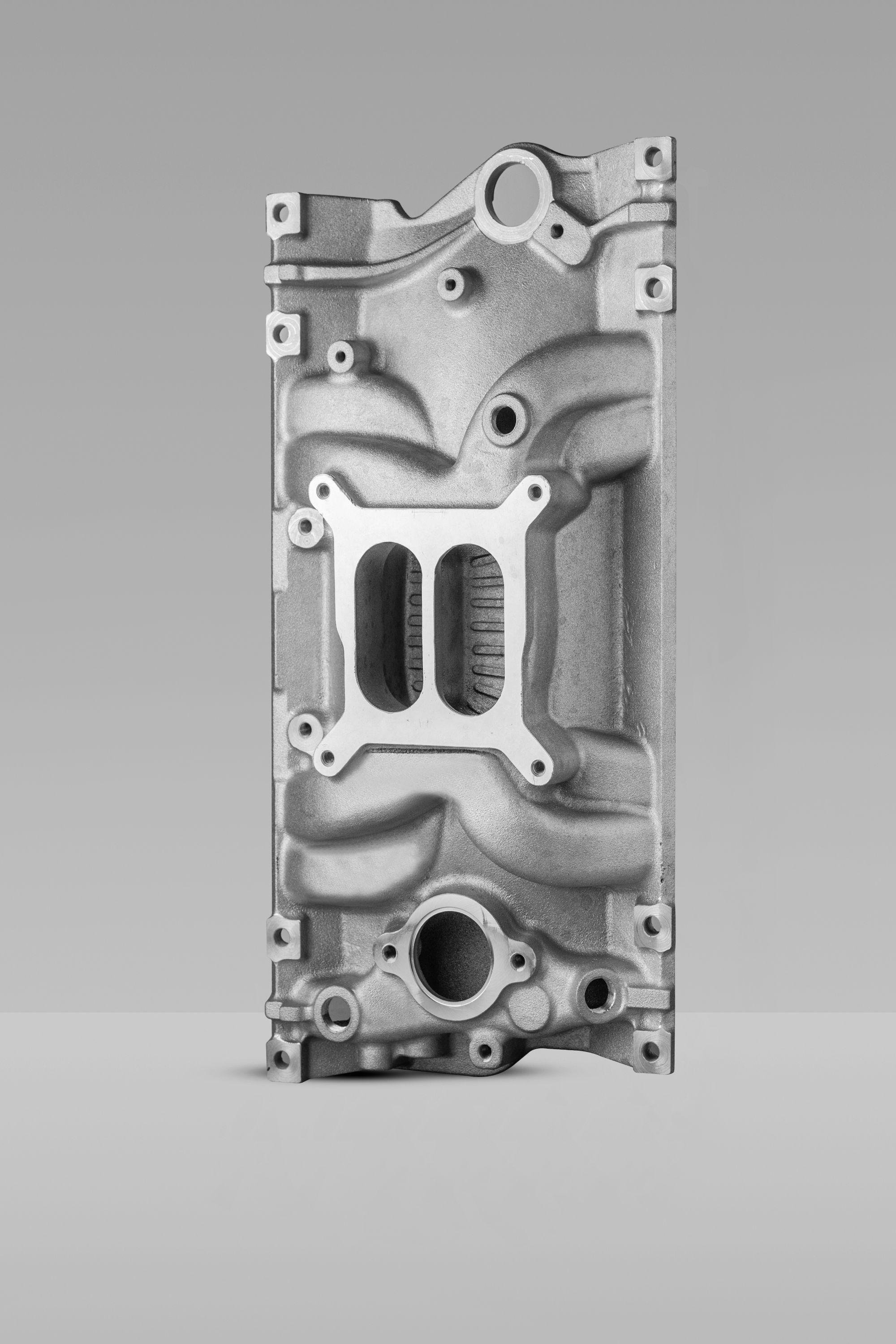
Aluminum doesn't just carry heat away quickly—it does so with a steadiness that is often overlooked. While many materials excel at rapid heat absorption, aluminum's real strength lies in its ability to cool evenly, preventing hot spots that can compromise performance over time.
This consistency comes from aluminum's combination of moderate thermal diffusivity and high specific heat capacity. It doesn't just whisk heat away in a sudden burst; rather, it moderates the temperature gradient, ensuring that every part of a component stays within a narrow temperature band. That's why you'll find it in everything from engine blocks to LED housings, where maintaining a stable thermal environment is just as critical as staying cool.
In practice, this means fewer thermal cycles, less stress on materials, and ultimately, a longer lifespan for the devices we rely on. It's a quiet advantage—one that doesn't shout for attention, but shapes the reliability of countless systems from the inside out.
Runner Geometry: How Design Dictates Torque Curves
The shape of a turbine runner isn't just about fitting into the housing—it's the primary fingerprint that determines how torque builds and falls off with rotational speed. Blade curvature, inlet angle, and channel width all work together to convert fluid momentum into useful shaft work, but they do so with very different efficiency profiles. A highly curved blade might grab more low-speed torque by aggressively turning the flow, yet it can choke the passage at higher RPMs, causing a steep drop-off. In contrast, a flatter, more open geometry spreads the torque curve wider, sacrificing peak twist for broader usability.
You can see this trade-off clearly in variable-speed applications. Runners designed with a pronounced cup or deep bucket profile often produce a torque curve that climbs sharply and then plateaus, ideal for machines that need strong startup grunt. Meanwhile, slimmer, axially stretched geometries yield a softer ramp-up but maintain torque much further into the rev range, which suits systems demanding steady output. The volute and diffuser interaction further tweaks the curve, but the runner's core shape is what really sets the baseline—change the blade wrap angle by just a few degrees, and you shift the entire torque-speed relationship.
Single-Plane or Dual-Plane? A Practical Decision Guide
When planning breast augmentation, one of the most frequent dilemmas is whether to place the implant above or below the chest muscle. The single-plane approach keeps the implant entirely above the muscle, which can offer a shorter recovery and less discomfort, but it may not suit every body type. On the other hand, the dual-plane method involves partially covering the implant with muscle, providing more soft-tissue coverage and a natural slope—especially beneficial for thin patients with little breast tissue.
The choice really hinges on your native anatomy and the look you want. If you have adequate natural breast tissue, a single-plane placement might work beautifully, giving a rounder, more prominent upper pole. However, if you’re lean or have tight skin, dual-plane offers camouflage for the implant’s edge and reduces the risk of visible rippling. It’s not a one-size-fits-all decision; a tailored approach yields the most natural result.
Ultimately, your surgeon’s assessment of your chest wall shape, soft-tissue thickness, and the implant type you select will guide the decision. Don’t hesitate to ask to see before-and-after photos of patients with builds similar to yours, using both techniques. The goal is a harmonious outcome that fits your frame, so weigh the pros and cons in context of your daily life and aesthetic preferences.
Weight Matters: Reducing Engine Bay Mass for Agile Handling
Shaving kilograms from the engine bay transforms a car's responsiveness. When you relocate the weighty lump up front, the nose reacts instantly to steering inputs, turning a lazy cruiser into a point-and-squirt weapon. It's not just about peak power numbers—it's about how quickly the chassis can change direction, and that starts with what hangs over the front axle.
Engineers attack mass with exotic materials and clever packaging. Swapping cast iron blocks for compact aluminum units, using carbon fiber intakes, or even ditching the spare tire well can peel away crucial pounds. Some track-focused builds go further, relocating batteries to the rear and fitting tubular subframes to push the weight bias toward the magic 50-50 split.
The payoff is felt in tight chicanes and off-camber corners. A lighter nose dives less under braking, resists understeer, and lets the rear tires do their job without fighting momentum. It's a physics lesson you can feel: every kilo removed from the engine bay sharpens the car's reflexes, making it dance where others merely plow.
Top Picks: Manifolds That Deliver on the Dyno and Street
Finding an intake manifold that boosts peak numbers without sacrificing daily drivability is rarer than most catalogs suggest. A handful of designs, however, manage to walk that line. The Edelbrock Performer RPM Air-Gap, for instance, pulls heat away from the plenum so incoming air stays dense, which shows up clearly on the dyno as a torque bump from idle to 5,500 rpm. On the street, that translates into a snappier throttle and less heat soak in traffic.
For those running a 4150‑style carburetor, the Holley Strip Dominator is another gem. Its single‑plane layout trades a little bottom‑end grunt for a broad mid‑range that pulls hard past 7,000 rpm on the rollers, yet the engine still fires up without a fight on cold mornings. The raised runners aren’t so tall that they demand a hood scoop, so it slips under stock sheet metal on many combinations.
If boost is part of the equation, the sheet‑metal intake from Wilson Manifolds comes into its own. Tuned runner lengths and a plenum volume sized for forced induction let it shine on the dyno with double‑digit gains under pressure, while street manners stay intact thanks to smooth off‑idle transition. It’s a favorite among builders who know that a car driven to the track needs to behave just as well as it performs.
FAQ
Aluminum intake manifolds are favored because they handle heat better than plastic, allowing for consistent air density and improved combustion. They also resist warping under high pressure, which is crucial for turbocharged or supercharged setups, and their smooth interior surfaces promote unobstructed airflow.
Several designs have earned a strong reputation, such as the Edelbrock Performer RPM for classic V8s, the Skunk2 Pro Series for Honda applications, and the Holley Sniper fabricated manifold for modern EFI conversions. Each brings gains by optimizing runner length and plenum volume for targeted RPM ranges.
The primary advantage comes from reduced air restriction. Aluminum manifolds can be ported and have larger, straighter runners that minimize turbulence. This lets the cylinders fill more completely on each intake stroke, raising volumetric efficiency and delivering more torque and horsepower.
One concern is heat soak; aluminum absorbs engine bay heat, which can warm the incoming air if not properly managed with thermal barriers or intercoolers. They're also heavier than plastic, adding a few pounds. However, for most performance builds, the flow gains outweigh these minor drawbacks.
Match the manifold's power band and plenum size to your camshaft profile and usage. Check hood clearance, throttle body compatibility, and whether you need provisions for sensors or vacuum ports. Material thickness and welding quality also matter if you plan to port or modify it later.
With basic hand tools and patience, many people do it at home. It involves removing the old manifold, cleaning gasket surfaces, and torquing bolts in sequence. However, if the new manifold requires relocating coils or rerouting lines, having a shop handle it can save time and prevent leaks.
Sheetmetal manifolds offer ultimate customizability and often better high-RPM flow, but they can be noisier and less weather-resistant. Aluminum castings strike a good balance, with durable construction and consistent performance across a wider range of conditions, making them ideal for daily driving and occasional track use.
In most cases, yes. Altering the intake path changes the air-fuel mixture signal and might affect vacuum readings. A professional tune ensures the ECU adjusts for the increased airflow, preventing lean conditions and maximizing the benefits without risking engine damage.
Conclusion
Picking the right aluminum intake manifold isn't just about raw horsepower numbers—it’s about how power comes on and stays reliable. Aluminum’s heat dissipation works in your favor, especially in stop-and-go traffic or on a road course, where consistent air temps mean consistent timing. Matching the manifold to your engine’s RPM sweet spot unlocks serious gains: a dual-plane keeps torque fat down low for street driving, while a single-plane lights up the top end on the track.
Runner length and taper directly shape the torque curve, so a manifold with moderate runners can broaden the powerband without killing peak flow. The weight savings over cast iron sharpen steering response, and on a build where every pound counts, it’s a real handling advantage. Our favorites? The Edelbrock Performer RPM combines dual-plane street manners with enough plenum volume for a stout cam, while the Holley Hi-Ram proves aluminum can dominate on the dyno and still cruise at 65 mph without complaint. In the end, it’s about choosing a manifold that works with your engine, not against it—and these aluminum options deliver where others fall short.
Contact Us
Contact Person: Shelly
Email: [email protected]
Tel/WhatsApp: 8613967667688
Website: https://www.yongyu.com/