
Substantial Automotive Shunt Resistors: Key to Precision Current Sensing in Modern Vehicles
2026-07-15
As vehicles grow smarter and more electrified, precise current measurement has become non-negotiable. At the heart of this challenge lie substantial automotive shunt resistors—often overlooked yet absolutely critical. Designed to handle high currents while delivering micro-ohm-level accuracy, these components enable everything from battery management to motor control. But not all shunts are created equal, and choosing the right one can make or break a system’s performance. That’s where Milliohm comes in, redefining reliability with shunt solutions built for the rigors of modern automotive design.
The Silent Backbone of Modern Automotive Electronics
In today's vehicles, silent guardians work tirelessly behind the scenes, orchestrating everything from fuel injection to advanced driver-assistance systems. These embedded controllers, often no larger than a smartphone, process thousands of sensor inputs per second, making split-second decisions that keep engines running smoothly and passengers safe. They thrive in harsh environments, shrugging off heat, vibration, and electromagnetic noise that would cripple ordinary electronics.
What truly sets these systems apart is their unyielding reliability. While consumer gadgets might restart or freeze, automotive electronics are designed for mission-critical performance—failure is not an option at highway speeds. This resilience is achieved through meticulous hardware design, redundant circuits, and software that has been tested against countless fault scenarios. Every moment you drive, these unseen processors execute complex algorithms that enhance comfort, slash emissions, and sharpen handling, all without drawing attention to themselves.
As cars evolve into connected, electric, and autonomous machines, this backbone grows ever more vital. It forms the neural network that seamlessly integrates powertrain management, battery optimization, and real-time communication with other vehicles and infrastructure. Without this quietly efficient foundation, the futuristic features that drivers now expect would simply be impossible. It’s a world where perfection is the baseline, and silence is the ultimate mark of success.
Why Every Millivolt Matters in Battery Management
In battery management, precision isn't just a luxury—it's a necessity. A single millivolt might seem negligible, but in systems where voltage measurements dictate everything from state-of-charge estimation to safety cutoffs, that tiny difference can cascade into significant errors. For instance, a 5 mV error in a lithium-ion cell voltage reading can translate into a 5-10% inaccuracy in remaining capacity estimates, potentially leaving a device dead when you need it most.
The impact becomes even more critical in multi-cell packs. Small voltage mismatches between cells lead to imbalances that, over time, degrade the battery's overall performance and lifespan. By catching and correcting these millivolt-level discrepancies early, battery management systems prevent premature aging, reduce the risk of thermal runaway, and ensure that each charge cycle extracts maximum usable energy. Every millivolt tracked and balanced means longer runtimes and safer operation.
Ultimately, chasing every millivolt drives innovation in analog front-end design, calibration techniques, and state estimation algorithms. The push toward ultra-low-power electronics and fast-charging demands that nothing is wasted—not even a whisper of voltage. In a world where efficiency separates premium from problematic, those tiny measurements are what keep your batteries healthy, reliable, and precisely managed.
Shunt Resistors: The Critical Link in EV Power Delivery
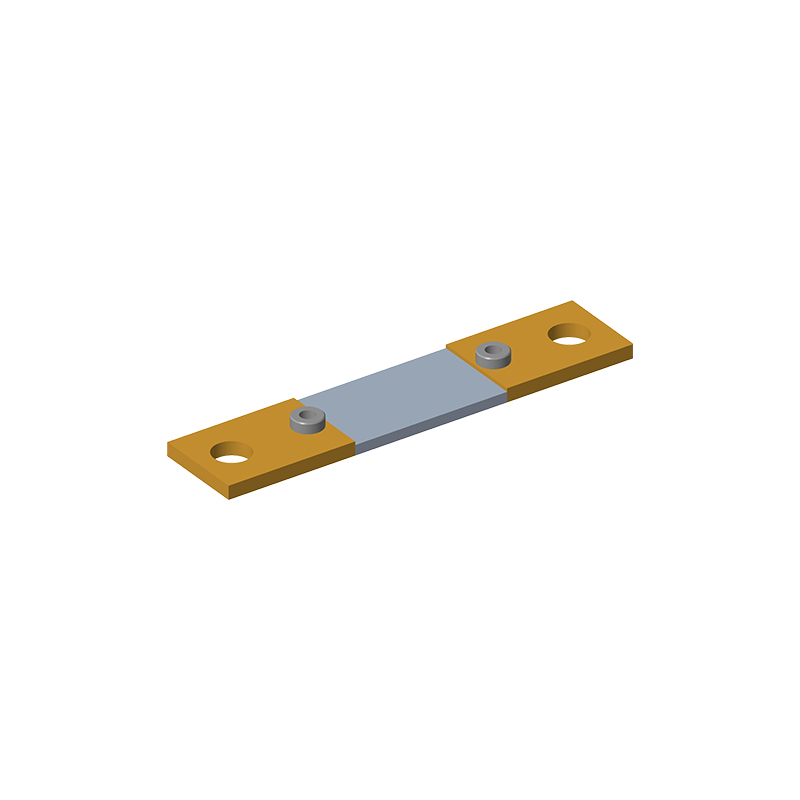
In the rapidly evolving world of electric vehicles, every component plays a vital role in ensuring efficiency and reliability. Among these, shunt resistors are often overlooked but form the backbone of precise current monitoring. By measuring the voltage drop across a known low resistance, these components deliver real-time data that directly feeds into battery management systems and motor controllers. Without them, it would be nearly impossible to accurately gauge state-of-charge or protect against overcurrent scenarios, making the entire system vulnerable to failure.
The demands placed on automotive-grade shunt resistors are extreme. They must handle high currents while maintaining extremely tight tolerances and temperature stability, all within the confines of compact, often thermally challenging environments. A slight drift in resistance can cascade into significant measurement errors, leading to reduced range calculations or even unsafe operating conditions. This is why materials like manganin or specialized alloys are selected for their low temperature coefficients, and why packaging technologies—from metal strip to multilayer ceramic—are constantly refined to balance power dissipation with size. The reliability of the entire power delivery chain hinges on these seemingly simple devices.
As EV architectures push toward 800V and higher, shunt resistors face new hurdles. Faster switching speeds in inverters demand better transient response, while higher continuous currents require even lower resistance values to minimize power loss and heat generation. Designers are now integrating shunts with isolation amplifiers and digital interfaces to create smart sensing nodes that report not just current magnitude but also temperature and fault conditions. The evolution of shunt technology mirrors the electric vehicle's own journey—from a niche component to a critical enabler of performance and safety.
Balancing Accuracy and Size in High-Voltage Systems
Designers of high-voltage equipment often face a fundamental tension between achieving precise measurements and keeping physical dimensions manageable. As voltage levels climb, insulating components must become thicker and clearances larger to prevent arcing, which naturally pushes up the size of sensors, dividers, and other critical parts. This can conflict with space-constrained installations or portable testing gear, where every millimeter counts. The trick lies in selecting materials and geometries that maintain dielectric integrity without adding bulk, while still delivering the signal fidelity needed for accurate monitoring or protection.
Recent advances in composite insulators and compact resistive–capacitive dividers have shifted what is possible. Instead of relying solely on bulky oil-filled or gas-insulated assemblies, engineers now blend materials with high dielectric strength and low temperature coefficients. This allows for slimmer profiles that hold calibration over a wide range of conditions. Careful field simulation also helps to identify stress points early, enabling designers to shave off excess material without compromising safety margins. The result is equipment that can fit into tight substation bays or mobile test trailers while still meeting strict accuracy classes.
Practical experience shows that this balance is not purely a technical exercise but also a matter of application priorities. In some industrial settings, a slight trade-off in measurement accuracy might be acceptable if it means the system can be retrofitted into an existing panel. Elsewhere, extreme precision is non-negotiable, and engineers must accept a somewhat larger footprint. Understanding the real-world constraints—from installation environment to maintenance access—guides the final design. Ultimately, the most elegant solutions come from treating accuracy and size not as opponents, but as interdependent variables that can be optimized together through iterative prototyping and testing.
Under the Hood: How Precision Resistors Enhance Vehicle Safety
Modern vehicles rely on an intricate web of sensors and control units to keep passengers safe. At the core of these systems, precision resistors play a quiet but critical role. They ensure that signals from airbag sensors, anti-lock braking systems, and battery management circuits remain accurate and undisturbed, even under extreme temperatures and vibration.
Unlike ordinary resistors, precision types maintain tight tolerance and low drift over time. In an electronic stability control module, for instance, a tiny deviation in resistance could misinterpret wheel speed, delaying corrective action. By providing consistent performance, these components allow safety systems to react in milliseconds with zero room for error.
Manufacturers also leverage precision resistors to meet stringent automotive safety standards. Their reliability in current sensing and voltage division directly impacts the fail-safe operation of advanced driver-assistance systems. As vehicles become more autonomous, the demand for such high-accuracy passive components will only grow, making them an invisible but indispensable pillar of road safety.
The Evolution Towards Smarter Current Sensing Solutions
Current sensing has long been a fundamental requirement in electronics, but the methods we use have undergone a quiet yet profound transformation. Where once a simple shunt resistor or bulky current transformer sufficed, today's systems demand far more—higher precision, lower power losses, and the ability to communicate nuanced data in real time. This shift mirrors the broader move toward smarter, more connected devices, and it has reshaped the landscape of power management and motor control. The journey from passive, unidirectional measurement to adaptive sensing that can self-calibrate and predict faults marks a pivotal evolution, driven by the needs of electric vehicles, renewable energy, and advanced industrial automation.
Central to this progression is the integration of signal processing and intelligence directly within the sensor package. Early isolated approaches, such as Hall-effect sensors, provided galvanic isolation but often struggled with drift and limited bandwidth. The emergence of closed-loop Hall-effect and fluxgate technologies tightened accuracy, yet it was the fusion of these principles with application-specific integrated circuits (ASICs) that truly unlocked smart capabilities. Modern current sensors now embed analog-to-digital conversion, temperature compensation, and digital interfaces like I²C or SPI as standard, enabling them to do more than just report a voltage—they can diagnose system health, alert to overcurrent conditions, and even stream data for predictive maintenance algorithms.
The most telling sign of this evolution is the rise of fully integrated, isolated current sensors that combine the sensing element, signal conditioning, and isolation in a single compact package. These devices often leverage magnetic field sensing based on giant magnetoresistance (GMR) or tunnel magnetoresistance (TMR), achieving micro-ohm resistance and microsecond response while consuming minimal board space. Such miniaturization and performance were unthinkable a decade ago. Now, they empower designers to embed precise energy monitoring into every power rail of a server rack or to realize finer torque control in robotic joints. As the internet of things continues to blur the lines between physical and digital, smarter current sensing becomes not just a technical upgrade but a fundamental enabler of energy efficiency and autonomous operation.
FAQ
In the automotive environment, where precise battery monitoring and motor control are non-negotiable for performance and safety, shunt resistors offer a direct and highly linear method to convert current into a measurable voltage drop. Unlike contactless sensors, they maintain accuracy across wide temperature ranges and are immune to electromagnetic interference, making them the backbone of many electronic control units.
These specialized resistors are engineered to handle the high continuous currents and transient overloads typical in vehicles, such as those in electric power steering or starter-generator systems. They feature robust constructions—often with metal-alloy resistive elements and welded terminations—that provide low resistance values with minimal temperature coefficient of resistance, along with dedicated thermal management to ensure stability under extreme under-hood conditions.
Precision current sensing via shunts is critical for accurate state-of-charge and state-of-health calculations. These resistors enable coulomb counting with minimal offset error, allowing the BMS to reliably monitor charge and discharge cycles, detect anomalies, and balance cells, which directly extends battery life and ensures safe operation.
The main hurdles involve managing thermal dissipation without compromising nearby components, minimizing voltage drop on the sensing path to preserve system efficiency, and achieving precise four-terminal Kelvin connections. Designers often use thick copper pours, thermal vias, and careful layout to separate high-current paths from sensitive signal traces, while selecting resistors with low self-heating and excellent long-term drift characteristics.
As the ambient temperature can swing from extreme cold to engine bay heat, a shunt's resistance may drift, leading to measurement errors. Automotive-grade shunts employ materials like Manganin or electron-beam welded copper-nickel alloys that exhibit TCR values as low as ±50 ppm/°C, ensuring that the voltage drop stays proportional to current even during rapid thermal changes, which is vital for feedback loops in fuel injection or transmission control.
They undergo rigorous testing per AEC-Q200, including thermal shock, high-humidity operation, and mechanical vibration profiles that simulate road conditions. Beyond that, manufacturers perform load life tests at maximum operating temperature and rated power for thousands of hours to guarantee resistance stability and structural integrity over the typical 15-year service life of a vehicle.
The move to 48V increases power demands even in mild hybrids, and shunts are essential for monitoring bi-directional currents in motor-generators and DC-DC converters. They enable precise torque control and energy recovery strategies by providing real-time current data with high dynamic range and low phase delay, which helps optimize fuel efficiency without adding complex isolation circuitry.
The industry is pushing for integrated shunt-plus-amplifier modules to reduce footprint and improve signal integrity. Also, the use of advanced metal composite materials and laser trimming allows for ultra-precise initial tolerances, while on-chip temperature sensing calibration is emerging to counter self-heating effects in very high power density applications, further elevating measurement precision for autonomous driving sensor suites.
Conclusion
Modern vehicles, especially electric ones, are packed with electronics that quietly depend on one unassuming component: the shunt resistor. These robust devices serve as the silent backbone, translating current into precise millivolt signals that battery management systems rely on to optimize charging, extend range, and prevent cell damage. In EV power delivery, shunts form the critical link between the battery and the motor inverter, enabling real-time monitoring of hundreds of amps while withstanding harsh under‑hood conditions. As high‑voltage systems shrink in size, engineers face the relentless challenge of balancing micron‑level accuracy with compact footprints and minimal thermal drift. This delicate equilibrium is what allows modern vehicles to squeeze every ounce of performance from their powertrains without compromising reliability.
Beyond efficiency, precision current sensing directly underpins vehicle safety. From detecting overcurrent faults that could trigger fires to enabling traction control and emergency disconnects, the low‑side shunt is woven into a car’s protective fabric. Its evolution is now accelerating toward smarter solutions: digital outputs, built‑in diagnostics, and seamless integration with domain controllers are turning the humble resistor into an intelligent node. These advances not only enhance functional safety but also pave the way for predictive maintenance and adaptive energy strategies. In an era where vehicles are becoming software‑defined, the shunt resistor remains essential—not just as a passive component, but as a key enabler of precision, efficiency, and trust on the road.
Contact Us
Contact Person: Yuying Gao
Email: [email protected]
Tel/WhatsApp: +86 18926013721
Website: https://en.milliohm.net/