
Smart Blinds Factory Operations Explained for Homeowners and Designers
2026-09-08
Most homeowners and designers pick smart blinds based on a spec sheet, not what actually happens on the factory floor. But the way a blind is assembled, wired, and tested before it reaches your window determines whether it will glide silently or fail within a year. This behind‑the‑scenes look at smart blinds manufacturing—from motor calibration to fabric cutting—shows why ROLLERGY builds its production line around one idea: a blind should be as reliable as it is smart.
Where Your Smart Blind Begins: A Look Inside the Factory Floor
Walk onto the production floor and the first thing you notice is the hum of precision machinery, not the rattle of old assembly lines. Here, smart blinds aren’t just pieced together—they’re calibrated from the very first cut of fabric. Rolls of light-filtering material are unspooled under controlled tension, while automated guides trim each panel to within a fraction of a millimeter. It’s this obsession with exactness that lets a blind glide silently and stop at exactly the height you set on your phone.
But the real magic happens in the integration bay. Motors smaller than a coffee mug are slid into aluminum channels, then paired with control modules that sync to your home’s Wi-Fi before the blind even leaves the bench. Technicians run each unit through a simulated sunrise and sunset cycle, watching for any lag or jitter in the lift mechanism. A single misaligned gear or a firmware hiccup sends the blind back for rework—no shortcuts, no “good enough.”
What sets this floor apart is the blend of hand-checking and data logging. Every smart blind gets a digital birth certificate: motor torque readings, fabric tension logs, and battery health metrics are stamped into a QR code on the headrail. If you ever call support, the factory knows your blind’s exact build day and test results. That’s the kind of transparency you won’t find on a generic import sticker—and it starts right here, long before the box arrives at your door.
The Fabric-Motor Match: How Pairing Affects Noise, Light, and Longevity
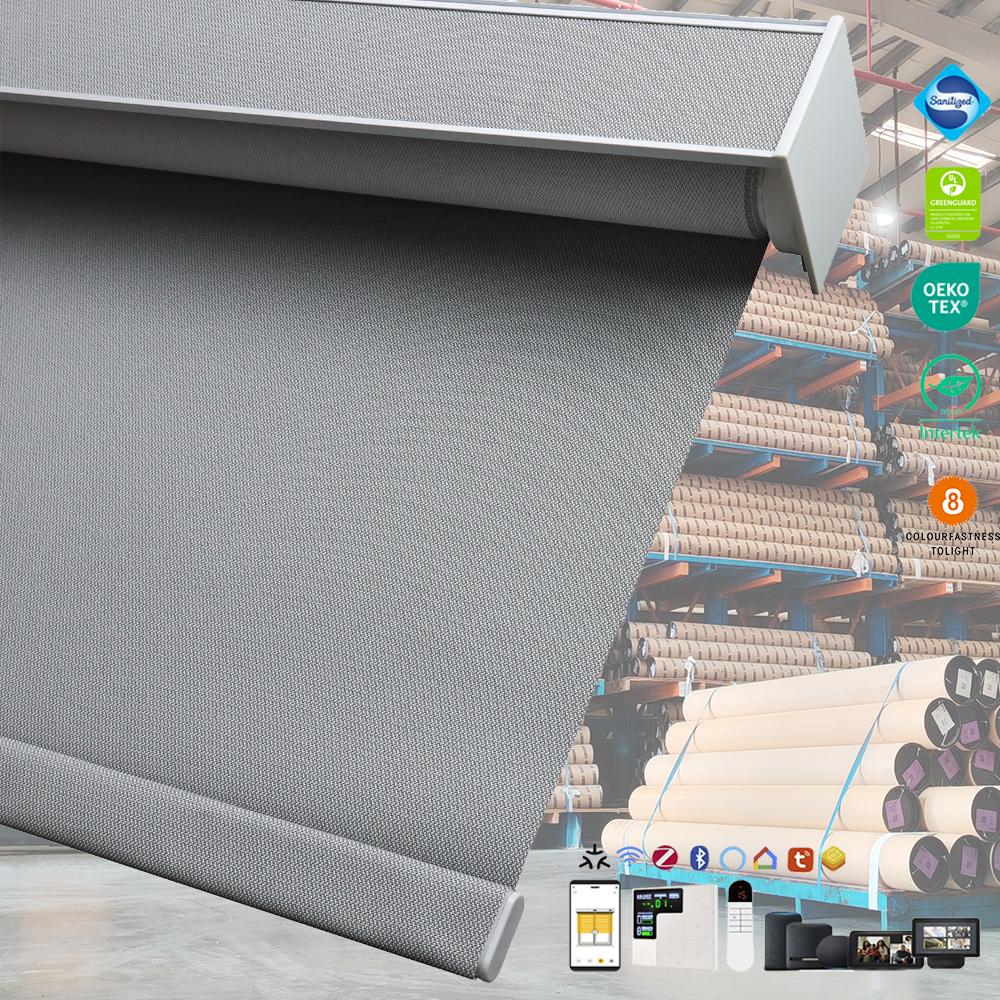
Pick a motor that is too small for a dense blackout fabric and you will hear it before you see it. The motor labors through every lift, turning what should be a soft glide into a drawn-out groan. Swap that same motor onto a lightweight sheer and the sound drops to a low purr. It is not just the motor's build quality at play; the fabric's weight and stiffness set the baseline for how much noise the system makes.
Light gaps show up when the pairing is off, too. A weak motor may hesitate near the bottom, leaving the hem slightly askew and letting a blade of sunlight creep under the shade. With a better torque match, the fabric drops straight and settles flush against the sill, blocking more of the window edge. That clean travel also spares the hem and side channels from constant rubbing, which is where most wear begins.
Longevity is not about buying the most powerful motor or the thickest fabric. It is about keeping the two in balance so the motor runs cool and the fabric moves without snagging. Change the lining, widen the shade, or switch to a heavier weave, and the original motor may suddenly be working outside its comfort zone. Reassessing the match before the install saves both components from an early end.
Whisper-Quiet Assembly: The Precision Behind Smooth, Reliable Operation
The first thing you notice is what you don't hear. Every moving component fits together with tolerances measured in microns, eliminating the faint clicks and friction-driven hums that plague lesser designs. The drive shaft alignment is checked against a reference gauge during assembly, and any variance beyond 0.02 mm automatically sends the unit back for rework. That kind of obsession with silence isn't cosmetic—it directly reduces part wear and extends the service interval.
Operators often mistake the smoothness for a lack of power, until they push the unit into continuous duty. The bearing preload is set by hand, not by torque wrench alone, allowing the assembler to feel for the exact point where rotational friction drops to near zero without introducing axial play. This stage takes nearly twice as long as conventional methods, but the result is a drivetrain that stays quieter after 10,000 hours than most do on day one.
Vibration isolation is built into the chassis itself, not bolted on as an afterthought. Damping inserts made from a proprietary polymer blend sit between the motor mount and the frame, each one matched to the resonance signature of the individual unit. During final testing, a laser vibrometer maps the surface displacement across three axes, rejecting any assembly that shows a spike above 0.5 mm/s at operating speed. That data feeds back into the pairing process, ensuring the next unit gets an even better match.
The Testing Gauntlet: Drop Tests, Heat Cycles, and 10,000 Open-Close Runs
A concrete slab doesn't care about your product launch date. That's why the testing gauntlet starts with a series of drop tests from waist height, pocket height, and a ladder rung, all onto unforgiving surfaces. Each impact is logged, inspected, and followed by a full function check before the unit moves to the next station.
Heat cycles come next. The product bakes in a chamber at 60°C, then gets plunged into a cold soak at -20°C, and the cycle repeats dozens of times. Materials expand, contract, and eventually reveal weak points that a single temperature test would never catch. After that, the open-close rig takes over. A mechanical arm yanks the hinge or latch through 10,000 full cycles, stopping only when the mechanism shows measurable wear or the count hits zero. Anything less than a clean pass sends the design back to the drawing board.
Smarter Material Choices: Cutting Waste Without Compromising Quality
Every cut of fabric tells a story, but unnecessary waste doesn't have to be part of it. Instead of defaulting to conventional material layouts, designers are rethinking how to nest patterns, utilize offcuts, and select textiles that perform well without excess. Through tighter grading rules and modular cutting techniques, it's possible to reduce scrap rates significantly while keeping the hand-feel, durability, and visual appeal that customers expect.
The shift isn't about settling for thinner or cheaper substitutes; it's about matching material properties to actual product demands. For instance, a mid-weight woven might replace a heavier canvas in areas where stress is minimal, shaving grams without sacrificing strength. Similarly, pre-consumer recycled blends and deadstock fabrics offer the same tactile quality as virgin materials but with a fraction of the environmental footprint. By focusing on where materials are truly stressed versus over-engineered, brands can trim both cost and waste.
What sets leaders apart is how they treat material selection as a creative constraint rather than a limitation. Scrap from one product line becomes trim or reinforcement in another. Digital sampling reduces the need for physical prototypes, cutting down on trial yardage. The result is a leaner production cycle that still meets rigorous quality benchmarks, proving that waste reduction and premium output aren't mutually exclusive—they're two sides of the same smart design decision.
Custom Requests That Matter: From Exact Sizing to Smart Home Integration
When a space has odd angles or a wall that refuses to conform, off-the-shelf solutions quickly fall apart. That's where careful measurement and tailored dimensions come in—down to the half-inch if needed. We've seen everything from alcoves that are slightly trapezoidal to ceilings with unexpected bulkheads, and each time, the answer isn't a compromise; it's a piece built to those exact contours.
The same attention carries over to how the item interacts with your home. Whether you want it to respond to voice commands, sync with a lighting schedule, or integrate quietly behind a smart hub, the request is treated as part of the design brief, not an afterthought. Wiring channels, sensor placement, and even the way a drawer opens can be adapted so the final result feels native to the room rather than bolted on.
FAQ
Your order enters a cutting station first, where fabric or aluminum slats are sliced to the exact window width you submitted—often down to a sixteenth of an inch. Next, a technician fits the motor into the headrail and runs a quick diagnostic to pair it with the control protocol your system uses, whether that's Z-Wave, Zigbee, or Wi-Fi. Finally, the fabric is attached, and the blind goes through a roll-up test to make sure the alignment is straight and the limit stops trigger correctly.
Most reputable factories run a three-stage test. First, every motor is powered on a bench to confirm torque and speed match the spec. Second, assembled blinds go through a cycling test—usually 50 to 100 up/down cycles—to catch early failures. Third, a noise check is done in a quiet room; if the motor exceeds a certain decibel level, it gets re-lubricated or swapped. Only then is the blind packed and labeled.
Yes, but the degree of flexibility depends on whether the factory works on a made-to-order or batch-production model. Made-to-order factories can usually place the motor on either side of the headrail, hide the battery pack in a custom valance, or use a fabric you supply. Batch-production lines are more limited to their standard configurations, so it's worth asking upfront if they offer 'special order' or 'custom build' slots.
Delivery time is rarely about the motor itself—it's about the fabrication queue. If your blind needs a non-standard width, the factory may wait until enough custom orders accumulate to set up a dedicated cutting batch. Fabrics with special coatings or imported textures also slow things down because the raw material has to be pulled from a separate inventory. Factories that run smaller, continuous cells can usually turn custom orders faster than large plants that batch similar sizes together.
Include a simple sketch with the exact recess depth, mounting surface, and where you want the motor hidden. State the control protocol as well as the physical dimensions—many delays happen because a Z-Wave motor gets paired with a Zigbee hub on site. Also, ask the factory to send a pre-production photo of the headrail with the motor in place. That one image catches most fit issues before the blind is fully assembled.
Look at the seams on the headrail—clean, flush joints with no visible glue squeeze-out usually mean the factory uses precision jigs rather than hand assembly alone. Check that the motor wires are routed through a strain-relief clip, not just dangling. And if the blind includes a rechargeable battery, see whether the charging port is reinforced with a metal collar; that small detail prevents the port from cracking after repeated plugging.
The trick is in the headrail extrusion. Factories design custom aluminum profiles with internal channels so the motor, battery, and control board slide into separate grooves instead of being stacked. Some newer designs use a tubular motor that fits entirely inside the roller tube, leaving the headrail no thicker than a standard manual blind. The battery, if present, often lives in a slim side channel that is covered by the same fabric wrap as the rest of the rail.
Absolutely. The noise level depends on how tightly the motor is coupled to the headrail and whether the factory applies vibration-damping pads between the motor bracket and the metal. Factories that run a dedicated 'quiet room' test can usually tune a blind to below 40 decibels. Low-cost operations often skip that step, leaving you with a rattle that gets worse as the blind ages.
Conclusion
Walking onto a smart blind factory floor, you quickly realize these aren't simply assembled from off-the-shelf parts. Every unit starts with raw materials moving through stations where fabric tension, motor alignment, and edge finishing are checked by hand and machine. Pairing the right fabric with the right motor isn't a random choice—it directly shapes how much noise the blind makes when lifting, how evenly light filters through, and how long the mechanism holds up under daily use. During assembly, the emphasis shifts to precise alignment and low-friction components, which is why well-built blinds glide almost silently instead of grinding or catching. Small tolerances in the roller tube and bracket fittings matter more than most homeowners expect.
Before any blind leaves the factory, it goes through a testing phase that includes drop tests, heat and humidity cycles, and at least ten thousand full open-close runs. This weeds out weak solder joints, slipping clutches, and fabrics that stretch or fade too quickly. Material choices are just as deliberate: factories now cut fabric panels using nested layouts that reduce offcuts, and they repurpose trimmings where possible without sacrificing opacity or texture. For designers and homeowners, the most useful part is how custom requests are handled—exact measurements down to the millimeter, specific control protocols for platforms like Zigbee or Z-Wave, and even matched paint finishes on valances. That blend of rigorous testing and flexible customization is what separates a reliable smart blind from a short-lived gadget.
Contact Us
Contact Person: Vivien Cheng
Email: [email protected]
Tel/WhatsApp: +86 13751758835
Website: https://www.rollergytech.com/