Pusher Furnace Advancements Transforming Industrial Heating Processes
2026-07-30
The industrial heating landscape is shifting fast, and pusher furnaces are no longer just brute-force machines. From precision temperature control to energy-smart designs, the latest breakthroughs are rewriting what these systems can do. At the heart of this change, THINKING-LONG is pushing boundaries—literally reengineering how materials move through heat. If you think you know pusher furnaces, it’s time to look again.
How Next-Gen Pusher Furnaces Are Redefining Heat Treatment Precision
Precision in heat treatment has always been a delicate balancing act—too much heat and you risk distorting the metal; too little and you fail to achieve the desired hardness. Next-generation pusher furnaces are flipping this narrative by introducing adaptive thermal mapping that adjusts in real time. Instead of relying on static recipes, these furnaces use embedded sensors and machine learning to monitor the actual temperature at every point along the conveyor. This means a part that’s slightly thicker in one section gets exactly the right soak time, while thinner areas are safeguarded against overheating. The result isn’t just tighter tolerances, but a level of consistency that traditional batch furnaces could only dream of.
What really sets the new designs apart is how they handle atmosphere control. Older systems often struggled with uneven gas flow, creating microclimates that led to spotty carburizing or decarburization. Modern pusher furnaces use directed laminar flow combined with pressure sensors that tweak the atmosphere within milliseconds. Imagine feeding a stream of parts with varying surface areas and never seeing a fluctuation in carbon potential—it’s no longer science fiction. Even delicate alloys that were once a nightmare to process now come out with zero surface defects, first time, every time.
And it’s not just about the tech inside the furnace. These next-gen models are being built with tighter integration into the factory floor. Smart pusher systems communicate directly with upstream forging presses and downstream quenching stations, adjusting cycle times on the fly to avoid bottlenecks. One operator can oversee multiple lines from a tablet, leaning on predictive analytics that flag potential issues before they shut down production. It’s a shift from fire-and-forget to a truly orchestrated thermal process, and it’s quietly raising the bar for what “precision” really means in heavy industry.
The Hidden Efficiency Gains Driving Modern Industrial Furnace Design
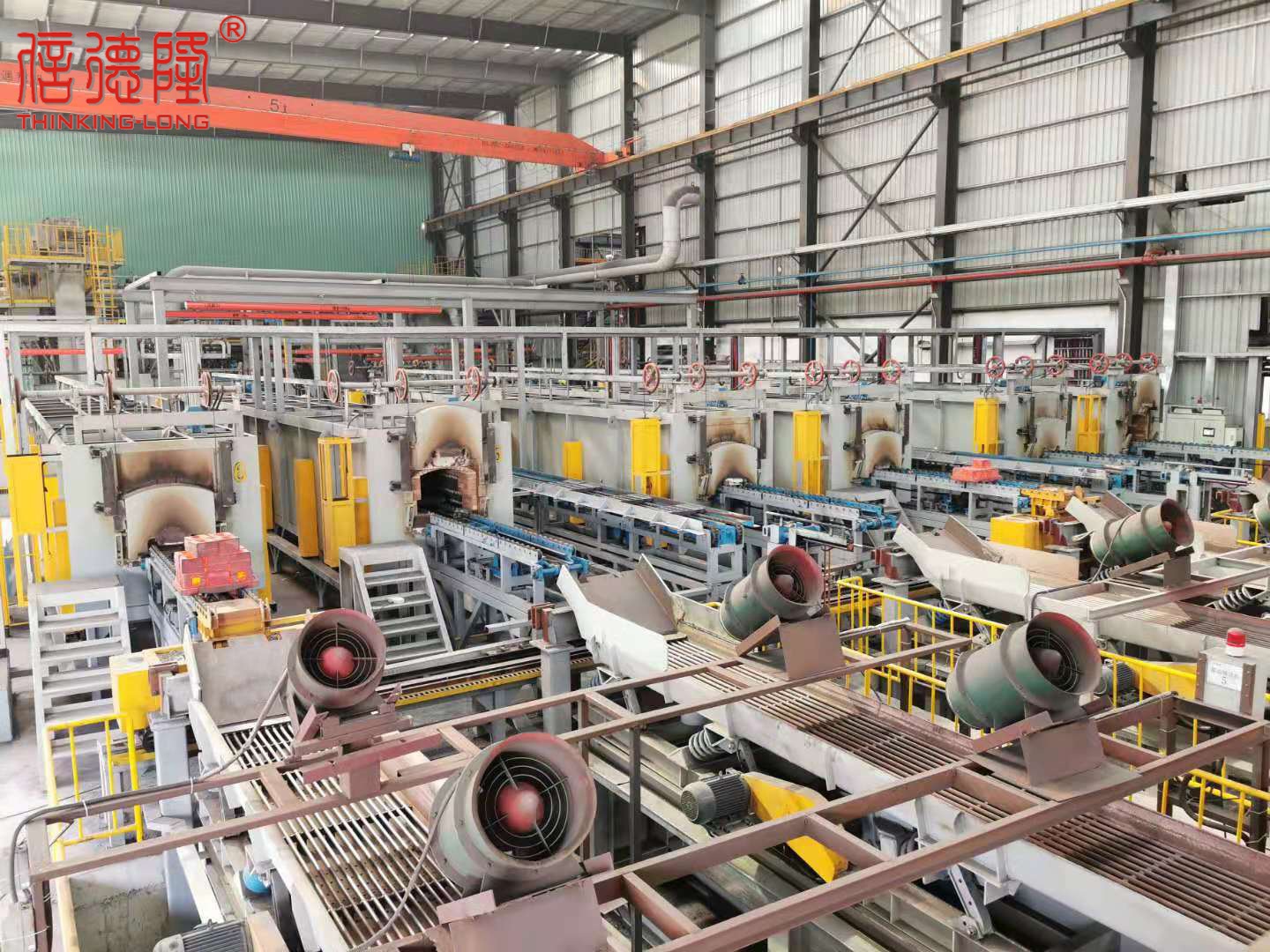
Modern industrial furnaces are quietly undergoing a transformation that goes beyond simple temperature control. One of the most overlooked efficiency gains lies in the use of advanced ceramic fiber linings and high-emissivity coatings. These materials not only reflect heat more effectively back into the chamber but also reduce the thermal mass of the structure itself. The result is a furnace that reaches operating temperature faster, loses less energy during cycling, and demands less fuel to maintain steady-state conditions. For operators, this translates directly into lower utility bills and a smaller carbon footprint without any change to the production process.
Another subtle but powerful shift is happening in burner technology and combustion management. Rather than relying on traditional on-off cycling, many new systems incorporate modulating gas valves and staged combustion, which allow for precise oxygen-to-fuel ratios across a wide range of firing rates. Paired with oxygen sensors that continuously sample the flue gas, these setups can automatically adjust the mixture to stay at peak efficiency even as ambient conditions or fuel quality vary. The energy savings can be significant—often in the 5 to 15 percent range—but the real gain is in the extended life of radiant tubes and refractories, since excess oxygen is kept to a minimum and hot spots are greatly reduced.
Perhaps the most elusive efficiency lever is the integration of real-time data with predictive control algorithms. By feeding historical process data into a model that learns the thermal behavior of a specific furnace, manufacturers can preemptively adjust firing rates for upcoming production steps instead of simply reacting to current temperatures. This anticipates load changes from new batches entering the furnace or shifts in product dimensions, dramatically cutting idle time and temperature overshoot. It’s a strategy that requires upfront investment in sensors and software, but in continuous operations it often pays for itself within months through reduced gas consumption and improved product consistency.
Why Smart Controls Are the Unsung Hero of Consistent Heating
For consistent heating without thrills, smart controls work behind the scenes. They quietly monitor indoor conditions, outdoor changes, and even your daily patterns. Unlike manual thermostats that swing from too hot to too cold, these systems make minor, almost imperceptible adjustments. That steady comfort you feel? It's not luck—it's a controller that never stops tuning the output.
The real magic lies in their ability to learn and anticipate. A smart control doesn't just react; it knows when you prefer a warmer kitchen on early mornings or a cooler bedroom at midnight. It accounts for humidity, drafts, and sun exposure, blending all these factors into a smooth thermal experience. This kind of subtlety is rarely appreciated because it simply works—no drama, no cold surprises.
We often overlook these devices because they don't demand attention. They aren't flashy or talked about at dinner parties. Yet, they are the reason your home feels reliably warm day after day, year after year. While we focus on the furnace or boiler, the modest controller ensures every dollar spent on energy is used effectively, making it the true backbone of home comfort.
Breaking the Mold: Modular Pusher Furnaces for Agile Manufacturing
Traditional pusher furnaces have long been synonymous with rigid, high-volume production lines—great for consistency but a nightmare when market demands shift. Modular designs flip this script entirely. By breaking the furnace into independent, reconfigurable sections, manufacturers can now swap out heating zones, adjust throughput, or even repurpose the line for entirely different part profiles without tearing down the whole system. It’s like having a heat-treating toolkit rather than a single-purpose monolith.
The real magic lies in the plug-and-play mentality these systems bring to the floor. Need a faster cooling curve? Slide in a quench module. Scaling production up for a new contract? Add another heating segment in a fraction of the time it used to take. This responsiveness doesn’t just slash downtime—it turns the furnace into a competitive weapon, letting shops chase opportunities instead of being shackled by their own equipment.
From Waste to Worth: Recuperative Innovations Slashing Energy Bills
In a world where every joule counts, businesses are turning their attention to the energy routinely thrown away. Exhaust heat from industrial processes, lukewarm wastewater from commercial laundries, and even the stale air pumped out of office towers hold hidden value. Instead of letting it dissipate into the atmosphere, recuperative systems capture and repurpose this thermal energy, feeding it back into heating, cooling, or production cycles. The result is a sharp drop in utility expenses, often without the need to generate a single additional kilowatt.
What sets modern recuperation apart is its ability to squeeze savings from overlooked sources. Heat exchangers now salvage warmth from drain water in hotels and apartment blocks, preheating incoming cold water and cutting boiler runtimes by up to 40%. In manufacturing, closed-loop systems recycle process heat to precondition raw materials, slicing natural gas consumption. Even ventilation losses are being tackled: enthalpy wheels transfer both heat and moisture between outgoing and incoming airstreams, lightening the load on HVAC compressors during sweltering summers and freezing winters alike.
The shift from waste to worth isn't just about gadgetry—it's a quiet rethink of facility design. Retrofitting an older plant with a simple plate exchanger can pay for itself in under a year, while new builds are embedding cascading energy reuse from the blueprint stage. Maintenance teams are finding that these systems, often with no moving parts, require little attention beyond periodic cleaning. As energy prices remain volatile, turning buildings and factories into their own miniature power stations—where waste streams become dependable assets—moves from a nice-to-have to a hard-nosed financial strategy.
Future-Proofing Production: The Rise of Alloy and Lining Breakthroughs
Factories today are quietly shedding their old skins. The metals and protective layers that once defined industrial limits are being reimagined, not in bold headlines but in subtle shifts at the molecular level. A new generation of alloys is emerging—formulated not just for strength, but for an almost organic ability to resist wear, corrosion, and heat in ways that feel less like engineering and more like adaptation. These materials seem to learn from the environments they endure, developing resilience that traditional metallurgy could only simulate through frequent replacement and costly downtime.
At the same time, the linings that shield reactors, pipes, and containment vessels are undergoing their own quiet revolution. Ceramic and polymer composites are being layered with a precision that mimics natural structures—bone, shell, nacre—achieving hardness without brittleness, flexibility without softness. It’s not uncommon to see a lining that can self-report early signs of stress, or one that subtly shifts its surface chemistry to neutralize an incoming corrosive agent before it can take hold. These aren’t just barriers; they’re becoming intelligent interfaces between brutal industrial processes and the equipment that makes them possible.
What’s most striking is how this shift is altering the very concept of production planning. Instead of building for obsolescence and scheduled maintenance, engineers are beginning to design for continuity. The conversation has moved from ‘how long until this fails?’ to ‘how can we make failure irrelevant?’ Alloy formulations and lining architectures are now developed in tandem, creating systems where the whole is far more durable than the sum of its parts. It’s a subtle but profound transformation—one where tomorrow’s facilities aren’t just less likely to break down, but are fundamentally indifferent to the forces that once limited their lifespan.
FAQ
Modern pusher furnaces feature modular refractory linings for faster maintenance, advanced burner systems with precise air-fuel ratio control, and integrated heat recovery units. These improvements allow for tighter temperature uniformity, reduced fuel consumption, and longer campaign lives compared to older designs.
Advancements such as regenerative burners, improved insulation materials, and intelligent combustion controls can boost thermal efficiency by up to 30%. This translates to lower natural gas usage per ton of processed material, directly cutting operating costs and carbon emissions.
Yes, contemporary pusher furnaces are equipped with IoT sensors and data analytics platforms. Real-time monitoring of temperature profiles, atmosphere composition, and mechanical health allows predictive maintenance, reduced unplanned downtime, and consistent product quality.
New designs incorporate sealed quench zones, advanced fume extraction systems, and low-NOx burners. These features minimize workplace exposure to hazardous atmospheres and help facilities meet strict emission regulations without retrofitting external scrubbers.
Optimized hearth configurations and automated charging/discharging mechanisms reduce cycle times and mechanical damage to components. Fewer jams and smoother material flow allow continuous operation at higher throughput rates without sacrificing heating consistency.
Uniform heat distribution from advanced burner arrays and computational fluid dynamics-designed chambers ensures consistent case depths and metallurgical properties. This eliminates soft spots and distortion issues, leading to higher fatigue strength and longer service life of treated parts.
A large automotive forge replaced its aging pusher line with a high-efficiency model featuring radiant tubes and regenerative burners. The upgrade cut gas consumption by 25%, reduced scale formation by 40%, and increased throughput by 15%, while paying back the investment within 18 months.
Conclusion
Modern pusher furnaces have quietly undergone a radical transformation, moving far beyond their traditional role as simple material conveyors. At the heart of this shift is a fusion of precision engineering and smart automation that redefines what consistent heat treatment actually means. Next-generation designs now incorporate closed-loop thermal controls that adapt in real time, eliminating the hot spots and uneven soak times that once plagued high-volume production. This isn't just about tighter temperature bands—it's about making every cycle predictable, from carburizing depth to grain structure, without relying on operator intuition. Meanwhile, the physical architecture of these systems has been rethought from the ground up. Modular furnace sections, built around standardized yet configurable zones, allow manufacturers to reconfigure lines for new part geometries in days rather than weeks. The days of monolithic, single-purpose pusher furnaces are fading as agility becomes a competitive necessity.
Equally compelling are the behind-the-scenes efficiency gains that directly impact the bottom line. Advanced recuperative burners and redesigned flue paths now capture waste heat that was once vented into the factory roof, preheating combustion air or even feeding secondary processes. In many installations, this translates to double-digit percentage drops in fuel consumption—a silent revolution in operational expenditure. But the real unsung hero lies in the control algorithms that orchestrate burner staging and atmosphere flow; by dynamically balancing load demand with minimal energy input, they prevent the wasteful cycling that older systems couldn't avoid. This intelligence extends to predictive maintenance too, flagging degradation in alloy rollers or refractory linings before they cause unscheduled downtime. Speaking of materials, the latest nickel-based alloys and ceramic-fiber composites are allowing furnaces to run hotter, longer, and in more aggressive atmospheres without the constant rebuilds that historically constrained throughput. Together, these advancements don't just improve a single metric—they future-proof the entire heat treating operation against fluctuating energy costs and ever-tighter quality standards.
Contact Us
Contact Person: Qian Xijun
Email: [email protected]
Tel/WhatsApp: 8613961736750
Website: https://www.thinkinglong.com/