
Professional Slate Flexible Stone Veneer Elevates Any Space with Natural Stone Texture
2026-10-07
There's a reason designers keep reaching for slate—its texture, depth, and organic character make any surface feel grounded. But real stone is heavy, brittle, and unforgiving. Magic Stone changes that with a professional slate flexible stone veneer that delivers the same natural stone texture in a lightweight, bendable form. From accent walls to curved surfaces, it elevates spaces without the usual limitations. Here's what makes it different.
Unveiling the Look of Real Stone Without the Weight
Real stone carries a presence—textured, grounded, irreplaceably organic. Yet lifting slabs, bracing walls, and wrestling with mortar often demands more than most projects can bear. There is a quieter path: surfaces that mirror the raw beauty of split slate, rough granite, or weathered limestone while shedding nearly all of the physical burden. The trick lies in advanced composites and lightweight veneers that capture the uneven grain, the subtle color shifts, the shadow‑catching undulations—without the backbreaking heft. You get the visual weight, the tactile intrigue, but your walls and wallet stay light.
What makes this possible is not a paint trick or a cheap print. Molds taken from actual stone transfer every ridge and fissure into a fraction of the mass. Mineral pigments are layered, not sprayed, so no two panels repeat exactly. From a few feet away, even a trained eye hesitates. Up close, the slight warmth of a matte binder replaces cold density, and the edge reveals a slim profile instead of a thick slab. It’s the look of a mountain face without the mountain’s gravity.
Installation becomes a matter of adhesive and patience, not cranes and structural reinforcement. A feature wall in a loft, a fireplace surround in a rental, a retail accent that would otherwise require permitting—all become plausible in a weekend. And when design tastes shift, the material comes down cleanly, leaving no scar. The illusion is deliberate, the practicality undeniable. Real stone’s soul, minus its stubborn mass.
How Flexible Veneer Transforms Ordinary Walls into Showpieces
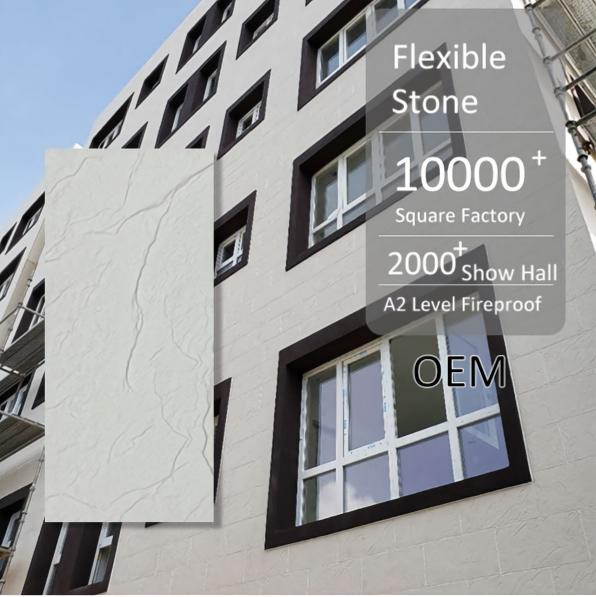
A flat painted wall rarely draws attention, but flexible veneer turns that same surface into something people want to touch. Because the material bends around curves, columns, and awkward corners without splitting, it adds depth that ordinary paint or wallpaper simply cannot match. The wood grain shifts with the light, so a hallway or reception area feels warmer and more intentional within a single afternoon.
What makes the change feel less like a renovation and more like a styling trick is how easily the veneer conforms to the existing wall. There is no need to tear out drywall or rebuild a feature wall from scratch. You keep the original structure, apply the flexible sheet directly over the surface, and suddenly a plain alcove or stairwell becomes the part of the room people remember.
The effect is especially strong in spaces with curved architecture or recessed niches, where rigid panels would leave gaps or require custom carpentry. A backlit bar front, a rounded entryway, or a bedroom headboard wall can all shift from forgettable to focal point once the grain direction and finish are chosen to suit the surrounding light. That is the real transformation: not just covering a wall, but giving it a role in the room.
From Living Rooms to Exteriors: Spaces That Benefit Most
A well-chosen scent does more than freshen the air—it reshapes how a room feels. In living rooms, where guests linger and families unwind, soft woody or amber notes create an unspoken invitation to settle in. The same fragrance that warms a conversation by the sofa might feel heavy in a sunroom, where lighter citrus or green accords keep the space feeling open and alert. It's less about matching decor and more about matching the rhythm of the room: calm for rest, bright for movement.
Bedrooms ask for something quieter still. Lavender, chamomile, or a barely-there musk can signal the body to slow down without shouting for attention. Hallways and entryways, often forgotten, benefit from a crisp, clean scent that greets you before you even take off your coat—think eucalyptus or white tea. Then step outside: porches, patios, and garden nooks can carry bolder blends that might overwhelm indoors. Herbal notes like rosemary or basil mingle with outdoor air, making even a small balcony feel like an extension of the living space rather than an afterthought.
What ties these spaces together is intention. A dining area might lean into subtle spice or fig to complement meals without competing with them. A home office can use peppermint or lemon to nudge focus during long afternoons. By treating scent as part of the room's function—not just a background perfume—you give each area its own quiet character. The result is a home that feels layered and lived-in, where moving from one space to another is a small sensory shift rather than a flat, uniform experience.
Texture That Feels Natural, Maintenance That Feels Effortless
Run your hand across the surface and you’ll notice it right away—there’s a subtle grain, a slight variation in tone, the kind of organic detail that makes a space feel lived-in rather than showroom-staged. It doesn’t try too hard to be perfect, and that’s exactly why it works. Scuffs, daily wear, and the occasional spill blend into the texture instead of shouting for attention.
Keeping it looking this way doesn’t require a roster of specialty cleaners or a weekend of scrubbing. A quick sweep, a damp cloth, maybe a mild soap now and then—that’s about it. The finish is designed to handle real routines: pets tracking through, kids dropping things, chairs scooting back from the table. You live your life; the surface takes it in stride.
What you get is that rare combination of warmth and practicality. Enough character to make a room feel grounded, enough resilience that you won’t hover over every footprint. It looks better with use, not despite it.
Why Designers Are Choosing Slate Over Traditional Masonry
Slate's natural cleft surface offers a depth and texture that manufactured masonry simply can't replicate. Each piece carries subtle variations in tone and grain, giving walls a lived-in character from day one. Designers are drawn to this irregularity because it breaks the monotony of uniform brick or concrete block, creating visual rhythm without relying on artificial distressing or heavy coatings.
Another practical shift is slate's performance in wet and freeze-thaw climates. Traditional masonry often absorbs moisture, leading to spalling and efflorescence over time. Slate, by contrast, has extremely low water absorption and resists frost damage naturally, which means fewer callbacks and a cleaner look years after installation. For designers balancing aesthetics with long-term maintenance, that combination quietly tips the scale.
Finally, the material's thin profile and modular formats allow for quicker installation and less structural support than full-depth stone or brick. This flexibility lets architects use slate on feature walls, fireplace surrounds, and even curved surfaces without compromising the handmade feel. It's not about abandoning masonry altogether—it's about choosing a material that ages gracefully while giving projects a sharper, more contemporary edge.
Installation Simplicity: A DIY-Friendly Approach to Stone Finishes
Stone finishes have moved way beyond messy mortar beds and backbreaking lifting. A lot of the current options are lightweight panels or thin veneers that go up with basic adhesives or hidden clips. If you own a level, a trowel, and a saw with a diamond blade, you're pretty much set. That low barrier to entry turns a weekend project into something actually doable, even if you've never touched stone before.
The real trick is surface preparation and layout. Spending an hour making sure the wall is flat and snapping reference lines will save you from fighting the material later. Since stone has natural variation, small gaps or uneven edges actually add character instead of looking like mistakes. Corners are typically pre-made or solved with overlapping pieces, so there's no need to grind perfect 45-degree angles. Start with a small accent wall or a fireplace surround, and you'll quickly see why this has become a favourite DIY project.
FAQ
Traditional slate is rigid and heavy, which limits where it can go. This veneer keeps the natural stone texture but adds a flexible backing, so it can bend around curves, corners, and irregular surfaces without cracking. It also installs far faster since there's no need for mortar beds or heavy support framing.
Absolutely. The flexible core allows it to wrap smoothly around columns, archways, and other curved features. You get the look of quarried slate even on surfaces that would be impossible for standard stone tiles.
Maintenance is minimal. Wipe it down with a damp cloth for routine cleaning, and avoid harsh acidic or abrasive cleaners. If it's in a high-moisture area or outdoors, applying a stone sealer once a year helps it shrug off stains and weather.
Yes, it's designed to handle outdoor conditions, including rain, frost, and UV exposure. Just make sure the substrate is properly prepared and sealed, especially in extreme climates, and it will hold up well for years.
It bonds to most common building surfaces—drywall, concrete, plywood, cement board, even existing tile—as long as the surface is clean, dry, and smooth. Light sanding or priming may be needed on glossy finishes.
Because it uses a genuine stone layer, the color shifts, cleft texture, and edges look remarkably close to solid slate. Each sheet has subtle variations, so the finished wall doesn't have an unnaturally uniform pattern.
A fraction of the weight. This makes it easier to handle, reduces structural load on walls, and can lower shipping costs. You won't need extra framing or reinforcement just to support the veneer.
Yes, a sharp utility knife or heavy-duty scissors is usually enough to trim it to size. For intricate cuts around outlets or edges, scoring and snapping works cleanly without special stone-cutting equipment.
Conclusion
The desire for genuine stone character often collides with structural limits, cost, and installation labor. Professional Slate Flexible Stone Veneer sidesteps those trade-offs by delivering the layered, irregular surface of quarried slate in a lightweight sheet that bends around corners, curves, and existing drywall. Because it is applied directly to stable substrates, the material opens up possibilities that traditional masonry cannot match, from a living room accent wall to a tight entryway or a curved outdoor column. The texture is not a printed imitation; it carries subtle pits, ridges, and tonal shifts that catch light the way real slate does. This immediate material presence gives ordinary walls a crafted, artisanal feel without requiring a mason or heavy structural support.
Maintenance also shifts from routine sealing and mortar repairs to simple occasional dusting or wiping with a damp cloth, which keeps the surface looking fresh for years. Designers frequently choose this flexible veneer over conventional slate because it offers the same visual weight with dramatically faster installation and fewer supply-chain variables. Panels can be cut with basic tools, dry-fit, and adhered in a weekend, making it a realistic DIY project for homeowners who want a stone finish but hesitate to take on full masonry. Whether used behind a bathroom vanity, around a fireplace, or across an exterior façade, the result is a space that feels anchored by natural stone texture while remaining practical to install and live with.
Contact Us
Contact Person: Vito
Email: [email protected]
Tel/WhatsApp: 86 13088879266
Website: https://www.magicstonemcm.com