
Professional Polycarboxylate Superplasticizer: Advanced Solutions for High-Performance Concrete
2026-08-26
High-performance concrete demands more than just strength—it requires precision, workability, and long-term durability. Polycarboxylate superplasticizer (PCE) has become the go-to solution for engineers and contractors tackling complex pours, from high-rise cores to self-consolidating mixes. Yet not all PCEs are created equal. This is where HAISEN steps in, offering advanced admixture technology that pushes the boundaries of what concrete can achieve. In this post, we'll explore the key factors that set professional-grade PCE apart and why HAISEN's approach is gaining attention on demanding job sites.
When High Strength Meets Easy Flow: The Real Role of Polycarboxylate
Polycarboxylate ethers don't simply lubricate fresh concrete; they change how water and cement interact. Conventional high-strength mixes would turn stiff as water content drops, but PCE molecules attach to particle surfaces and create a dense, brush-like layer that keeps grains apart through steric repulsion. That dispersing action frees water that would otherwise be trapped in flocs, so a mix can reach low water-cement ratios without losing the flow needed for tight formwork and congested reinforcement.
The less obvious part is time. Many high-range water reducers give early flow at the cost of rapid slump loss or excessive retardation. A well-designed polycarboxylate spreads its adsorption over the first hour, letting workability hold while cement starts hydrating. On site this means fewer water additions, less segregation, and more predictable pump pressure. The real role isn't superplasticizing alone; it's keeping high strength and easy flow in the same bucket long enough to place the concrete properly.
Cutting Water Without Losing Workability—Here’s What Changes
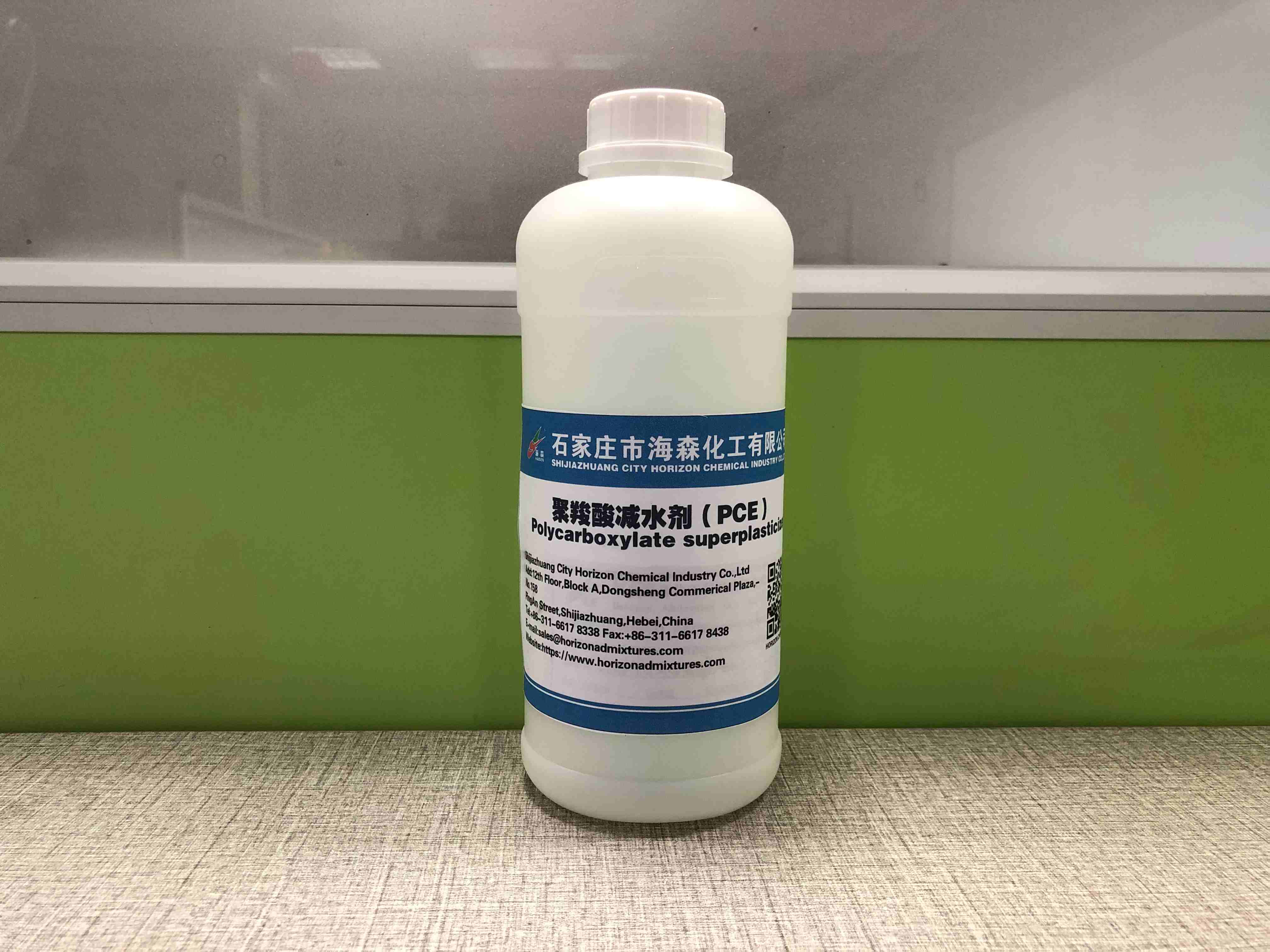
Concrete mixes often hit a wall when lowering water content—slump drops fast, and the crew is left fighting a stiff, uncooperative batch. The trick isn’t just cutting water; it’s rebalancing the entire system so the mix still flows and finishes well. Superplasticizers and mid-range water reducers step in here, but their effectiveness depends heavily on timing, dosage, and how well they’re dispersed through the mix. A common misstep is dumping the admixture too early or too late, which either gets absorbed by cement particles before it can act or leaves it stranded without enough mixing energy to spread evenly.
Aggregate shape and gradation play a bigger role than most realize. When you pull water out, the paste gets leaner, and any angular or gap-graded aggregate will lock up sooner. Switching to rounded, well-graded fines can restore workability without adding a drop back. Similarly, using a small amount of a viscosity-modifying admixture or a tiny increase in air entrainment helps the mix stay cohesive and less prone to segregation, even at lower water-cement ratios. These adjustments aren’t just "add more plasticizer"—they’re about giving the remaining water and paste a better structure to carry the load.
Plant and site conditions also shift once you go low-water. The mix may look great in the lab but arrive on site stiff because it lost moisture during transit or sat in a hot drum. Keeping an eye on aggregate moisture stockpiles and adjusting batch water for actual surface moisture becomes critical. On the finishing side, crews notice that low-water mixes bleed less, which sounds good until they realize surface drying happens faster. A fine mist of evaporation retarder or careful timing with burlap and plastic can keep the surface workable long enough to hit the required finish without adding water back at the point of placement.
Why Your Mix Design Needs More Than Just Cement and Aggregates
A concrete mix that leans only on cement and aggregates often falls short once real-world conditions come into play. Without adjusting the paste, you lose control over workability, setting time, and long-term durability. The gap between a lab-perfect blend and one that survives a jobsite shows up quickly in the form of segregation, excessive bleed water, or a surface that dusts under traffic.
Admixtures and supplementary materials like fly ash, slag, or silica fume reshape the chemistry, while fibers or air-entraining agents address shrinkage and freeze-thaw cycles. Skipping these elements leaves the mix brittle, porous, or prone to cracking, no matter how strong the base components look on paper. A well-rounded design treats every ingredient as a variable, not an afterthought.
From Batching Plant to Pour: Keeping Slump Stable Under Pressure
Slump loss starts the moment water hits cement, and by the time a truck reaches the pour, ambient temperature, drum rotation, and aggregate absorption have all been working against you. At the batching plant, accounting for travel time and site delays means adjusting the initial slump upward or dosing a mid-range water reducer that holds workability longer without affecting set time. The goal is not just to hit a number at the plant gate, but to arrive with enough plasticity to place and finish properly.
On site, the common fix of adding water to bring slump back up weakens the paste and invites cracking. A better move is to keep a supply of high-range water reducer or hydration stabilizer on hand and add it in small doses, then remix at high speed for the required number of revolutions. If the pour is running behind and the pressure is on, resist the urge to skip the slump check—catching a stiff load before it hits the pump is far cheaper than tearing out a bad placement.
The Hidden Barrier Against Chloride Ingress and Freeze-Thaw Damage
Concrete's real vulnerability often sits below the surface. Even when the outer face looks intact, a connected network of capillary pores quietly channels water and dissolved salts into the cover zone. A hidden barrier works by altering that network rather than just coating the surface. It lines or blocks the narrow pathways before chlorides can reach reinforcing steel and before ice can form with enough pressure to crack the matrix. Because the effect lives inside the pore structure, it doesn't peel away under traffic or weather the way a topical sealer can.
Chloride ingress rarely announces itself early. Salts migrate inward through capillary suction and diffusion, accumulating at the rebar until corrosion begins and the expanding rust forces the cover to crack. A useful hidden barrier doesn't simply slow this movement; it breaks the continuity of the liquid phase. By reducing the volume of connected pores and encouraging discontinuous micro-voids, the material limits both ionic diffusion and the suction that pulls salt-laden water deeper. That shift is subtle but decisive, because it changes how moisture moves rather than relying on a fixed membrane thickness.
Freeze-thaw cycles make the problem worse. When near-saturated pores freeze, expanding water stresses the surrounding matrix and creates fresh fractures. Each cycle widens those cracks, raises permeability, and gives chlorides an easier route inward. A hidden barrier that keeps saturation below critical levels—or introduces a controlled pattern of tiny air voids—prevents much of that damage before it starts. In the field, that translates into fewer spalls, less scaling, and longer service life without the constant need to recoat exposed surfaces.
Less Cement, Same Performance: The Sustainability Edge You Can Measure
What if cutting cement didn't mean cutting corners on performance? In real-world mixes, replacing a portion of ordinary Portland cement with finely tuned supplementary cementitious materials—like calcined clay, limestone, or slag—often preserves compressive strength, workability, and durability. The real shift shows up elsewhere: lower clinker factor translates directly into fewer kilograms of CO₂ per cubic meter, without asking the structural engineer to redesign anything.
The key isn't simply swapping one powder for another. It's about calibrating the particle packing and reactivity so the matrix remains dense and resilient. Projects that track this carefully see a measurable drop in embodied carbon—sometimes 20 to 30 percent—while keeping the same 28-day strength targets and the same construction schedule. That's the sustainability edge you can actually put on a spreadsheet.
For owners and contractors, this means the green premium doesn't have to be a gamble on long-term performance. You can verify it with standard cube tests, shrinkage data, and chloride resistance, then compare against your baseline mix. The result is a quieter kind of innovation: less cement, same trust in the structure, and a cleaner footprint you can report without asterisks.
FAQ
It's a high-range water reducer built on polycarboxylate ether polymers. Unlike older naphthalene or melamine-based admixtures, it relies on steric hindrance rather than electrostatic repulsion, which lets you cut water content sharply while keeping the mix workable.
By dispersing cement particles more efficiently, it allows a much lower water-cement ratio without sacrificing flow. That leads to a denser microstructure, higher compressive strength, better durability, and reduced shrinkage cracking over time.
Consistent molecular weight distribution, better compatibility with supplementary cementitious materials, and dependable performance across temperature swings. Professional grades also offer batch-to-batch uniformity and technical support that generic options often lack.
Yes, but the dosage may need adjustment. Cements with higher alkali content or different fineness can interact differently with polycarboxylate molecules. Trial mixes are the only reliable way to confirm the right amount.
Usually between 0.2% and 1.5% by weight of cementitious material, depending on the target slump and water reduction. Overdosing can cause segregation or excessive retardation, so starting low and increasing gradually is safer.
It can, but not always negatively. Some formulations are designed to keep setting normal, while others may slightly delay hydration. Early strength often improves due to the lower water-cement ratio, even if the initial set is delayed.
Rapid slump loss, setting delayed beyond the expected window, or unexpected changes in air content. If these appear, try adjusting the dosage, changing the addition sequence, or switching to a different molecular weight formulation.
Conclusion
Professional polycarboxylate superplasticizers have quietly changed what is possible in high-performance concrete. Their real value shows up when a mix must hit 60 MPa or more yet still flow around dense rebar without vibration. High strength and easy placement are no longer competing goals—the polymer disperses cement grains so effectively that water demand drops by 20% or more, and the mix keeps its slump for the full haul from batching plant to pour. Even at low dosages, the effect on hydration is evident within minutes, not hours. This is not just about adding a chemical; it is about redesigning the paste so cement, aggregates, and admixture work as one system.
That system-level view matters because durable concrete rarely comes from cement and aggregates alone. Polycarboxylate molecules reduce the capillary porosity that invites chloride ingress and freeze-thaw cracking, while the lower water-cement ratio tightens the matrix against long-term damage. This shift matters most in aggressive exposure classes, where a small drop in permeability translates into decades of added service life. The sustainability payoff is equally direct: with less cement needed to reach the same strength, carbon footprint falls and performance holds. For producers willing to look past a simple dosage chart, the admixture becomes a control point—keeping slump stable under pressure, cutting water without losing workability, and turning an ordinary mix design into one that performs measurably better on site.
Contact Us
Contact Person: Sam Lee
Email: [email protected]
Tel/WhatsApp: 86-311-6617 8338
Website: https://www.horizonadmixtures.com/