
Professional Circuit Breaker Essentials: Safeguarding Your Electrical Systems
2026-07-27
When it comes to protecting your electrical systems, the right circuit breaker isn’t just a component—it’s your first line of defense. Yet, many overlook the nuanced essentials that separate a standard unit from a truly reliable safeguard. Whether you’re upgrading an industrial setup or securing a residential panel, understanding these professional-grade details can prevent catastrophic failures. And when reliability is non-negotiable, brands like Chang Song have set benchmarks. Dive into the core principles that define superior circuit protection, and discover what makes some breakers outperform others under pressure.
Beyond the Rating Plate: What Truly Dictates Circuit Breaker Performance
The rating plate on a circuit breaker offers only a narrow glimpse into its capabilities. While it displays nominal voltage, current rating, and interrupting capacity, these numbers are tested under standardized conditions that rarely mirror real-world electrical environments. Temperature extremes, altitude, and the nature of connected loads can dramatically alter how a breaker actually performs.
Beyond printed specifications, the true performance is dictated by the internal mechanics and materials. The precision of the trip unit, the quality of arc quenching mechanisms, and the robustness of conducting materials determine how quickly and reliably a breaker clears faults. Subtle differences in manufacturing tolerances can cause two breakers with identical nameplates to behave very differently under stress.
Furthermore, the installation environment plays a critical role. Dust, humidity, and vibration can degrade internal components over time, while circuit conditions such as harmonic distortion or inrush currents push breakers into operating zones that the rating plate never hints at. Field testing and continuous monitoring often reveal performance limits that the manufacturer’s sticker cannot capture.
The Overlooked Flaw in Standard Installations That Weakens Protection
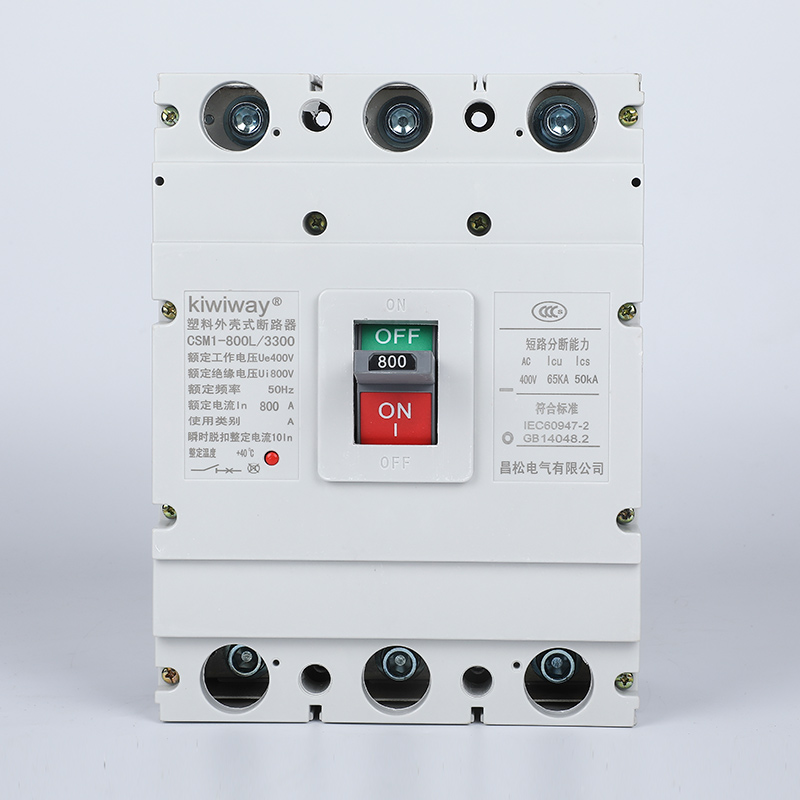
Most people assume that a standard installation guarantees maximum security, but there's a subtle slip-up that often gets ignored. The typical mounting procedure, while quick and efficient, tends to rely on generic brackets and anchor points that aren't optimized for the specific environment. Over time, vibrations, temperature shifts, or even minor impacts can cause these connection points to loosen imperceptibly. This gradual degradation isn't obvious during a routine visual check, yet it significantly undermines the overall reliability of the system, leaving it vulnerable when it's needed most.
Another aspect seldom discussed is the impact of cable routing within the housing. In many off-the-shelf setups, wires are tucked away without much thought given to strain relief. Sharp bends or constant pressure on connectors lead to micro-fractures in the conductors, creating intermittent faults that are a nightmare to diagnose. Because these issues develop slowly, they fly under the radar during initial testing. By the time the protection fails, the root cause is buried under layers of "it was installed according to the manual," making it clear that simply following the standard playbook isn't enough.
The real weakness often stems from a lack of adaptation to real-world conditions. Standard guides are written for ideal scenarios—clean, stable, and climate-controlled spaces. But actual sites are dusty, humid, or subject to unexpected movement. When installers rigidly adhere to default specifications without accounting for these factors, they inadvertently create stress points and corrosion hotspots. A slight modification, like using a different sealant or adding a flexible conduit, could extend the lifespan dramatically. It's this gap between textbook procedure and practical wisdom that silently erodes the protection you thought you had.
Matching Breakers to Load Types Without the Usual Guesswork
Selecting the right breaker can feel like a shot in the dark if you don’t fully understand what you’re powering. Resistive loads like heating elements or incandescent lights behave differently than inductive loads such as motors or transformers. The latter can draw inrush currents many times higher than their running amps, which standard breakers might misinterpret as a fault. That’s why getting familiar with load characteristics upfront eliminates the trial-and-error approach that leads to nuisance trips or, worse, equipment damage.
Manufacturers often rate breakers for specific load profiles to account for these quirks. For instance, a high-inrush breaker might have a delayed trip curve that allows temporary surges without flinching, while fine electronics demand a breaker that responds fast to shorts but holds steady during normal operation. There’s no universal ‘best’ breaker—only the one that fits the load’s personality. Once you map the load’s start-up behavior and steady-state draw to the breaker’s time-current curve, the matching becomes predictable instead of guesswork.
An often-overlooked factor is the environment. Dust, moisture, and extreme temperatures can alter a breaker’s performance just as much as the load itself. If you’re pairing a breaker with a motor in a cold warehouse, you might need to derate its capacity or choose a design built for thermal extremes. By considering these real-world conditions alongside the load type, you sidestep the head-scratching that happens when a perfectly sized breaker keeps tripping for no obvious reason.
Arc Faults and Ground Faults: Where Basic Breakers Stop Working
Standard circuit breakers are designed to trip when they detect an overload or a short circuit, but they have a blind spot when it comes to certain dangerous electrical conditions. Arc faults, for instance, occur when electricity jumps across a gap in a damaged wire or loose connection, generating intense heat that can ignite surrounding materials. These arcs often produce waveforms too erratic or low in current to trigger a thermal-magnetic trip, yet temperatures can exceed 10,000 degrees Fahrenheit. Ground faults, on the other hand, involve unintended paths to ground—like a person touching a live wire—where the current leakage might be as low as a few milliamps, far below a typical breaker's 15- or 20-amp threshold. In both cases, the breaker remains closed, leaving a hidden fire or shock hazard unaddressed.
The mechanisms inside a basic breaker simply aren't tuned to catch these subtle anomalies. An overload trip relies on a bi-metallic strip bending from gradual heat buildup, while a short circuit triggers an electromagnetic coil to instantly separate the contacts. Neither of these reacts to the high-frequency, irregular signature of an arc fault, nor to the small imbalances in current that characterize a ground fault. This is why specialized devices like Arc Fault Circuit Interrupters (AFCIs) and Ground Fault Circuit Interrupters (GFCIs) were developed—they use electronic sensors to continuously monitor for unique waveform patterns and leakage currents. Without them, a worn extension cord behind a couch can arc silently until flames erupt, or a hairdryer slipping into a sink can deliver a fatal shock before any protective action occurs.
Modern electrical codes increasingly mandate these advanced devices in residential settings, recognizing that basic breakers alone can't provide comprehensive protection. AFCIs are now required in bedrooms and living areas of new homes to prevent fires from arc faults, while GFCIs have long been essential in kitchens, bathrooms, and outdoor outlets to guard against electrocution. The evolution highlights a crucial gap: a circuit that appears safeguarded by an ordinary breaker may, in truth, be vulnerable to faults that evolve slowly or mimic normal loads. Understanding where basic breakers stop working isn't just an academic point—it's the difference between a system that shuts off when things go wrong and one that lets disaster unfold silently.
Thermal vs. Magnetic Trip Mechanisms: The Functional Divide
At the heart of every circuit breaker lies a decision point: how to distinguish a harmless inrush from a genuine fault, and a slow cooking overload from a dead short. The thermal element watches the first scenario, relying on a bimetallic strip that bends predictably as current-driven heat accumulates. It’s inherently sluggish, designed that way to ignore the brief surge of a motor starting but to react when excessive current lingers, warping the strip enough to trigger a trip. This delayed action mirrors the thermal time constant of the conductors it protects—an elegant, passive feedback loop that has remained largely unchanged for decades.
In contrast, the magnetic trip is the fast-twitch muscle of the mechanism. A solenoid coil carries the line current; under normal loads, its magnetic pull is negligible. But when a short-circuit current surges through—often ten times the rated load or more—the field intensifies abruptly, snapping a plunger or armature against the latch with almost no delay. This instantaneous response clears the fault before damage propagates, often in less than a half cycle. Where the thermal element safeguards against insidious overheating, the magnetic element defends against the explosive force of a bolted fault, prioritizing speed over subtlety.
The functional divide isn’t just academic—it dictates how a breaker is sized and applied in real installations. Engineers routinely count on the thermal trip’s I²t characteristic to let temporary overloads slide while still catching sustained excess, and they trust the magnetic trip’s fixed or adjustable threshold to ignore transformer inrush but intercept true faults. A breaker that relies solely on either mechanism would be a single-purpose device; together they form a layered defense that respects the thermal inertia of wiring and the destructive potential of high-current spikes. This blend of patience and immediacy, born from simple electromechanical physics, remains the bedrock of low-voltage distribution even as electronic trip units gain ground.
Testing Schedules: How Often to Exercise Your Breakers for Reliability
Circuit breakers aren’t just set-and-forget devices—they need regular movement to stay reliable. For most residential breakers, a simple manual trip and reset every six months is enough to prevent the internal mechanisms from seizing up. This quick cycle clears any light oxidation on the contacts and ensures the spring-loaded trip mechanism stays responsive. Think of it like cracking open a rarely used valve to keep it from sticking.
Commercial and industrial environments, where breakers face higher loads and more frequent operation, demand more proactive attention. A reliable schedule here might involve exercising breakers quarterly, ideally during planned maintenance shutdowns. Some facilities even implement monthly checks on critical circuits, using a thermal imaging camera to spot early signs of overheating—a sign that connections are degrading and a manual trip may be overdue.
The goal is consistency without overdoing it. Exercising a breaker too often can wear down the mechanical parts prematurely, while neglecting it invites failure just when you need it most. The sweet spot depends on the environment: dusty or humid settings accelerate the need, while climate-controlled panels can stretch intervals a bit longer. Regardless, logging each exercise helps track wear and reminds you it’s time to act—not when a fault occurs, but before it ever has a chance.
FAQ
It’s like a silent guardian that cuts off electricity the moment it detects an overload or short circuit, preventing wires from overheating and reducing fire risks.
Watch for frequent tripping without clear cause, a burning smell near the panel, scorch marks, or if the switch feels loose or won’t stay reset—those are all red flags.
Standard breakers guard against overloads and short circuits, while GFCI breakers add personal protection by tripping almost instantly if current leaks, like when water and electricity meet.
While a confident DIYer can handle a straightforward swap with proper safety steps, any hesitation or complex panel work means it’s smarter—and safer—to hire a licensed pro.
That’s a clear overload: both appliances draw heavy current on the same circuit, so the breaker does its job and shuts things down before the wires get too hot.
Match the breaker’s amp rating to the circuit’s wire gauge—for example, 14-gauge wire pairs with 15 amps, and 12-gauge with 20 amps. Mismatching invites problems.
A slight warmth under heavy load can be typical, but if it’s noticeably hot or you can’t keep your hand on it, switch it off and get an inspection—that’s a warning sign of trouble.
First, reset it firmly. If it trips again with nothing plugged in, you likely have a hard fault in the wiring or a dead short—stop messing with it and call an electrician immediately.
Conclusion
A circuit breaker’s rating plate only tells part of the story. True performance hinges on environmental factors, installation quality, and the specific demands of the connected load. Even a correctly sized breaker can fail to protect if terminal connections are loose or if it’s mounted in an enclosure that restricts airflow. The overlooked flaw in many standard installations is poor workmanship—under-torqued lugs, mismatched conductor sizes, or excessive ambient heat—all of which increase internal resistance and cause nuisance tripping or, worse, a failure to open under fault conditions. Matching a breaker to the load goes beyond ampacity; motor inrush, capacitive loads, and harmonics demand careful selection of trip curves and interrupting ratings. Without understanding these nuances, protection becomes guesswork that leaves systems vulnerable.
Even when breakers are correctly specified, they have inherent blind spots. Arc faults and ground faults require dedicated detection circuits that standard thermal-magnetic breakers lack, meaning a smoldering arc or low-level leakage current can persist indefinitely. The functional divide between thermal and magnetic trip mechanisms is central to reliable protection: thermal elements handle sustained overloads by mimicking the heat buildup in wiring, while magnetic mechanisms respond instantly to massive overcurrents. Neither, however, can self-assess its mechanical readiness. Regular manual testing—tripping and resetting breakers on a schedule dictated by environment and criticality—is the only way to confirm they will operate when needed. A maintenance program that neglects exercising breakers undermines the entire safeguard, turning a potentially life-saving device into a false promise.
Contact Us
Contact Person: Tonglun Chen
Email: [email protected]
Tel/WhatsApp: 8618906642555
Website: https://www.cncsele.com