
OEM Juice Production Line Maker: How to Choose the Right One for Your Business
2026-07-16
Selecting an OEM juice production line maker is a decision that can define your business’s efficiency and product quality. With countless options on the market, knowing what to look for—beyond just price—is essential to avoid costly mistakes. At INTOP Machinery, we’ve seen firsthand how the right partnership transforms production from a bottleneck into a competitive advantage. This guide cuts through the noise, offering practical insights to help you evaluate manufacturers and secure a line that truly fits your goals.
Pinpointing Your Production Scale and Bottling Needs
Getting a clear picture of your production volume isn’t just about counting bottles—it’s about matching your equipment to the rhythm of your business. Think about your peak output days, not just averages. If you’re running a small-batch distillery, you might need a setup that handles 500 bottles a day with finesse, not the brute speed of a massive line. The key is to avoid over-investing in capacity you’ll rarely use or, worse, under-sizing and creating a bottleneck that stalls your growth.
Bottling needs go beyond the filler itself. The type of bottle, closure, and label complexity can dictate the entire line design. A winery using custom-shaped bottles and hand-applied wax seals has vastly different requirements than a brewery filling standard aluminum cans. Consider future product launches too—flexibility now can save a costly retrofit later. Sometimes, a semi-automatic machine that adapts to multiple formats is smarter than a fully automatic one tied to a single spec.
It’s tempting to copy a competitor’s setup, but your space, workforce, and energy costs might tell a different story. Small footprint machines with quick changeovers can be worth their weight in gold if your facility is tight or your staff is lean. Instead of chasing the highest rated speed, look at real-world efficiency and downtime. A slower line that runs reliably with minimal maintenance often outperforms a high-speed headache that’s constantly breaking down.
Matching Equipment Capabilities to Your Fruit Varieties
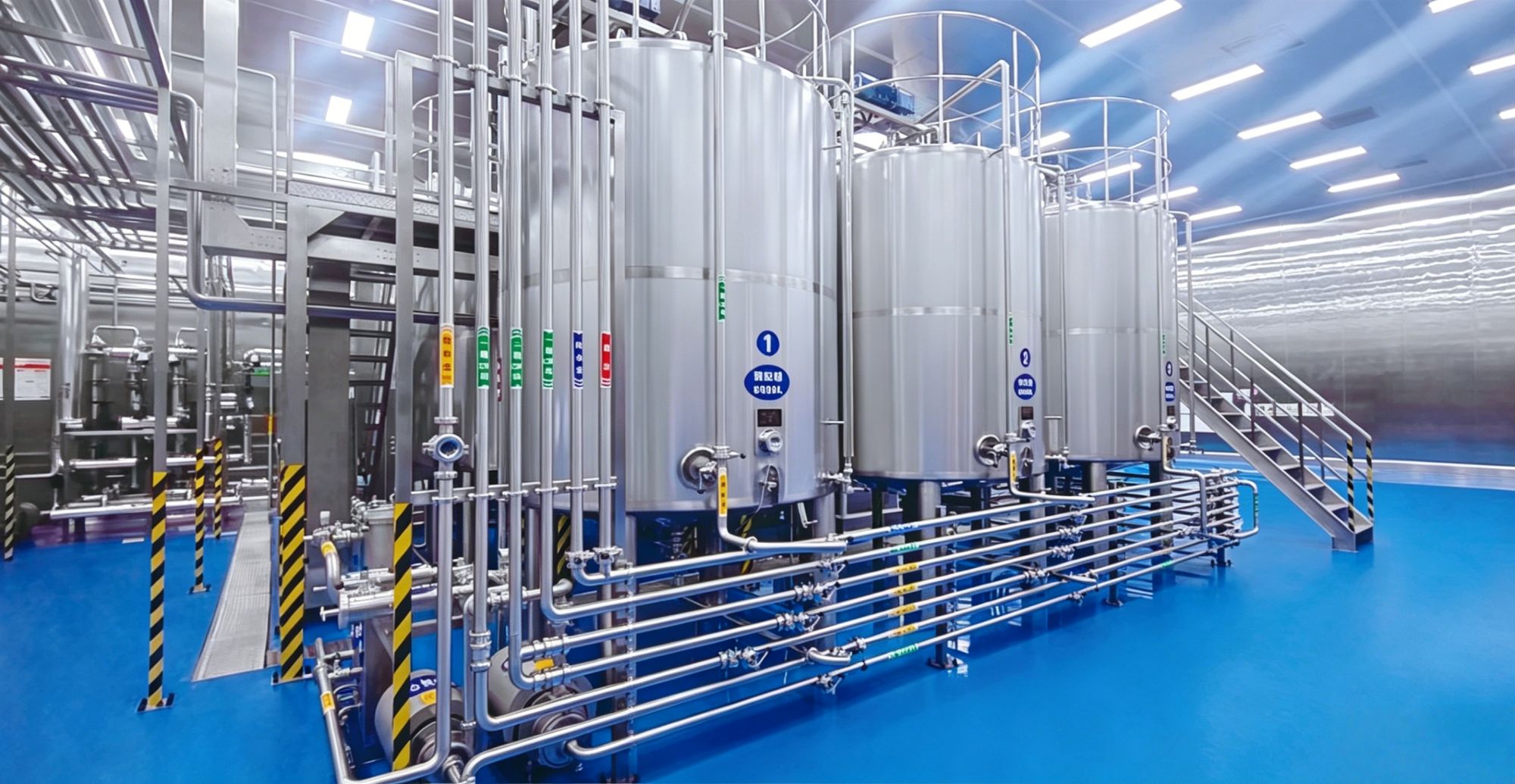
Not every piece of machinery handles all fruit types equally. Apples and pears, for instance, demand gentle rollers and soft brushes to preserve their natural wax coating and prevent bruising, while citrus fruits are far more resilient and can move through faster, more aggressive sorting lanes. Understanding these material differences ensures you’re not just buying equipment, but the right setup for the specific textures and densities of your harvest.
Stone fruits like peaches and nectarines introduce their own nuance: their delicate flesh requires padded receiving bins and low-drop transfers to avoid the inevitable damage that shows up days later in cold storage. On the other hand, robust fruits such as kiwifruit or even avocados might call for high-capacity systems with adjustable speed drives, allowing you to ramp up throughput without sacrificing accuracy when the season peaks.
Matching capabilities also extends to size grading and optical sorting. A blueberry grower will prioritize optics that detect subtle color variations and reject overripe berries, whereas a mango packer needs volumetric sizing that accounts for oblong shapes. By treating your fruit varieties as design inputs—not an afterthought—you avoid surprises during installation and get cleaner, higher-quality packs that align with supermarket specifications from day one.
Evaluating Build Quality and Long-Term Reliability
When you're considering a product that's supposed to last, build quality is the first thing you should scrutinize. Look beyond the spec sheet—feel the materials in person if possible, check for uniform finishes, and pay attention to how components fit together. A device with tight seams, minimal flex, and premium textures often signals thoughtful engineering rather than cost-cutting shortcuts.
Long-term reliability goes hand in hand with the choice of internal components and the manufacturer's track record. Search for teardown videos or reliability surveys from independent sources to see which parts are prone to failure. Capacitors, hinges, and battery cells tend to be weak points; a brand that invests in higher-grade elements and thorough testing usually sees fewer returns and happier customers years down the line.
Real-world aging patterns matter just as much as factory condition. Pay attention to how finishes hold up against scratches, how ports respond to repeated plugging, and whether software support timelines align with your expected usage period. A product that still functions smoothly after two years of daily use, with minimal physical degradation and accessible repair options, is likely a better long-term companion than one that crumbles under normal wear.
Navigating Customization and Flexible Configurations
Balancing the need for tailored solutions with the desire for simplicity often feels like walking a tightrope. We’ve all encountered platforms that claim to be customizable but quickly reveal their rigidity once you move beyond surface-level tweaks. True flexibility doesn’t come from piling on endless options—it emerges when the system’s design anticipates real-world use cases without burying you in complexity. That means sensible defaults that actually fit, paired with the ability to override precisely where it matters.
Configurations should feel more like building with Legos than wrestling with a tangled web of menus. Instead of forcing you down a single path, a well-architected suite of tools lets you compose workflows that match your mental model. You might start with a template that already knows the difference between a marketing team’s needs and an engineering squad’s, then adjust the nuances—notification thresholds, access tiers, data retention rules—without having to decipher cryptic jargon.
The real test isn’t how many checkboxes you find on a settings page; it’s how easily you can forget the interface is even there. When done thoughtfully, customization fades into the background, letting your team focus on what they actually need to accomplish. After all, the goal isn’t to master a tool’s quirks—it’s to shape it so naturally that it becomes an unobtrusive extension of your own process.
Scrutinizing After-Sales Support and Spare Parts Access
When you buy equipment for your business, the real test isn't how it performs on day one—it's what happens when something goes wrong six months in. A supplier's after-sales support can make or break your operations. Some brands shine here, with dedicated regional teams that answer calls in minutes, not days, and techs who actually listen before rattling off a script. Others treat support as an afterthought, leaving you stuck with a machine that's little more than an expensive paperweight while you wait for a callback that never comes.
Spare parts availability is another piece of the puzzle that's often overlooked until the moment you need a critical component. The best manufacturers maintain stocking programs that keep common wear items and failure-prone parts on the shelf locally, not buried in a warehouse halfway across the world. But here's the catch: some brands will sell you the machine at an attractive price, only to surprise you later with lead times measured in weeks or months for what should be routine replacements. We've seen operations grind to a halt over a $2 seal that nobody bothered to stock.
Look beyond the glossy brochures and ask hard questions before signing. How many field service engineers are within a day's drive of your facility? Can you buy critical spares outright rather than being forced into a service contract that puts control in the vendor's hands? A little digging upfront reveals which partners have built their business on real post-sale reliability—and which ones are just selling boxes.
Balancing Upfront Investment with Operational Costs
Every infrastructure decision involves weighing immediate capital outlay against ongoing expenses. It’s tempting to minimize upfront spending to keep initial costs low, but that often leads to higher operational burdens down the road—more maintenance, frequent replacements, and energy inefficiencies that quietly drain budgets. Conversely, a larger initial investment in quality materials, energy-efficient systems, and durable designs can slash long-term operating costs, sometimes paying for itself faster than expected.
The real challenge is finding the break-even point where the premium paid today yields meaningful savings tomorrow. This requires looking beyond sticker prices and factoring in lifecycle costs—energy consumption, maintenance labor, component lifespan, and even disposal. For instance, a cheaper pump might seem attractive until its higher electricity use and shorter service intervals eat away the initial advantage within a couple of years. Smart buyers run the numbers over a 10- or 20-year horizon, often discovering that spending 20% more upfront can cut total ownership costs by half.
There’s also a middle ground: phased investments or modular approaches that spread costs over time while still targeting long-term efficiency. This lets organizations balance cash flow constraints without locking themselves into a cycle of high operational waste. Ultimately, the goal isn’t to minimize one cost bucket but to optimize the whole, aligning spending patterns with both financial realities and performance expectations.
FAQ
Look beyond the basic specs: examine their engineering depth, automation level, and how they handle varying fruit types or pulp consistencies. Ask for live demos or recent installations that mirror your scale, and probe their approach to energy efficiency and waste reduction—these details separate a capable builder from one just assembling parts.
Insist on a granular quotation that breaks down design, installation, training, and especially after-sales support. Clarify what’s included in the warranty—parts, labor, travel. Ask about typical spare parts consumption and lead times, and build a buffer for unforeseen civil works or utility upgrades; a transparent partner will walk you through these before signing.
Genuine customization shows up in the engineering conversations: they ask about your raw material sourcing, target bottle shapes, cap types, and even local climate conditions that affect cooling or pasteurization. They’ll propose tailored layouts, integrate your preferred CIP stations, and adapt software recipes. If all you see are pre-configured catalogs with minimal changes, you’re likely getting a repackaged solution.
Citrus processing differs hugely from berry or tropical fruit lines—each has unique peeling, extraction, and turbidity challenges. A maker experienced with high-pulp orange juice won’t necessarily nail a clear apple juice line. Past projects in your specific niche mean they’ve already solved the enzymatic, sediment, and flavor retention hurdles, saving you months of trial and error.
Request time-stamped video tours of running lines, detailed logs from existing installations, and third-party validation like lab reports on final product quality. Offer to connect with past clients for candid feedback. Many makers now offer remote proof-of-concept runs where you send your raw material and they ship back processed samples with full data—no travel needed.
Food safety standards vary widely—FDA, EU hygiene norms, or regional halal certifications require specific material grades, traceability, and cleanability. A manufacturer familiar with your target market’s inspection protocols can pre-engineer compliance into skid designs, tank finishes, and documentation. This avoids costly retrofits and accelerates your own certification timeline.
Dig into their regional service network: Do they have local technicians, or is every fix a flight away? Ask about critical spares shelf life, typical shipping times for non-stock items, and whether they offer predictive maintenance services using IIoT. Request a sample service-level agreement and see how they handle emergency downtime; a 48-hour response is worthless if it’s only by email.
Choose a framework that allows easy expansion—modular conveyors, extra filler heads, and space for a second pasteurizer. Ensure control systems are open-architecture (like Siemens or Rockwell) to avoid vendor lock-in. Discuss roadmap alignment: will they support new package formats (aseptic cartons, pouches) or alternative processes (HPP)? Future-proofed lines grow with your portfolio, not against it.
Conclusion
When selecting an OEM juice production line, start by clearly defining your output targets and packaging requirements. Whether you’re bottling in glass or cartons, the line’s speed and capacity must align with your market demands—oversizing wastes capital, while undersized lines create bottlenecks. Next, examine how well the machinery handles your specific fruit varieties; delicate berries, fibrous mangoes, and hard apples each demand tailored extraction methods, so verify that the maker has proven experience with your raw materials. Beyond performance, scrutinize the build quality: stainless steel thickness, welding consistency, and component brands directly impact longevity. A line that cuts corners here will eventually cost more in downtime and repairs.
At the same time, prioritize manufacturers that offer flexible configurations rather than rigid, off-the-shelf systems. A truly customizable line can evolve with your business—adding a concentrator today, a pasteurizer later—without requiring a full overhaul. Such adaptability is only viable if the supplier provides strong after-sales support, including readily available spare parts and responsive technical service. Before signing, ask about common part lead times and whether they maintain local inventory. Finally, weigh the upfront investment against ongoing operational costs: energy-efficient motors, water recycling modules, and low-maintenance designs may raise initial quotes but slash long-term expenses. The goal is a line that not only fits your current budget but also keeps producing profitably for years.
Contact Us
Contact Person: Laura
Email: [email protected]
Tel/WhatsApp: +86 13957758832
Website: https://www.intopmachinery.com