
Laser Safety Essentials: How China Laser Safety House Protects Your Workplace
2026-06-01
In today's high-tech industrial landscape, laser systems are indispensable, yet their invisible hazards can pose serious risks to unprotected eyes and skin. From manufacturing floors to research labs, ensuring proper safety measures is not just compliance—it's a critical investment in your team's well-being. That's where LASERPAIR steps in, offering next-level protective solutions tailored to modern workplaces. Discover how China Laser Safety House integrates cutting-edge technology with practical safeguards to keep your operations both productive and secure.
The Invisible Threat in Every Laser-Intensive Workspace
When we picture a laser-intensive space, cutting beams and intricate engravings often steal the spotlight. But lurking behind that high-tech brilliance is a hazard most operators never consider until it’s too late: the plume. Every time a laser interacts with material, it vaporizes a cocktail of particulates, fumes, and toxic gases—things like benzene, formaldehyde, and even hydrogen cyanide can show up depending on what’s being processed. This airborne mix drifts through the room, settling into corners, equipment, and lungs, often without any visible sign. It’s the kind of slow, compounding risk that doesn’t register on standard safety checklists, yet it quietly chips away at air quality and long-term health.
The real kicker? Standard ventilation rarely catches the finer particles. High-volume air handlers might pull away the visible haze, but the sub-micron stuff—the fraction that can slip deep into respiratory tissue—tends to recirculate or hang in dead zones. Workspace layouts don’t help: a poorly placed partition, a corner workstation, or even a stack of inventory can create eddies where contaminants pool. People assume an open floor plan and a couple of exhaust vents are enough, but without smoke capture tethered directly to the laser head or fume extraction arm positioned precisely, the room becomes a slow-moving soup of irritants. It’s not dramatic in the moment, yet the cumulative effect shows up in headaches, respiratory irritation, and materials safety data sheets that nobody reads twice.
Hardware alone can’t fix it. The most overlooked factor is how the daily rhythm of a shop undermines even well-designed systems. Filters clog, extraction hoses get pinched, and alignment drifts because people are too busy to pause. The threat doesn’t come from a one-time failure; it’s baked into how work flows when lasers run nonstop. Real protection means accepting that air quality isn’t a set-and-forget deal. It demands a habit of checking capture velocities at the nozzle, swapping filters before they’re choked, and questioning whether that “clean” smell is just masking volatile organic compounds. Without that mindset, every laser pulse adds an invisible deposit into the room’s atmosphere—one that won’t show up on a maintenance log but will absolutely collect in anyone who breathes it.
Why Generic Safety Gear Often Creates a False Sense of Security
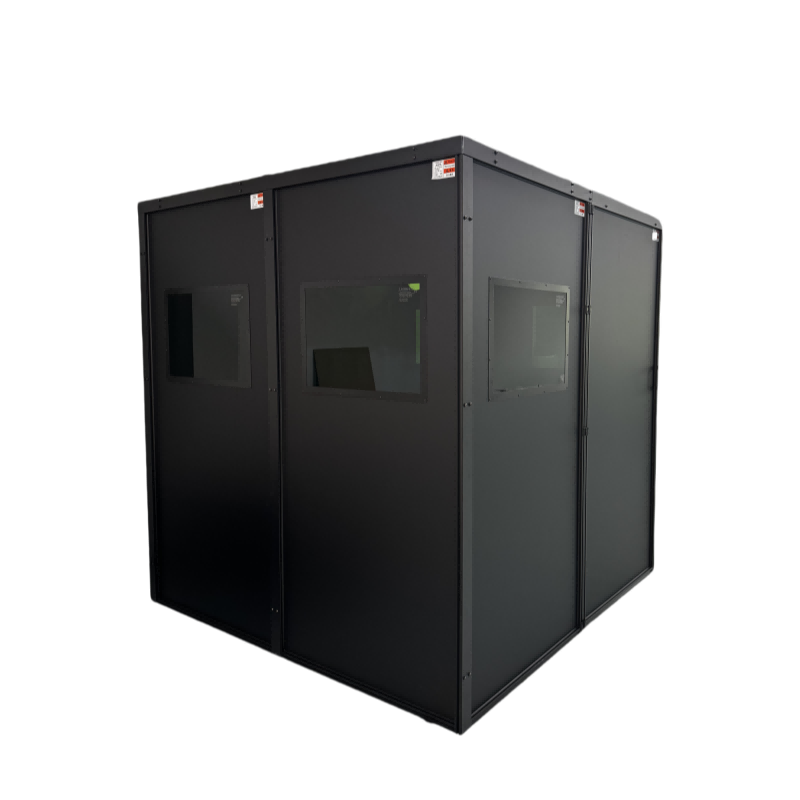
Many workers assume that any safety equipment labeled as protective will keep them safe, but generic gear often fails to account for the specific hazards of a job. When companies purchase one-size-fits-all solutions, the equipment might meet basic regulatory standards without offering real protection against the unique risks present in a particular environment. This mismatch creates a dangerous illusion of safety, as workers feel shielded while remaining exposed to serious harm.
The problem deepens with gear that isn't tailored to individual body types or movement patterns. Ill-fitting gloves, helmets that slip during work, or harnesses that aren't adjustable can all lead to catastrophic failures at critical moments. Moreover, generic materials may degrade faster under certain chemical or temperature conditions, a fact that isn't always obvious to the user. The employee trusts the gear because it looks the part, not realizing that its design shortcuts are a ticking clock.
Over time, this false sense of security breeds complacency. When workers rely on substandard equipment, they might skip additional precautions or ignore warning signs because they assume they're already protected. This psychological shift is perhaps the most insidious consequence, as it turns a physical vulnerability into a habitual risk. Real safety demands gear that's not just present, but precisely engineered for the task at hand.
How China Laser Safety House Engineers Outsmart Common Workplace Risks
At China Laser Safety House, engineers have flipped the script on hazard prevention by developing a dynamic beam-path visualization system that overlays real‑time risk zones onto workers’ augmented‑reality glasses. Instead of relying on static warning signs or scheduled audits, the team mapped the unpredictable scatter patterns of high‑power lasers using twin‑sensor arrays that detect both direct and reflected energy. The result is a live, color‑coded overlay that shifts as equipment adjusts, giving operators an instinctive sense of where not to stand—without needing to memorize lockout procedures.
What sets their approach apart is a training method built around narrative‑driven simulations that mirror the actual shop‑floor chaos. Rather than dry manuals, new hires walk through branching scenarios where a missed interlock check leads to a visible beam‑path breach, complete with the sound of a blaring alarm and a vibrating wristband. The immersive drills are continually updated with incident reports from across the industry, turning every near‑miss into a shared learning moment. This storytelling angle ingrains safe habits faster because it taps into the brain’s natural response to consequence, not just compliance.
Looking beyond goggles and curtains, the team also tackled complacency by embedding smart sensors directly into protective garments. Their latest coveralls measure micro‑fluctuations in temperature and ambient light, triggering a gentle haptic pulse on the shoulder if a worker lingers near a reflective surface for too long. It’s a subtle nudge that keeps safety top‑of‑mind without interrupting workflow, and the data feeds back into a plant‑wide dashboard that flags trending risk patterns long before they turn into accidents. By blending physical feedback with predictive analytics, they’ve created a system that quietly outthinks the hazards most people never see coming.
Installation Mistakes That Compromise Even the Best Equipment
It’s tempting to assume that top‑tier gear will perform flawlessly out of the box, but that confidence often crumbles the moment shortcuts creep into the setup. A rushed alignment or a bracket tightened just a bit too eagerly can introduce stresses that wear down precision components long before their time. Even the most expensive machinery relies on the humble bolts, feet, and clearances to translate design intent into real‑world dependability.
One common slip is overlooking the environment itself. Humidity, vibration from nearby equipment, or a slightly uneven floor might seem trivial on day one, yet they steadily erode bearings, warp seals, and invite corrosion. Another is cable mismanagement: power and signal lines draped carelessly not only risk intermittent faults but also turn routine maintenance into a tangled guessing game. The equipment didn’t leave the factory with those vulnerabilities—they were gifted to it during installation.
The fix rarely demands exotic tools or an engineering degree. It’s about leaning into patience—double‑checking torque specs, verifying level with a machinist’s precision, and giving connections a gentle wiggle test. Treat the installation as the first act of operation, not a mere prelude, and the equipment tends to return the favor with years of quiet, faithful service.
The Straight Line From Proper Training to Incident-Free Operations
Training isn't just a box to check—it's the foundation that keeps daily work predictable and safe. When crews understand not only what to do but why it matters, they start spotting risks before they turn into problems. Proper training bridges the gap between knowing a procedure and instinctively making the right call under pressure. That shift from memorizing steps to internalizing good judgment is what separates a tight operation from one that constantly fights fires.
Real capability grows from hands-on practice and clear, consistent coaching. It's not about drowning people in manuals or endless slide decks; it's about giving them the tools to build muscle memory for the critical moments. When training is designed around real scenarios and honest feedback, teams stop waiting for instructions and start owning their part of the process. That ownership creates a natural barrier against incidents—people become more aware of their surroundings, more willing to speak up, and quicker to adapt when conditions change.
An incident-free record isn't luck—it's the result of a culture where learning and performance are wired into the day-to-day. Every drill, every debrief, and every quiet shift where nothing goes wrong is evidence that the training worked. The straight line from preparation to safe execution isn't a metaphor; it's visible every time someone makes the right choice without hesitation. And that line stays strong only when organizations keep investing in their people long after the initial certification is done.
Proof in Patterns: Where Proactive Protection Pays Off
Spotting recurring irregularities before they escalate isn’t just cautious—it’s a competitive edge. In industries where downtime or breaches carry massive costs, the real proof emerges from the quiet absence of disruptions. Teams that map out subtle shifts in user behavior, transaction flows, or system loads often catch what automated alerts miss. They move from firefighting to fine-tuning, and the payoff shows up in steadier operations and fewer late-night calls.
Consider how a retailer avoided a holiday-season meltdown by noticing a pattern: gift card redemptions were spiking in odd geographic clusters days before a coordinated fraud attempt. The early nudge let them tighten verification without slowing legitimate sales. Contrast that with competitors who only reacted after the chargebacks piled up. The difference isn’t just money saved—it’s the trust that stays intact when customers never see a glitch.
Proactive protection builds its case over time, not through a single dramatic save. It shows up in lower churn rates, fewer compliance headaches, and the kind of institutional memory that turns raw data into a shield. When a manufacturing firm reconfigures its supply chain based on a faint signal of regional port delays, the ROI isn’t instantly visible. But six months later, when shelves stay stocked while others scramble, the pattern’s wisdom becomes impossible to ignore.
FAQ
Lasers are powerful tools, but even a split-second exposure can cause permanent eye damage or skin burns. Without proper safeguards, scattered radiation and high-intensity beams turn a productive workspace into a hazardous zone.
Rather than offering generic barriers, they design custom enclosures that integrate with existing workflows. This means protection is not an afterthought—it becomes a seamless part of daily operations.
Absolutely. China Laser Safety House assesses wavelength, power output, and beam path for each setup. The resulting enclosure is built to match the specific laser, ensuring full containment without interfering with functionality.
The choice of materials is everything. Their enclosures use specialized acrylics and metal composites that absorb or reflect dangerous wavelengths, tested rigorously to avoid degradation over time.
They incorporate interlock systems that immediately shut down the laser if a panel is opened unexpectedly. Combined with warning indicators and delayed restart protocols, it creates a failsafe environment for technicians.
They often suggest a layered approach: training programs for staff, administrative controls like signage and restricted access zones, and regular audits to ensure the enclosure remains uncompromised.
Poorly designed setups can indeed cause delays, but China Laser Safety House prioritizes ergonomic access and quick-change fixtures. The result is a workspace that's both fast and secure.
Start with a site evaluation to map out beam paths and identify vulnerabilities. A tailored consult usually reveals that protection doesn't have to be a trade-off between safety and productivity.
Conclusion
Laser-intensive workspaces harbor invisible hazards that standard safety measures rarely address. Many facilities settle for generic protective gear, mistakenly believing that a pair of tinted glasses provides total defense. The truth is, every wavelength demands its own precise attenuation, and off-the-shelf solutions often create a dangerous sense of complacency. China Laser Safety House engineers recognize that genuine protection starts with understanding how scattered radiation and stray reflections behave in a real operating environment. Instead of selling one-size-fits-all gear, they design custom enclosures, barriers, and interlocks that outsmart risks at the source, replacing luck with physics-based certainty.
Even the most advanced equipment can fail when installed incorrectly or used without proper training. Common mistakes—such as misaligned sensors, gaps in protective curtains, or overlooked maintenance—turn well-intentioned setups into hidden traps. China Laser Safety House bridges this gap by combining precision installation with practical, hands-on education. Their team identifies weaknesses that generic manuals miss and trains operators to spot hazards before they escalate. This dual focus on flawless setup and informed workers creates a pattern where proactive protection becomes routine. The result is a measurable drop in incidents, proving that investing in expert guidance and tailored safety systems is not just a precaution—it’s the most direct path to a workplace where accidents are the exception, not the rule.
Contact Us
Contact Person: Jenny
Email: [email protected]
Tel/WhatsApp: +86 13537713281
Website: https://www.laserpair-safety.com/