
High-Quality Solar Lawn Light Manufacturer for Durable and Eco-Friendly Outdoor Lighting
2026-08-20
A lawn that glows after dusk without wires or wasted energy sounds like a small luxury—until you realize how many solar lights fail after one season. That’s where SRS changes the story. As a high-quality solar lawn light manufacturer, SRS focuses on durable and eco-friendly outdoor lighting that actually lasts, season after season. Before we dig into the details, ask yourself: is your outdoor lighting truly built to endure?
Weatherproof Solar Lights Built for Harsh Backyards
When the wind picks up and the rain slants sideways, most outdoor lights give up. These aren't most lights. Each unit is sealed tight against moisture, with a double-layered housing that shrugs off downpours, snowmelt, and even the occasional sprinkler overspray. The solar panel sits under a tempered glass shield, angled to shed water fast so it keeps charging through a storm instead of going dark.
Harsh backyards throw more than water at you. Dust, mud, and frost can crawl into tiny gaps and kill a weaker fixture. That's why the casing here uses a snap-lock design with a silicone gasket—no screws to rust, no seams for grit to grind into. The stake is thick aluminum, not flimsy plastic, so it won't bend when the ground freezes or when a dog tears past chasing a squirrel.
Heat matters too. In full July sun, cheap solar lights bake and their batteries swell. These run a heat-dissipating backplate and a smart charge controller that throttles down when the temperature spikes. The result: they work from a subzero January night to a scorching August afternoon, with the same warm, steady glow you'd expect from fixtures twice the price.
Why Our Factory Uses Recycled Aluminum and Tempered Glass
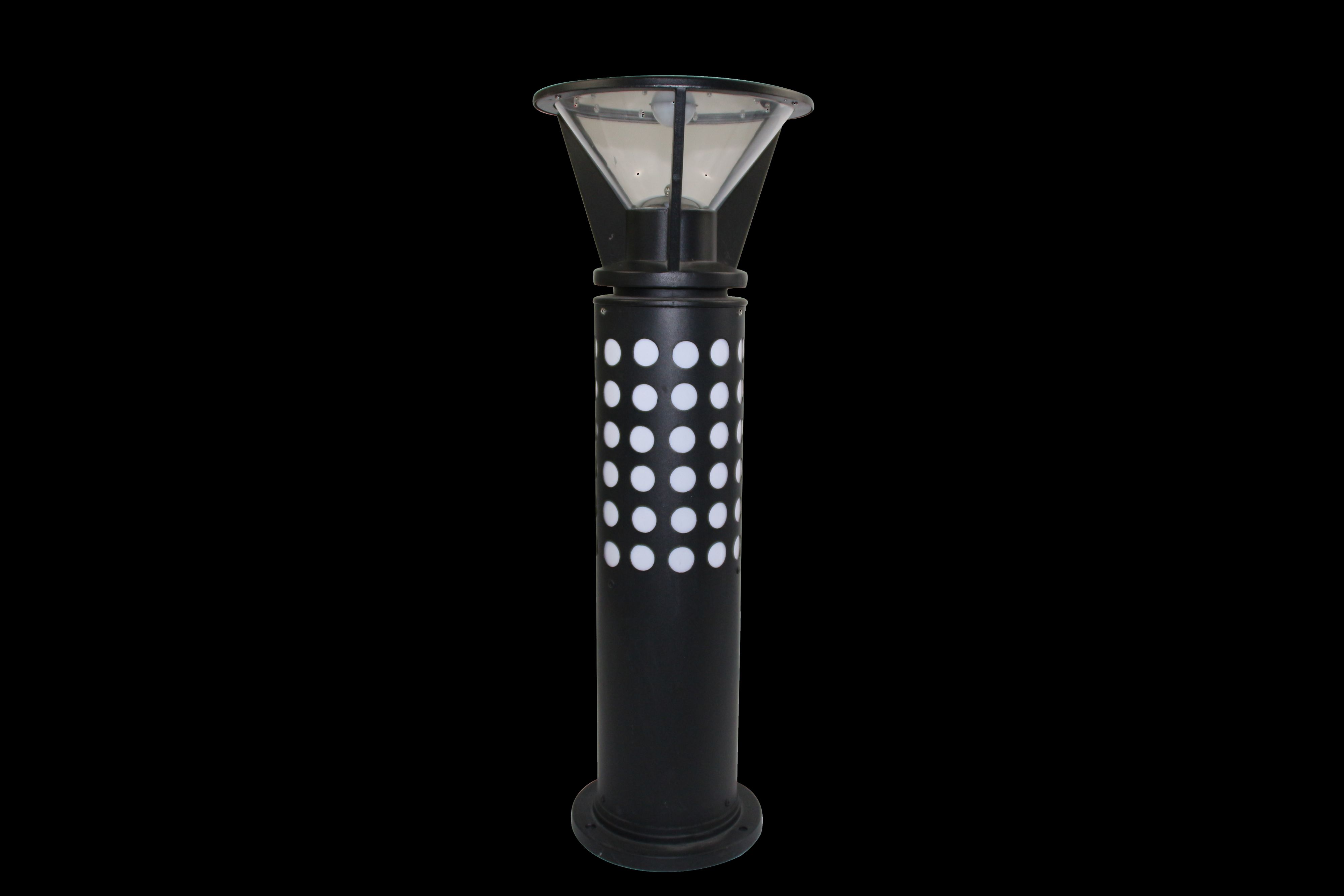
Switching to recycled aluminum was a practical decision, not just an environmental gesture. Producing new aluminum from raw ore consumes massive amounts of electricity, while recycling uses only a fraction of that energy. The recycled material we source goes through strict sorting and purification, so the final sheets retain the same tensile strength and corrosion resistance as virgin metal. This means our products stay lightweight but tough, without the hidden cost of excessive mining.
Tempered glass was chosen for its safety profile and resilience. When it breaks, it shatters into small, relatively harmless chunks instead of sharp shards, which reduces the risk of injury in homes or workplaces. It also handles thermal stress far better than standard glass, so it won't crack when exposed to sudden temperature changes. These qualities make it a natural fit for items that need to survive daily wear and tear.
Combining these two materials gives us a production process that is both lean and dependable. We aren't chasing trends or labels; we're simply using inputs that perform well over time and can re-enter the supply chain at the end of their life. For our customers, that translates into products that hold up under real use and don't carry unnecessary environmental baggage.
Solar Panels That Keep Charging Even on Cloudy Days
Cloudy skies don't have to mean a dead battery. Modern photovoltaic cells are designed to capture diffuse light, not just direct beams. Thin-film panels, in particular, use materials like cadmium telluride or amorphous silicon that respond well to low-light conditions. Even under heavy overcast, they can trickle charge your devices, keeping your backup power ready without a sunny break.
The key is in how these panels harvest energy across a wider light spectrum. Standard crystalline panels lose efficiency fast when clouds roll in, but newer multi-junction designs layer different semiconductor materials to catch more of what little light penetrates. Some systems also pair with microinverters that optimize output per panel, meaning one shaded cell won't drag down the whole array. It's a quiet shift from all-or-nothing solar to something more patient and persistent.
For anyone living in foggy coastal areas or northern latitudes, this changes the math. You no longer need a cloudless week to justify the setup. A system that sips energy from grey skies can cover a porch light, a gate opener, or a small shed fan. It’s not about replacing the grid—it’s about keeping small things alive when the sun takes a day off.
Custom Lawn Light Designs Without the Long Lead Times
Most custom lighting projects drag on for months because every tweak means new tooling or another round of back-and-forth with an overseas factory. We handle the machining, bending, and finishing in-house, so a revised lamp head or a taller stem doesn't trigger a six-week delay. You can pick the post height, shade profile, finish color, and even the perforation pattern on the top cap, and we'll have a working sample ready in about two weeks.
The trick is keeping a library of modular bases, stems, and shade blanks that we adapt instead of starting from scratch. A customer recently needed a low-profile path light with a wider throw and a dark bronze finish; we cut the shade on our laser table, powder-coated the parts to match their existing hardware, and shipped a small pilot run in seventeen days. No minimum order drama, no endless email chains.
If you want something truly one-off, like a custom cutout that casts a specific leaf pattern on the lawn, we can do that too. You'll work directly with the fabricator, not a middleman, so changes get made on the floor the same day. That's how a custom lawn light should work: you describe it, we build it, and it shows up before the season changes.
Every Light Tested for Freeze, Heat, and Heavy Rain
Freeze chambers, heat soak ovens, and high-pressure rain tunnels aren't optional extras here — each light has to survive all three before it earns a spot on a truck.
The cold test doesn't just chill the housing; it checks whether internal seals shrink and let moisture creep in. Then the heat cycle pushes thermal expansion to the limit, watching for lens clouding or cracked solder joints. After that, heavy rain hits every angle, including the backside, because water has a habit of finding the one seam you forgot to check.
What makes the difference is running these extremes back-to-back. A light that handles a blizzard but fogs up in a summer downpour isn't good enough. The goal is simple: when you're out in it, the beam stays clear and the switch keeps working.
A Family-Owned Manufacturer Focused on Low-Impact Lighting
Our workshop sits on the same plot of land where my grandfather first started bending metal for lamp housings in 1962. Three generations later, we still answer the phone ourselves, and the person packing your order is likely the same one who cut the timber or finished the powder coat that morning. Being family-owned isn't a marketing line for us—it means every fixture carries the weight of our name, and we don't ship anything we wouldn't hang in our own kitchens.
Low-impact lighting, in our view, is mostly about saying no. No plastic diffusers that yellow in two years. No glued-in LED boards that force you to toss the whole fixture when one diode fails. No oversized boxes half full of foam. We choose materials that age well and components that can be swapped out instead of thrown away. Heat sinks are sized to keep LEDs running far below their rated temperature, which stretches lifespan and reduces replacement cycles. Packaging is cardboard and paper only. The result is a light that draws very little power, lasts long enough to be handed down, and leaves behind almost nothing when it finally retires.
Because we build in small batches, we can adjust each run to what our customers actually need rather than chasing forecasts. That keeps waste low and allows us to use local suppliers within a day's drive. It's slower than mass production, but we'd rather make fewer lights properly than many lights carelessly.
FAQ
We use thick, UV-stabilized ABS housings and polycarbonate lenses that won't yellow or crack in direct sun. The internal battery compartment is sealed against moisture and dust, and the stake is made from powder-coated aluminum so it won't bend when pushed into firm soil.
The monocrystalline panel still pulls a partial charge under cloud cover, and the lithium iron phosphate battery stores enough energy to run for roughly three nights on a full charge. Rain isn't an issue because the unit carries an IP65 rating.
The housing uses recycled ABS, the battery is replaceable and free of heavy metals, and the packaging is molded pulp instead of plastic foam. We also avoid cadmium-based solar cells, which are common in cheaper imports.
Yes, each light is self-contained. You push the stake into the ground or use the included surface-mount base, let the panel sit in sun for a day to activate the battery, and switch it on. No trenching, transformers, or electrician needed.
You'll get a focused pool of warm white light, around 50 lumens per fixture in our current model, which reads as a soft guide along walkways rather than a harsh flood. For path and garden accents, most customers find it comparable to a 3-4 watt LED wired fixture.
We offer a two-year replacement warranty covering the panel, battery, and housing. If a battery degrades after that, you can buy a replacement module for a few dollars and swap it in with a screwdriver.
Only an occasional wipe of the panel with a damp cloth every month or two, especially if you live near a dusty road or under trees. The LED is rated for 50,000 hours, so bulb changes are rare.
Conclusion
Our factory builds solar lawn lights that hold up in rough weather and still look sharp after years outdoors. Every unit is assembled around a weatherproof housing, so driving rain, dust, and harsh backyard conditions won't creep into the battery or wiring. The panels are designed to pull in usable charge even under overcast skies, which means the lights don't quit just because the sun hides for a few days. We use recycled aluminum and tempered glass for the bodies and lenses, cutting down on waste without sacrificing strength or clarity. It's a practical way to keep the fixtures tough enough for real gardens and paths.
Before anything ships, each light goes through test cycles for freezing temperatures, summer heat, and heavy rain, so you're not buying a fair-weather ornament. We also handle custom designs in-house, which keeps lead times short while letting you adjust height, finish, or light pattern to match a project. As a family-owned manufacturer, we lean toward low-impact processes: less plastic, fewer rushed batches, and more attention to how long each product lasts. That combination of durability, custom options, and responsible materials is what we mean by eco-friendly outdoor lighting that actually performs night after night.
Contact Us
Contact Person: kitty
Email: [email protected]
Tel/WhatsApp: +8618676039824
Website: https://www.srssolargroup.com/