High Quality Diaper Manufacturing Machine: Essential Features for Maximum Efficiency
2026-07-12
In the competitive world of diaper production, choosing the right machinery can make or break your efficiency. Modern high-quality diaper manufacturing machines must deliver speed, precision, and reliability to keep up with market demands. But what truly sets top-tier equipment apart? From automated material feeding to intelligent defect detection, the essential features go far beyond basic operation. At Womeng, we understand that every detail matters when you're aiming for maximum output without compromising on quality. Let's explore the key innovations that transform a standard production line into a powerhouse of productivity—and why investing in the right technology can give your business a decisive edge.
Precision Material Handling for Flawless Diaper Assembly
In the high-speed world of diaper manufacturing, even a millimeter's misalignment can trigger a cascade of defects. Precision material handling relies on servo-driven rollers and vacuum belts that grip the delicate nonwoven layers without stretching or tearing, synchronizing their advance to the exact phase of the forming drum. This interplay ensures that every elastic strand, acquisition layer, and containment cuff arrives at the bonding point with microscopic accuracy, turning a continuous web into a perfectly contoured product.
Real-time feedback loops are the unsung backbone of this process. Laser sensors and high-resolution cameras scan the web a hundred times per second, detecting the faintest drift in tension or lateral position. The system instantly adjusts dancer rolls and guides, compensating for material variability—whether it's a slight change in ambient humidity or a minor inconsistency in raw stock thickness. Such adaptive control eliminates the need for constant manual intervention, keeping the line humming at full tilt while rejecting flawed components before they reach the core assembly stage.
Redundancy is built not as an afterthought but as a design principle. Dual-path conveyors and intelligent diverter gates reroute material flow around a jammed section without breaking the cadence of production. Meanwhile, prognostic algorithms track wear patterns on grippers and vacuum ports, flagging maintenance needs days before a failure occurs. This forward-looking approach transforms material handling from a simple transport task into a strategic asset, one that consistently delivers the fit, comfort, and leak protection parents count on, all while minimizing waste and downtime.
High-Speed Performance That Never Sacrifices Quality
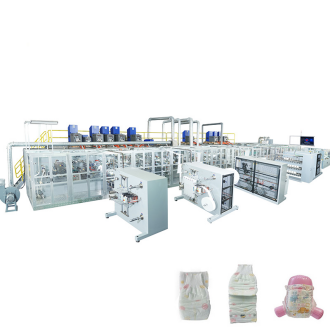
Speed often comes with a compromise, but here, it's a different story. Every cycle, every operation, and every output is tuned to deliver rapid results without cutting corners. The core architecture handles demanding tasks effortlessly, ensuring that what you get at the finish line retains the same precision and care as if time were no object.
What sets this apart is how the internal workflows manage data and processes. Instead of rushing through steps and introducing errors, smart buffering and parallel processing keep the pipeline smooth. It's like a well-rehearsed orchestra playing at double tempo yet never missing a beat—consistency stays intact even when you push the limits.
For anyone who has watched fast outputs turn sloppy, the difference here is immediately clear. The output remains crisp, colors accurate, and details sharp. No smearing, no artifacts, no half-baked results. It's a simple promise kept: you don't have to choose between getting it done quickly and getting it done right.
Smart Automation Systems Minimizing Waste and Idle Time
Modern factories are weaving smart automation deep into their workflows to catch bottlenecks before they swell. Sensors embedded on equipment track every cycle, sending real-time data to algorithms that learn the rhythm of production. When a press sits idle waiting for material or a conveyor drifts out of sync, the system nudges schedules and reroutes tasks instantly. It's not about replacing human judgment but sharpening it—giving teams the visibility to act on idle stretches and material pileups that would otherwise go unnoticed until the end of a shift. The result is a quiet elimination of wasted minutes and overbuying that chips away at cost without ceremony.
The real shift comes from predictive choreography. Rather than running machines to a fixed timetable, automation reads upcoming demand, tool wear, and even energy pricing to stagger jobs in a way that keeps every asset just busy enough. Spindles don't spin against empty air waiting for an operator; they pause until the exact moment a part is ready. This dance between waiting and working shrinks idle time from double-digit percentages down to figures that barely register. Waste isn't only about scrapped materials—it's about the overlooked gaps where machines hum with no output, and smart systems are showing how to close those gaps without adding headcount.
The gains often hide in plain sight, in the small gaps between tasks that are too brief for manual tracking. An automated cell that self-adjusts its warm-up period based on ambient temperature, or a packaging line that switches recipes without a full stop, keeps the floor flowing. These aren't headline-grabbing overhauls; they're incremental refinements that accumulate into weeks of recovered capacity each year. When waste and idle time shrink, what's left is a more honest use of energy, labor, and materials—a leaner operation that feels less frantic yet delivers more.
Innovative Bonding and Cutting for Ultimate Leak Protection
Precision in how materials join and separate lies at the core of modern leak prevention. By fusing advanced bonding techniques with meticulously controlled cutting processes, we’ve redefined what it means to create a truly sealed environment. Rather than relying on conventional seals that degrade over time, this approach integrates molecular-level adhesion and clean, stress-free edges to eliminate the smallest pathways for fluid or gas escape. The result is a seamless barrier that performs consistently under pressure, temperature swings, and constant vibration, setting a new benchmark for reliability.
The magic happens in the details. Our bonding method uses a custom-formulated adhesive that actually strengthens at the interface, turning the joint into the toughest part of the assembly. Meanwhile, laser-guided cutting ensures surfaces meet with microscopic flatness, leaving no room for gaps or micro-fractures where leaks typically start. This synergy between bond integrity and flawless edge preparation doesn’t just stop leaks—it prevents them from ever having a chance to begin, even in applications where traditional gaskets and O-rings fail within months.
What truly separates this system from the pack is its adaptability across materials and operating extremes. Whether it’s corrosive chemicals at high flow rates or delicate medical gases, the technology self-optimizes the bonding and cutting parameters for the specific substrate pair. Field data shows installations enduring years longer without maintenance, slashing downtime and replacement costs. It’s leak protection that doesn’t just patch vulnerabilities but fundamentally eliminates them, delivering peace of mind in industries where even a single drop can spell disaster.
Energy-Saving Mechanisms That Lower Operational Costs
Reducing energy consumption isn't just about swapping out lightbulbs—it's a mindset woven into daily operations. Simple adjustments, like fine-tuning HVAC schedules to match actual occupancy or allowing wider temperature deadbands, can chip away at utility bills without sacrificing comfort. Smart sensors and timers eliminate waste in overlooked areas, from warehouse lighting that dims when aisles are empty to equipment that powers down during idle stretches. These subtle shifts often pay for themselves within months, transforming cost centers into efficiency wins.
The real savings come from scrutinizing equipment that runs around the clock. Variable frequency drives on motors and pumps let machinery ramp down when full power isn't needed, slashing kilowatt-hours dramatically. Heat recovery systems capture warmth from exhaust air or industrial processes, repurposing it to preheat incoming water or workspace air—turning a waste product into free heating. Even routine maintenance plays a role: clean filters, lubricated parts, and calibrated controls keep systems humming at peak efficiency, preventing the slow drift toward higher consumption that erodes budgets unnoticed.
Beyond hardware, behavioral tweaks compound the impact. Incentive programs that reward teams for hitting energy targets turn conservation into a shared goal, while real-time dashboards make usage visible and personal. Shifting energy-intensive tasks to off-peak hours taps into lower utility rates, sometimes halving the cost per unit of production. These strategies don't require a technological overhaul; they just demand a fresh look at how and when energy flows through a facility.
Modular Design for Quick Changeovers and Minimal Maintenance
Breaking down machinery into self-contained modules transforms changeovers from a drawn-out ordeal into a swift, almost effortless task. Each module — whether it's a filling head, capping station, or labeling unit — can be swapped out independently, often with simple locking mechanisms and quick-connect fittings. Operators can reconfigure a line for a new product in minutes, not hours, because there's no need to recalibrate an entire monolithic system. This approach also slashes the chance of errors; when every connection point is standardized, the guesswork disappears, and consistency becomes built-in.
Maintenance becomes far less intrusive when you only need to address a faulty module instead of pulling apart half the machine. Worn components can be slid out, sent for repair, and replaced with a standby unit without halting production for long. Because modules are isolated, updates or upgrades can happen on a single section without impacting neighboring functions. The design naturally encourages a proactive upkeep routine — regular inspections and part replacements become quick pit stops rather than full-scale shutdowns.
FAQ
When evaluating a machine, focus on precision engineering, robust material handling capabilities, and advanced automation. The machine should offer consistent tension control, accurate cutting and folding, and seamless integration of elastic and absorbent layers. Look for models with servo-driven systems and real-time monitoring to ensure every diaper meets strict quality standards.
Automation minimizes manual intervention, reduces downtime, and speeds up production cycles. Automated feeding, splicing, and reject functions keep the line moving without frequent stops. Smart sensors adjust parameters on the fly, while data logging helps predict maintenance needs, preventing unexpected breakdowns that could halt output.
Regular cleaning of rollers and cutting blades is essential to prevent adhesive buildup and ensure precise cuts. Lubricate moving parts as per the manufacturer’s schedule and replace wear-prone components like belts and seals promptly. Implementing a preventive maintenance plan based on machine usage data can significantly extend the lifespan and maintain high throughput.
Absolutely. Modern machines are designed to process a variety of sustainable substrates, including biodegradable films and plant-based nonwovens, without compromising speed or quality. Adjustable tension controls and gentle handling systems ensure delicate eco-materials aren’t stretched or torn during high-speed production.
Real-time monitoring systems use cameras and sensors to detect defects like misaligned ears, missing tapes, or inconsistent absorbent cores instantly. They can trigger automatic ejection of faulty units and provide operators with immediate feedback, allowing quick adjustments to minimize waste and uphold product consistency.
Ergonomic design with intuitive touchscreen interfaces, clear safety guarding, and easy access points for maintenance reduces operator fatigue and accident risks. Features like emergency stop buttons, light curtains, and automated shutdown routines ensure a safe working environment while simplifying daily operations.
Conclusion
In modern diaper production, achieving maximum efficiency hinges on seamlessly integrating precision, speed, and intelligent control. Advanced manufacturing machines are engineered with high-precision material handling systems that guarantee flawless assembly, ensuring each layer aligns perfectly to eliminate defects. This meticulous handling is complemented by high-speed performance that never compromises on quality, even when running at full capacity. Smart automation further elevates the process by dynamically adjusting operations to minimize waste and idle time, while innovative bonding and cutting technologies create robust seals that deliver ultimate leak protection. Every component works in harmony—from the continuous, non-stop feeding of materials to the synchronized application of elastic threads and absorbent cores—ensuring consistent output without interruptions.
Beyond the production line, operational efficiency is boosted by energy-saving mechanisms that significantly lower long-term costs, and a modular design that enables rapid changeovers and reduces maintenance downtime. This modularity allows manufacturers to swiftly switch between diaper sizes and styles or add new features without extensive retooling, keeping the machine adaptable to market demands. The combination of reduced energy consumption, minimal raw material waste, and streamlined maintenance schedules translates directly into a higher return on investment. Ultimately, these machines are not just about speed—they represent a holistic approach to quality and efficiency, where every stage, from material feeding to final packaging, is optimized for peak performance, ensuring that each diaper meets the highest standards of comfort and reliability while keeping production economical and sustainable.
Contact Us
Contact Person: Jessie Lai
Email: [email protected]
Tel/WhatsApp: 86-188594442931
Website: https://www.wm-machinery.com