
High-Quality Alloy Resistor Manufacturers: Choosing the Right Partner for Precision Components
2026-06-27
Precision in electronic design begins with the passive components often taken for granted. Among these, alloy resistors stand out for their ability to maintain stability under demanding conditions—but only if sourced from a manufacturer that truly understands your application. Partnering with the right supplier isn’t just about tolerances and TCR; it’s about long-term reliability and support that evolves with your designs. At the forefront of this field, Milliohm has earned a reputation for crafting resistors that meet the exacting needs of industries where failure is simply not an option. In this post, we’ll explore what separates exceptional alloy resistor manufacturers from the rest and how to choose a partner that aligns with your precision goals. Whether you’re designing for automotive sensing, industrial automation, or battery management, the insights ahead will help you make a decision that reverberates through the entire lifecycle of your product.
Material Mastery: Why Alloy Composition Dictates Resistor Performance
Resistors might seem like the simplest components on a board, but their performance hinges on a delicate balance of metallurgy. The alloy used for the resistive element isn’t chosen at random—its composition directly shapes key parameters like temperature coefficient, stability under load, and long‑term drift. For instance, a nickel‑chromium alloy offers excellent precision and low noise, making it ideal for instrumentation, while adding aluminum and iron can create a material that withstands high surge energies but trades away some accuracy. This isn't just about picking a metal; it’s tuning a formula at the atomic level to get exactly the behavior a circuit demands.
Temperature changes wreak havoc on resistance values unless the alloy is deliberately engineered to fight back. By adjusting the ratio of constituents—say, tweaking the copper-to‑manganese balance in a Manganin alloy—manufacturers can flatten the temperature coefficient curve to near zero over a specific range. That’s why a precision resistor can hold its value within parts per million per degree, while a cheaper carbon film part drifts noticeably. The magic lies in how electron scattering changes with thermal energy, and a well‑designed alloy locks that scattering into a predictable, minimal pattern. Get the mix wrong, and you’ll see resistance wander with every degree, something no calibration can fully fix.
Corrosion resistance and mechanical stress play equally critical roles. A resistive film that cracks or oxidizes over time loses its carefully designed properties, so alloys often include passivating elements like chromium or silicon. These form stable oxide layers that protect the conductive path without insulating it—a tricky balancing act. In high‑voltage pulse applications, the alloy must also handle sudden thermal expansion without delamination. That’s why bulk metal foil resistors, with a cold‑worked crystalline structure, can shrug off stresses that would send a thin‑film part out of tolerance. Ultimately, mastering resistor alloys means accepting that every performance metric is a trade‑off, and the right composition is the one that sacrifices least in the places your circuit cares most.
Precision Engineering: Manufacturing Processes That Eliminate Tolerance Drift
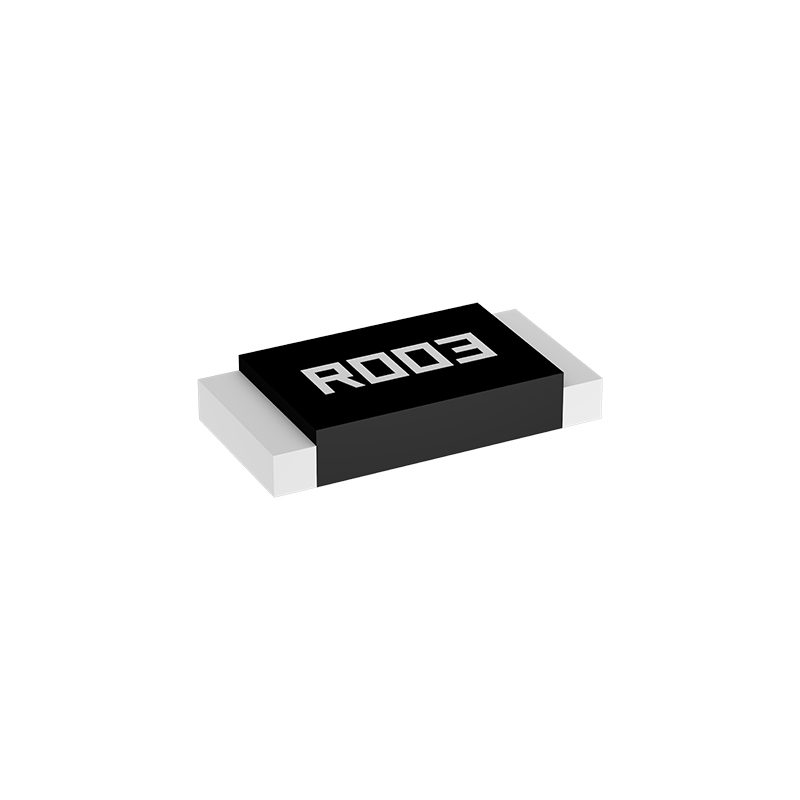
Precision engineering isn’t just about hitting tight numbers on a drawing—it’s about making sure those numbers stay put, batch after batch. Tolerance drift, the slow creep of dimensional variation over time, can quietly unravel even the most meticulously designed assemblies. To choke it off at the source, shops increasingly lean on processes that aren’t reliant on operator finesse or tooling that gradually wears out of spec. Think of closed-loop CNC systems that measure a part mid-cycle and nudge offsets in real time, or thermal compensation algorithms that sense spindle growth and adjust before a tenth of a micron wanders off course.
Material choice and preparation play an outsized role that often gets overlooked. Alloys with erratic grain structure or residual stress can shift dimensions days after machining, no matter how sharp the tool or stable the fixture. By specifying stress-relieved stock, cryogenically treated tooling, or even in-house annealing steps before the first cut, manufacturers remove an invisible but persistent source of scatter. Some high-end facilities go as far as mapping incoming material batches with coordinate measuring machines and feeding that data into adaptive toolpaths, so the process compensates for subtle hardness variations that would otherwise push bores and diameters out of tolerance window over a shift.
Finally, there’s the less glamorous side: environmental control and metrology discipline. A temperature swing of two degrees in the shop can easily mimic a drift in precision that sends a production run sideways. The difference between chasing ghosts and actually eliminating drift often comes down to how well the inspection loop is closed. Using calibrated artifacts at the machine, frequent inline probing, and statistical process control that triggers corrective action before parts hit the reject pile—these aren’t novelties but hard-won habits that turn “zero drift” from a slogan into an everyday outcome.
Beyond the Datasheet: Customization Capabilities for Niche Applications
Standard datasheets often provide a one-size-fits-all picture, but many niche applications demand more than what's on paper. We work closely with engineering teams to adapt core specifications—whether that means tweaking sensor sensitivity, adjusting power profiles, or refining communication protocols—so the final module slots seamlessly into your unique operational environment, no compromises required.
True customization goes beyond electrical parameters; it can involve everything from bespoke firmware builds and specialized calibration routines to mechanical modifications like conformal coating, custom connector pinouts, or ruggedized enclosures. This hands-on approach ensures that even low-volume, high-complexity projects get a solution that feels purpose-built, not just adapted from a generic reference design.
What sets this apart is the willingness to tackle requirements that many suppliers would consider out of scope. From radiation-hardened variants for aerospace to ultra-miniaturized packages for medical implants, the dialogue starts where the datasheet ends, turning apparent limitations into practical, field-ready deliverables through iterative co-engineering and real-world validation.
Reliability Under Stress: Thermal Stability and Long-Term Drift Testing
When components face sustained thermal loads, their behavior often reveals weaknesses that simple datasheet numbers fail to capture. Our thermal stability assessment pushes devices well beyond nominal limits, holding them at elevated temperatures for extended periods while actively monitoring key parameters. We look for subtle changes in leakage current, gain shifts, or voltage reference deviations—indicators that the internal material structure is degrading. This isn't a pass/fail test; it's a window into how the device's architecture copes with the relentless stress of high-temperature operation. By mapping these changes over time, we can pinpoint failure mechanisms that would otherwise cause field returns weeks or months after deployment.
Long-term drift testing takes a different but complementary approach, focusing on the slow, cumulative effects that degrade precision over thousands of hours. Here, we cycle devices through realistic operating conditions, occasionally soaking them at temperature extremes to accelerate aging. The goal is to measure the irreversible drift in critical specifications—think offset voltages in op-amps or frequency stability in oscillators. We've observed that drift rarely follows a straight line; instead, it often exhibits a settling period followed by a gradual, nearly linear wander. Understanding this fingerprint for each device type enables us to build predictive models that inform maintenance schedules and lifetime warranties, giving customers a clear picture of how performance will trend over the entire product lifespan.
The real value emerges when we combine thermal stability and drift data into a unified reliability profile. Analyzing how a device responds to sudden temperature spikes versus prolonged soaking at moderate levels helps us identify latent defects like die attach voids or intermetallic growth. We've caught instances where a part would sail through conventional burn-in tests yet fail miserably when subjected to our combined stress protocol—because the failure only manifests after the cumulative damage from both thermal cycling and long-term drift crosses a threshold. This methodology doesn't just screen out weak units; it guides design improvements by showing exactly where the margins are thinnest, ensuring that the next iteration is more robust from the start.
Seamless Integration: Supply Chain Agility in a Volatile Market
When market demand swings as unpredictably as the weather, supply chains need to pivot on a dime. Seamless integration isn't just about linking systems together; it's about enabling information to flow like water—from suppliers to warehouses to the last mile—so every link can react in real time.
Many companies still rely on batch-processed data and delayed reports to make decisions, which is like driving while looking in the rearview mirror. Real agility comes from synchronizing production schedules, inventory levels, and transportation networks in real time, so that even a faint demand signal can trigger a chain of adjustments without creating a bullwhip effect.
Achieving this integration means tearing down the walls between departments and dismantling system silos. API-led connections, unified cloud platforms, and sharing a single version of the truth with suppliers let the entire chain keep rhythm amid chaos, and even turn volatility into competitive advantage.
Partnering for Progress: Co-Development and Lifecycle Support
Real partnership means sharing both the creative spark and the heavy lifting. From the earliest sketches of an idea, our engineers work side-by-side with your team to turn concepts into reliable products. This isn't a hand-off—it's a continual exchange, where prototyping, user feedback, and technical roadmaps are owned collectively.
After launch, the alliance doesn't end. We stay embedded in the project's evolution, providing more than routine maintenance. Our support covers everything from performance tuning and security patching to feature expansions driven by actual usage data. The goal is to keep the product aligned with emerging needs without unnecessary rebuilds or lengthy delays.
This model builds resilience into the entire lifecycle. Shared accountability reduces finger-pointing when challenges arise, and the deep product knowledge gained during co-development means quicker, more coherent upgrades. Over time, the lines between organizations blur into a single, forward-moving unit focused on lasting impact rather than short-term deliveries.
FAQ
A high-quality alloy resistor is characterized by its exceptional temperature stability, low TCR (temperature coefficient of resistance), minimal noise, and robust tolerance to environmental stress. The alloy composition, usually involving nickel-chromium or manganese-copper, ensures precise resistance values and long-term reliability.
The manufacturer's expertise directly influences the resistor's performance in demanding applications. A reliable partner ensures consistent material purity, tight tolerances, and customized solutions that generic suppliers can't match, which is vital for precision instruments, aerospace, and medical devices.
Alloy resistors offer superior pulse handling and lower inductance than wirewound types, and better long-term stability than thin film resistors in high-stress environments. They strike a balance between precision and durability, particularly for current sensing and surge protection.
Precision alloy resistors are indispensable in metrology-grade equipment, high-end audio systems, down-hole drilling tools, satellite power modules, and critical automotive sensors where deviations could lead to system failure or safety hazards.
Yes, leading manufacturers can tailor resistance values, physical dimensions, lead configurations, and even the alloy blend itself to meet unique electrical, thermal, or mechanical demands, though this typically requires a collaborative design cycle and minimum order commitments.
Beware of manufacturers that cut corners on raw material sourcing or skip thorough burn-in testing. Inconsistent batch-to-batch performance, exaggerated datasheet specs, and lack of traceability are red flags that could compromise your product's integrity.
Thermal EMF (electromotive force) generated at junctions of dissimilar metals can introduce measurement errors in low-level DC circuits. Premium alloy resistors often use specially formulated alloys and construction techniques to keep thermal EMF below 1 µV/°C, which is crucial for precision data acquisition.
Look beyond generic ISO 9001. Meaningful credentials include ISO/IEC 17025 for calibration/testing, IATF 16949 for automotive-grade production, and military specifications like MIL-PRF-55182. A manufacturer's willingness to share process capability data (Cpk) is a strong trust indicator.
Conclusion
Selecting a supplier for high-quality alloy resistors goes far beyond comparing datasheet numbers. The performance of these precision components starts with metallurgy—the specific alloy composition directly influences temperature coefficient, noise, and long-term stability. Manufacturers who truly understand material science can tailor the resistive element to deliver consistent results across demanding environments. Their expertise in precision engineering ensures that tolerance drift is virtually eliminated through controlled processes like laser trimming, heat treatment, and automated optical inspection. Without this deep manufacturing discipline, even a well-specified resistor can underperform when exposed to real-world conditions.
A reliable partner also recognizes that off-the-shelf solutions rarely address every challenge. Customization capabilities become essential for niche applications where standard footprints or resistance values fall short. Equally important is a commitment to proving performance: rigorous thermal cycling and extended load-life testing reveal the true reliability that datasheets cannot capture. And in today’s volatile market, supply chain agility—from raw material sourcing to just-in-time delivery—keeps your production lines moving. The strongest relationships evolve beyond transactional quoting; they involve collaborative co-development and lifecycle support that anticipate future design needs. Choosing a manufacturer who invests in these areas ensures your precision components remain dependable, from prototype to mass production.
Contact Us
Contact Person: Yuying Gao
Email: [email protected]
Tel/WhatsApp: +86 18926013721
Website: https://en.milliohm.net/