Hidden Attractions in Lijiang for a Deeper Cultural Experience
2026-09-28
Most travelers to Lijiang stick to the old town and the snow mountain, but the true heart of Naxi culture beats in places few guidebooks mention. Hidden temples with fading murals, villages that still follow ancient rhythms, and moments of silence broken only by wind chimes—these are the experiences that stay with you long after the trip ends. One such hidden gem is Jade Water Village, where centuries-old traditions play out daily, far from the selfie sticks. If you're ready to skip the surface and dive into something real, these lesser-known corners of Lijiang will change how you see this ancient land.
Dawn Chants with the Last Dongba Priests in a Remote Naxi Hamlet
The first light leaks over the ridge as an old man in a worn felt vest begins to murmur syllables that predate the village's stone steps. Roosters answer from the lower terraces, and woodsmoke drifts through the walnut trees. Inside the dim courtyard, two Dongba priests face the eastern range, their breath visible in the cold as they recite the dawn verses that call the sun back from the mountain's shoulder.
Fewer than a dozen of these ritual specialists remain in this hamlet, and most are past seventy. They learned the pictographic scriptures not from books but by kneeling beside their fathers and uncles, repeating the chants until the words lived in their muscles. Each morning's recitation is a thread pulled through a fabric that has been unraveling for decades—young people leave for county towns, and the new roads bring different noise.
At first the chant sounds like a low, rolling cough. Then it finds a cadence, rising and dipping with the flight of a single magpie crossing the clearing. The priests do not perform for visitors; they simply continue what they were taught to do, as if the mountains still expected it. When the final syllable settles, the oldest man folds his hands over a worn goatskin drum and says nothing for a long while. The sun clears the ridge, and the valley fills with ordinary light.
The Stone-Hewn Silence of Yuhu Village Above Lashi Lake
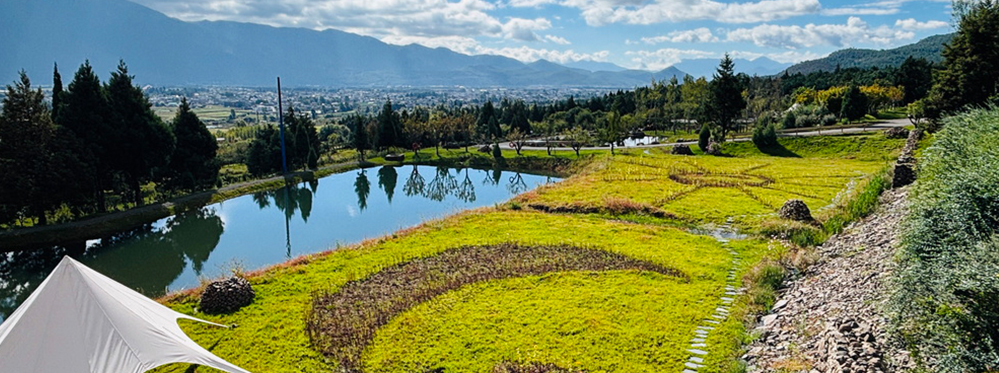
The road out of Lashi Lake sheds its noise quickly—once the water disappears behind the first ridge, the bus and motorbike hum thins to almost nothing. Yuhu appears as a cluster of stone houses stacked against the hillside, their walls the same gray-brown as the scree above them. The silence here is not the absence of sound but a kind of pressure, as if the weight of the quarried rock has pressed the air into something denser. A dog barks once, far down a lane, and the sound seems to fall to the ground and stay there.
Every lane is paved with the same local stone, split and fitted so tightly that weeds find little purchase. Walking uphill, you hear your own footsteps as soft thuds, not echoes—the stone swallows rather than returns sound. Doorways open into small courtyards where the only movement is a rope swaying under the weight of drying laundry. What strikes most visitors is how the village manages to feel both inhabited and held in suspension, as though the stone has been listening for centuries and has decided to keep whatever it hears.
At dusk the silence shifts. The last sunlight leaves the high peaks first, and a cool current slides down through the lanes, carrying the smell of pine resin and cold ash. Woodsmoke begins to rise from stone chimneys, but even that seems muted, curling into the dark without the crackle you expect. In Yuhu, the quiet is something built—layer upon layer, wall upon wall—and it remains long after you leave, a stone-hewn hush that sits just behind your ribs.
Yi Herders' Firelight in the Alpine Meadows of Wenhai
At the end of a long day moving yaks across the high pastures above Wenhai, the first cold drafts roll down from the ridge. A few herders scrape a shallow pit in the thin soil, stack dry rhododendron branches, and strike a match. The flame catches slowly in the thin air, then holds, throwing warm light across weathered faces and the dark shapes of animals bedded nearby.
No one announces the start of the evening. Someone pulls a dented kettle from a saddlebag, fills it with stream water, and sets it on the stones at the fire's edge. Roasted potatoes are passed around, their skins blackened and split. Talk moves between the day's work — a limping heifer, a broken fence line — and older stories, the kind told in the Yi dialect with laughter that needs no translation.
As the fire sinks to coals, the meadow around Wenhai disappears into a darkness that feels less empty than usual. The herders stretch, check the animals one last time, and pull wool blankets from their packs. Only the faint smell of woodsmoke and the occasional pop of a dying ember stay behind, long after the last silhouette has settled against the slope.
Crossing the Iron Bridge of Shigu Where Tea Caravans Once Swayed
Mid-stride on the Iron Bridge of Shigu, the steel plates dip and settle underfoot, each step answered by a low metallic sigh from the river below. The Jinsha River slides past in a wide, coppery ribbon, and for a moment the clang of boots drowns out the wind. It is easy to miss the small things here: the rust-pocked rivets, the splintered edge of a side rail, the faint grooves worn into the deck by decades of hooves and bare feet.
Those grooves are the reason this bridge lingers in memory. Long before tour buses idled in the car park, mule caravans swayed across this span with loads of compressed tea bricks headed north and west. Drivers cursed, mule bells clattered, and the bridge flexed under the weight of pack animals that knew every loose bolt by heart. Shigu was not just a crossing but a junction where the Tea Horse Road briefly touched the river and left its mark in iron, rope, and sweat.
Now the bridge carries only a handful of farmers, a few schoolchildren, and the occasional traveler who stops to listen. The caravan dust has settled, but the sway remains, subtle as a memory. If you stand still at the midpoint, close your eyes, and let the wind push against your back, you can almost hear the bell mare's lead note ringing out over the water, thin and clear, before it is swallowed by the gorge.
In Baisha, Murals Fade but the Stories Whisper On
The pigment has loosened its grip on the plaster, leaving behind ghost outlines of deities and dancers. What once blazed with indigo and cinnabar now exists as a hushed palette of earth tones, yet the walls still hold their breath.
Local elders trace the faint contours with trembling fingers, murmuring tales that never made it into guidebooks — of a painter who hid his lover's face in a bodhisattva's smile, of a monsoon that spared one panel because a child prayed there.
Visitors might see only stains and shadows, but the air in the old temple carries a low, persistent whisper. The murals no longer need to shout; the stories have already seeped into the stones.
Lisu Fire Dances Beneath the Red Sandstone Pinnacles of Liming
At dusk in Liming, as shadows stretch across the Danxia cliffs, the Lisu people gather around bonfires. Flames leap against red sandstone towers, and the dance begins—a rhythmic stomp that echoes off the rock. This isn't a staged performance but a living tradition tied to harvests, weddings, and protection from misfortune. The dancers move in a circle, hands linked or resting on shoulders, their steps accelerating with the beat of homemade instruments.
The fire itself carries older meanings. For the Lisu, it marks the boundary between day and night, the human and the spirit world. Sparks rise toward the pinnacles, which glow like embers in the last light. Visitors who are invited to join often find themselves pulled into the line, learning the quick cross-step and the call-and-response chants. What stays with them is not just the heat of the flames, but the sense that the land and the people are still in conversation.
FAQ
Yuhu Village, about 15 kilometers north of the old town, sits directly under Jade Dragon Snow Mountain. The stone houses and narrow lanes feel untouched by the crowds. Stay overnight with a local family, wake up early, and you'll see farmers walking yaks to pasture and women weaving on wooden looms. The former home of explorer Joseph Rock is here too, but the real treat is simply lingering by the village well or helping a family make butter tea.
Just behind the Baisha Murals, there's a small Dongba culture institute where elderly Dongba priests teach young locals to write pictographs. It's not a polished tourist stop—you might sit on a wooden bench and watch them copy characters onto rough paper. Ask permission before taking photos. If you're lucky, a priest will explain the meaning of a character tied to a nearby mountain or ritual.
Baisha Old Town, just north of Lijiang, has the same cobbled streets and flowing water but with goats crossing the road and grandmothers drying chilies on rooftops. It's small enough to explore in an hour, yet you can sit by the canal with a bowl of chickpea jelly and hear only the water. Nearby Shuhe is slightly busier but still far calmer than central Lijiang.
Wenhai, a high-altitude lake above Baisha, is ringed by Yi and Naxi villages that still follow seasonal herding patterns. In June and July the meadows turn white with potato flowers, and yaks graze beside the water. There's no big parking lot or ticket gate—just a dirt road and a few guesthouses. Hike from Yuhu Village over the pass, or arrange a ride with a local driver.
The safest way is to attend a public celebration like Sanduo Festival in early March, when Naxi people gather at Beiyue Temple to offer incense and dance. If you hear about a funeral or private ceremony in a village, don't show up uninvited. Ask your guesthouse host if outsiders are welcome, dress plainly, and keep your camera in your bag unless someone explicitly says otherwise.
Zhiyun Temple, on the western edge of Lashihai Lake, is a Kagyupa Tibetan Buddhist monastery that sees very few foreign visitors. The main hall has fading murals and a huge prayer wheel, and the ancient ginkgo tree in the courtyard is stunning in autumn. Walk around the back for views of the lake and wetlands. Admission is free, and you may be the only person there outside festival days.
Drive or take a local bus to Longpan Township, then walk the old caravan path from Axi Village down to the Jinsha River ferry crossing. You'll pass stone markers carved by muleteers and abandoned way stations. The trail is rough in places but easy to follow. It gives a tactile sense of how tea, salt, and horses moved between Yunnan and Tibet, far from the polished exhibits in town.
In villages like Yuhu or Wenhai, many guesthouse owners will cook for you if you ask a day ahead. Expect dishes like jidou liangfen (chickpea jelly), Lijiang baba (flatbread), and cured pork ribs with dried mushrooms. You might help grind chili or stir the pot while chatting about the harvest. This is the best way to taste home-style Naxi cooking and learn the stories behind each dish.
Conclusion
Beyond Lijiang's cobbled old town and crowded canals, a quieter world waits in the surrounding valleys and highlands. One morning in a remote Naxi hamlet, you can sit cross-legged on a worn wooden floor as one of the last Dongba priests chants dawn rites—his voice old as the pictographs fading on the wall behind him. A half-day away, Yuhu village clings to a stone slope above Lashi Lake, its houses cut straight from the mountain, and the silence there feels carved, not empty. Higher still, in the alpine meadows of Wenhai, Yi herders share tea by a fire as their sheep move like slow clouds through the grass; nobody speaks much, but the firelight does the talking.
Then there is the iron bridge at Shigu, rusted and narrow, where mule caravans once swayed with bricks of tea and salt; standing mid-span, you can almost hear the creak of leather and the old river below. Nearby in Baisha, the murals have dimmed under centuries of weather, yet the legends they hold still murmur through the wooden halls. And far to the north, beneath the red sandstone pinnacles of Liming, Lisu dancers whirl with torches at dusk—sparks rising like questions into the dark. These are not attractions with ticket booths or polished signs. They are places where culture still breathes, unevenly, quietly, and they reward the traveler willing to slow down and listen.
Contact Us
Contact Person: Changhong He
Email: [email protected]
Tel/WhatsApp: 086-0888-5190152
Website: https://vip.e-baixing.com/ysh