
Functional Masterbatch Solutions: Boosting Durability and Functionality in Plastics
2026-10-16
Every plastic part faces a lifetime of stress—UV rays, abrasion, temperature swings—and most failures trace back to missing functionality at the material level. Functional masterbatch solutions eliminate those weak points by embedding the right additives directly into the polymer. From UV stabilizers to antistatic agents, the right formulation can extend service life and add new capabilities. Xinwancai develops tailored masterbatches that match your resin, process, and performance targets, helping your products stand up to real-world demands.
Why Functional Masterbatches Are Redefining Plastic Longevity
Plastic products often fail not because the base polymer breaks down, but because the surrounding environment chips away at it—UV rays, heat, moisture, and microbial growth all take their toll. Functional masterbatches change that equation by embedding specialized additives directly into the polymer matrix during processing. Instead of applying a surface coating that wears off, these concentrates distribute protective agents throughout the part, so resistance to fading, cracking, and oxidation becomes part of the material’s DNA.
The result is a longer, more predictable service life without sacrificing processability or design freedom. A single masterbatch can combine thermal stabilizers, light absorbers, and antimicrobial agents tailored to the application, whether it’s outdoor furniture, automotive trim, or medical packaging. Because the additives are pre-dispersed in a compatible carrier resin, dosing is cleaner and more consistent than handling multiple powdered additives, which reduces variability and scrap. In practice, that means fewer premature replacements, less material waste, and a stronger case for plastics in demanding environments.
From UV Resistance to Anti-Static: Matching Additives to Real-World Stress
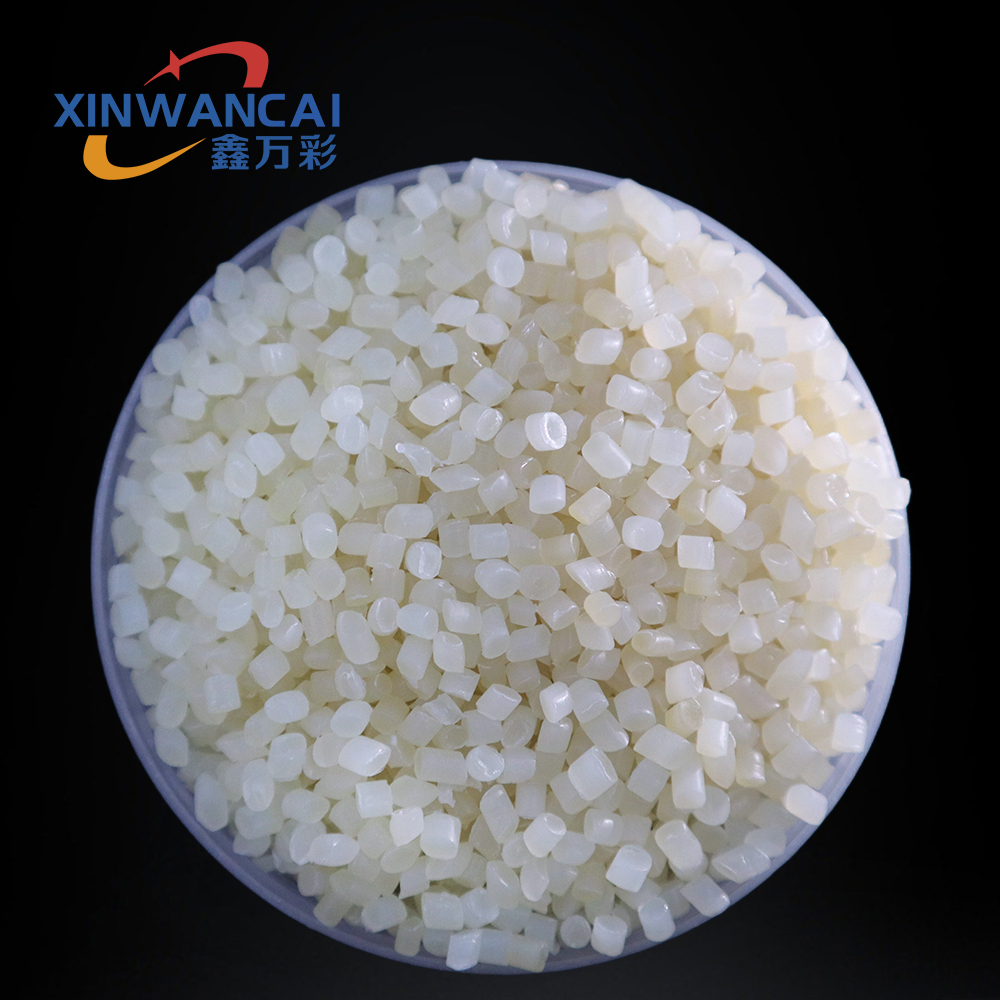
No single additive solves every problem, and pretending otherwise is how plastic parts fail early. UV stabilizers keep polypropylene patio chairs from turning chalky after two summers, but they do nothing when a conveyor roller builds enough static to ignite solvent vapors. Real-world stress rarely arrives alone: a car dashboard faces sunlight, heat cycling, and occasional cleaning chemicals all at once. So the first step is not picking a famous additive, but mapping the actual failure modes of the specific application. Does the part sit outdoors in Arizona, or inside a dusty electronics assembly line? Is the enemy oxidation, surface charge, friction, or a combination? Answer that before opening a catalog.
Once the stress profile is clear, matching additives becomes a balancing act rather than a checklist. Anti-static agents, for example, often migrate to the surface over time, which is fine for a short-lived packaging tray but disastrous for a precision gear that must stay dimensionally stable. Hindered amine light stabilizers work beautifully against UV degradation, yet they can interact with certain pigments and shift the final color after prolonged exposure. Even something as simple as adding a slip agent to reduce friction can compromise paint adhesion or ultrasonic welding. The best formulations are compromises where the additive package supports the primary function without quietly undermining a secondary requirement.
Testing under accelerated conditions helps, but only if the acceleration mimics the real failure mechanism. A xenon arc lamp can reproduce sunlight, but it won't tell you how static dissipates on a dry winter day in a heated warehouse. Thermal aging ovens show oxidation, yet they ignore the mechanical stress of repeated flexing that opens microcracks and lets oxygen penetrate deeper. Smart engineers combine lab data with field feedback, then adjust the additive loading in small steps. They also watch for interactions nobody listed on the datasheet: an anti-static agent might reduce melt strength and cause warpage, or a UV absorber might slightly plasticize the polymer and lower its heat deflection temperature. The goal is a material that survives the real world, not just the specification sheet.
How Dispersion Quality Determines Performance in the Final Part
In any formulation where solid particles must be distributed through a binder or matrix, the degree of dispersion reaches far beyond a simple visual check. Poorly dispersed pigment or filler leaves behind agglomerates that act as hidden failure points. Under mechanical load, these clusters concentrate stress instead of transferring it evenly, which can cut tensile strength or impact resistance by a surprising margin. But the effect is not always linear. A small number of oversized agglomerates may do more damage than a general shift in average particle size because cracks tend to initiate at the largest flaw, not the average one.
Optical properties expose dispersion quality just as sharply. In pigmented systems, color strength depends on how much particle surface area is actually available to interact with light. Tightly packed agglomerates shield much of that surface, so the same loading of pigment can appear weaker, duller, or less transparent. Gloss suffers too because protruding agglomerates scatter light at the film surface, breaking up the smooth reflectance that the eye reads as depth and clarity. A well-dispersed system, by contrast, yields richer color at lower pigment loadings and a more uniform surface.
Processing behavior often reveals what the final part will become. Good dispersion lowers viscosity because particles move past one another and through the matrix more freely, which allows higher solids content or finer feature reproduction in molding and coating. That same freedom translates into fewer internal voids and less shrinkage variation after curing or cooling. Ultimately, dispersion quality sets the ceiling for performance: you can compensate with additives or higher resin grades, but if agglomerates remain, the final part will always carry those built-in weaknesses.
Tailored Carrier Resins: The Overlooked Key to Compatibility
Most formulators treat carrier resins as a mere afterthought—a generic vehicle to deliver pigment or additives into a polymer matrix. Yet this assumption quietly undermines blend performance. A tailored carrier resin, engineered to match the polarity, melt viscosity, and chain architecture of the host polymer, can transform interfacial adhesion from a point of failure into a load-bearing bridge. The difference shows up in impact strength, haze, and long-term thermal stability, but only when the carrier is designed for the specific pairing at hand.
What makes a tailored carrier resin effective is not a single magic parameter but a convergence of subtle adjustments. Grafting a short-chain compatibilizer onto the carrier backbone, for instance, can lower interfacial tension just enough to allow fine dispersion of a minor phase without sacrificing melt processability. Alternatively, controlling the carrier's molecular weight distribution can shift the rheology so that it penetrates the interface during compounding rather than merely coating it. These are deliberate molecular choices, not off-the-shelf compromises, and they often yield a two- to three-fold improvement in elongation at break for otherwise brittle blends.
The payoff is tangible on the production floor. A tailored carrier resin widens the processing window, reduces screw torque during extrusion, and cuts down on die build-up—all while maintaining color strength and additive efficiency. More importantly, it allows compounders to pair polymers that were previously considered incompatible, opening up new material combinations from recycled streams without the usual penalty in mechanical properties. In this sense, the carrier resin acts as a quiet enabler, turning compatibility from a bottleneck into a design variable.
Balancing Cost and Performance in High-Volume Production
High-volume production constantly forces a tug-of-war between keeping unit costs low and meeting the performance demands that customers expect. Many manufacturers learn the hard way that shaving every possible expense from a design can create quality problems downstream, while over-engineering a part wastes materials and slows down the entire line. The real skill lies in identifying which performance parameters truly matter for the end user and trimming everything else without hurting reliability. That often means working closely with suppliers to negotiate better raw material prices, choosing manufacturing processes that reduce scrap rates, and redesigning components so they can be produced faster without compromising essential functions.
A practical approach starts with mapping out cost drivers across the whole production cycle, not just the bill of materials. Labor time, machine setup hours, energy consumption, and even packaging all play a role. Sometimes a slightly more expensive material can dramatically reduce machining time or eliminate a secondary finishing step, making the total part cost lower despite the higher upfront price. Likewise, investing in automated inspection early on might seem costly, but it prevents defective batches from reaching customers and triggering expensive recalls or warranty claims. Finding this balance rarely comes from a single big decision; it emerges from dozens of small trade-offs made during design reviews, pilot runs, and supplier negotiations.
Ultimately, the manufacturers that thrive in high-volume settings treat cost and performance as two sides of the same conversation rather than opposing forces. They track field failure data relentlessly to see where over-specification is wasting money and where under-specification is causing returns. Cross-functional teams with design, production, and quality engineers together can spot opportunities that a single department would miss. By focusing on value delivered to the customer instead of simply minimizing upfront expense, these companies build products that hold up in the real world while keeping their production lines profitable and scalable.
Testing Beyond the Data Sheet: What Actually Happens on the Line
The datasheet says the sensor responds in 2 milliseconds. It doesn't mention the guy on line four who drops the housing twice before it gets bolted in, or that the ambient temperature near the reflow oven spikes to 48°C every Tuesday. Bench testing is clean; the line is not. When you're standing there with a multimeter at 7 a.m., you learn quickly that "typical" values are a polite fiction. The real question isn't whether the part meets spec in isolation—it's whether it survives a shift change, a worn fixture, and a forklift vibrating the entire frame.
Take the new flow meter we qualified last spring. All five lab samples nailed the pressure-versus-output curve. On the line, we saw a 12% drift after the first hour. Root cause wasn't the electronics; it was a pneumatic quick-connect that someone over-tightened with a strap wrench. The datasheet never told us the fitting would loosen under pulse loads, because the datasheet assumes you install it like the lab does. You have to test with the actual production tools, not the calibrated torque drivers from metrology.
What actually happens on the line is that time, temperature, and human variation become part of the specification. A good test plan doesn't just verify the part—it maps how the line changes it. We now run every new component through a 'dirty build' before sign-off: mismatched screw lengths, uneven torque, slightly bent leads. Some engineers call it overkill. But the parts that pass that test are the ones that don't come back in a box eight months later.
FAQ
A functional masterbatch goes beyond aesthetics. While standard masterbatches typically focus on color or a single additive, functional versions are engineered to deliver specific performance upgrades—think UV resistance, flame retardancy, antistatic behavior, or antimicrobial protection. They're formulated to integrate these properties uniformly into the polymer matrix without compromising the base resin's processability.
They address a range of real-world failures. For outdoor applications, UV stabilizers and antioxidants prevent chalking, embrittlement, and color fade. In automotive or electrical parts, heat stabilizers extend service life under continuous high temperatures. Anti-block and slip additives reduce surface friction and sticking, which is critical for films and packaging. Essentially, they target the degradation mechanisms that shorten a product's useful life.
The effect depends on the additive system. Some fillers and nucleating agents can raise stiffness, tensile strength, or impact resistance by refining the polymer's crystalline structure. Others, like processing aids, improve melt flow so the final part has fewer stress concentrations or weld lines. The key is proper dispersion—poorly mixed additives can create weak spots, but a well-designed masterbatch distributes them evenly, often improving overall consistency.
Yes, but they require strict regulatory compliance. Suppliers offer grades that meet FDA, EU, or USP Class VI standards, using only permitted additives and carrier resins. These can include antimicrobial agents for medical devices, oxygen scavengers for food packaging to extend shelf life, or slip agents that don't migrate beyond approved limits. Always request full documentation to verify the specific formulation's compliance.
Absolutely, though it demands careful formulation. Combining additives can lead to antagonistic interactions—for example, some flame retardants may reduce UV stability. Experienced suppliers use synergistic packages and compatibilizers to prevent these conflicts. The advantage is simplified dosing and fewer mixing steps, but the final performance must be validated through accelerated aging and fire tests.
First, match the carrier resin to the base polymer to ensure good compatibility. Next, check the let-down ratio—higher additive loadings mean lower dosage, which can save costs but may affect dispersion. Request thermal stability data, especially if processing temperatures are high. Also ask about lot-to-lot consistency and whether the supplier offers technical support for trial runs.
Dosing errors are a common cause of underperformance. If the masterbatch is fed at a lower rate than specified, the additive concentration drops below the effective threshold, leaving the plastic vulnerable to UV, heat, or static. Overdosing can cause surface blooming, plate-out, or even degradation. Modern gravimetric feeders and calibrated screw speeds are essential to hit the target let-down ratio consistently.
One major trend is the shift toward bio-based and biodegradable carrier resins, which align with sustainability goals without sacrificing function. Another is the use of nano-additives—like nano-clays or silver nanoparticles—that deliver high performance at extremely low loadings. Smart masterbatches with oxygen indicators or thermochromic pigments are also emerging for packaging and safety applications.
Conclusion
Plastic parts that survive years outdoors or shrug off static buildup rarely get there by accident. Functional masterbatches are quietly redefining what longevity means, because they let compounders dose exactly the additive a part needs—whether that's a UV stabilizer for sun-blasted fencing or an anti-static package for electronics packaging—without disrupting the base resin. But choosing the right chemistry is only half the story. If the additive isn't dispersed evenly, even the best formulation leaves weak spots: color streaks, brittle patches, or inconsistent surface resistivity. Real-world stress tests show that dispersion quality, more than additive loading, often decides whether a part fails at month six or year six.
Carrier resin choice is the overlooked lever here. A masterbatch built on a carrier that doesn't match the host polymer can create microscopic incompatibility, even if the additive itself is perfect. Tailoring the carrier to melt flow and polarity means the concentrate drops into the main resin without gels, poor gloss, or delamination at weld lines. On high-volume lines, that compatibility translates directly into cost control: fewer rejects, faster changeovers, and less over-dosing to compensate for poor mixing. Yet datasheets rarely capture what happens at the machine. Trials on actual molding or extrusion lines reveal the truth—how the masterbatch feeds, whether it bridges in the hopper, and how the final part holds up after thermal cycling or chemical exposure. Balancing upfront price against these on-line realities is what separates a functional masterbatch that merely meets a spec from one that actually extends service life.
Contact Us
Contact Person: JACK
Email: [email protected]
Tel/WhatsApp: 86 18650130917
Website: https://www.xinwancai.com/