
Fiber Optic HDMI Cable Factory: Unveiling Advanced Manufacturing for Flawless 8K Transmission
2026-11-16
What really happens inside a fiber optic HDMI cable factory before a single reel is shipped? At EBCYX, the answer isn't just automated assembly—it’s a relentless war on signal loss. Behind those flawless 8K transmissions lies a production floor where optical alignment, termination precision, and noise immunity are engineered at a microscopic scale. This behind-the-scenes look reveals how advanced manufacturing turns fragile glass strands into a pipeline capable of moving 48Gbps without a glitch, and why the difference between ‘4K ready’ and true 8K endurance starts long before the first frame lights up your screen.
Inside the Core: How Precision Engineering Powers 8K Clarity
At the heart of every 8K display lies a feat of micro-scale craftsmanship, where individual pixels are so densely packed they vanish from perception. The leap to 33 million pixels demands lens elements ground to tolerances measured in nanometers, and sensor planes aligned with a precision that makes a watchmaker’s tools look blunt. This isn’t merely about shrinking components; it’s about orchestrating light paths so exactly that photon scatter and color fringing become relics of a coarser era.
The real sorcery happens in the signal chain, where precision engineering wrestles with the raw physics of bandwidth. 8K data streams are monstrous—four times the payload of 4K—and even a microsecond of jitter can fracture an image into noise. Cooling systems are sculpted like aerospace components, pulling heat away from processors without generating vibrations that could misalign optics. Circuit board materials are chosen not just for conductivity but for their dielectric constancy, ensuring high-frequency signals arrive at each pixel in lockstep.
Then there’s the quiet battle against thermal drift, a nemesis invisible to the viewer but ever-present to the engineer. A single degree of temperature rise can expand metal parts enough to knock focus out by several pixels’ width. So you find invar alloys and carbon-fiber reinforcements nestled side by side, each material chosen to cancel its neighbor’s expansion, holding the entire imaging chain in a state of deliberate stillness. That’s the core truth: 8K clarity isn’t just captured—it’s engineered into existence, one deliberate, microscopic decision at a time.
The Unseen Science Behind Zero-Signal Loss Fiber Optic Lines
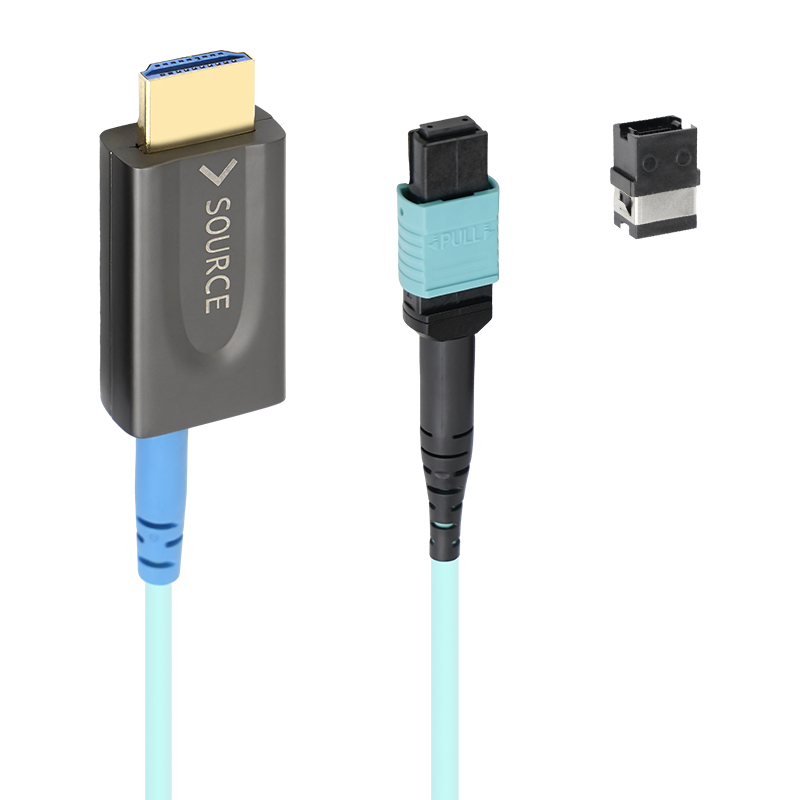
Light traveling through miles of glass strands shouldn’t arrive intact—at least according to conventional physics. Yet modern fiber optics engineer a near-perfect corridor where photons barely scatter or fade. The secret sits inside the core’s refractive index profile, which is gradually tapered rather than sharply bounded. This graded-index design coaxes light beams into following gently curved helical paths, constantly steering them away from imperfections in the cladding. Paired with ultra-pure silica glass where ion impurities are measured in parts per billion, the result is a medium so transparent that a pulse can cross an ocean with only a whisper of degradation.
What often goes unnoticed is the battle waged against Rayleigh scattering—the intrinsic backscattering caused by microscopic density ripples frozen into the glass during fabrication. Even flawless silica isn’t immune. Engineers push into longer wavelengths where scattering drops exponentially, settling around 1550 nanometers as the sweet spot. At this wavelength, Erbium-doped fiber amplifiers can step in precisely where attenuation threatens coherence. These amplifiers don’t rebuild the signal as a digital repeater would; they directly energize the photons using laser pumps, preserving the original waveform across thousands of kilometers. The whole chain becomes a careful balancing act between nonlinear effects and loss thresholds, one that’s painstakingly maintained by monitoring polarization-mode dispersion in real time.
Another invisible layer is the interplay between Raman gain and forward error correction algorithms. When a weak signal dips too low, a counter-propagating pump laser can transfer energy directly into the signal through stimulated Raman scattering, effectively turning part of the transmission fiber into a distributed, noise-soaking amplifier. Meanwhile, sophisticated coding squashes residual errors before they compound, using methods borrowed from deep-space communication. It’s a realm where materials science, quantum optics, and real-time signal processing blur together—making zero-signal loss not an absolute, but a meticulously engineered illusion that carries the world’s data without a single binary bit going missing.
Materials That Matter: Crafting Cables for Flawless High-Speed Data
The journey of a high-speed signal begins long before it reaches a connector or a circuit board—it starts with the raw materials inside the cable. At the core, the conductor choice sets the performance ceiling. While copper remains the workhorse for many applications, not all copper is equal. Oxygen-free high-conductivity copper, drawn with precise grain structure, minimizes resistance and signal loss across frequency ranges that push into gigahertz territory. For even more demanding links, silver-plated conductors offer a sweet spot, combining copper’s mechanical integrity with silver’s superior surface conductivity, especially critical as skin effect forces high-frequency currents to the outer edges of each strand.
Surrounding the conductor, the dielectric material quietly makes or breaks a cable’s high-speed potential. Signal velocity and skew depend heavily on this insulating layer. Solid polyethylene delivers low cost but can be too lossy; foamed or air-enhanced dielectrics, such as expanded PTFE or special fluoropolymers, push the velocity of propagation closer to the speed of light while tightening impedance tolerance. The best designs treat the dielectric as part of a precision transmission line, controlling its thickness to micron-level consistency to avoid reflections that corrupt eye diagrams at the receiver.
On the outside, the shield and jacket aren’t mere protective wrappers—they influence electromagnetic compatibility and mechanical reliability. Braided copper shields with high optical coverage guard against external interference, while foil layers tackle high-frequency noise that braids alone might miss. Pairing them in carefully terminated combinations creates a Faraday cage without adding unnecessary stiffness. The outer jacket material, often a halogen-free thermoplastic or polyurethane, is then chosen for its flex life, chemical resistance, and flame performance, ensuring that the cable can survive bending, routing, and real-world environments without degrading the precise material balance within.
Where Durability Meets Delicate Signal Integrity
Rugged environments don’t have to spell the end for pristine signal quality. The challenge lies in crafting connectors and housings that absorb physical stress without letting it translate into data disruption. Through precision-machined contact geometries and anti-resonance polymers, each component becomes a fortress where vibration, shock, and temperature swings are neutralized before they can corrupt the transmission line.
What often goes unnoticed is how microscopic movement can introduce jitter and bit errors. The design counteracts this with fully shrouded lead-in sockets and sequential mating stages that keep impedance stable even under mechanical duress. It’s not simply about toughness in the obvious sense—it’s about sustaining identical electrical behavior from a static lab bench to a high-shake production floor.
Layer in custom strain-relief geometry and low-void dielectric compounds, and you get a system that treats delicate differential pairs as if they were armored cables. Every insertion cycle reaffirms the same return loss profile, every thermal drift event leaves eye diagrams intact—durability here is inseparable from the integrity it protects.
From Raw Components to Ultra HD: A Seamless Production Flow
Every high-definition visual experience begins with unprocessed raw components: the sensor data, the initial footage, the unrefined audio tracks. In their native form, these elements are far from screen-ready. They contain noise, color imbalances, and an overwhelming amount of information that needs to be shaped into something coherent and vivid. The first step in a seamless production flow is to treat these raw inputs not as limitations but as a foundation rich with potential. Sophisticated, almost surgical ingestion tools parse the massive data sets without stripping away the subtle nuances that will later define the final image’s depth and realism. This is where the character of the output is born—long before any pixel reaches a display.
The transition from raw components to Ultra HD isn’t just a matter of scaling resolution; it’s a layered process where color science, dynamic range mapping, and temporal noise reduction work in unison. Imagine a single workflow where log-encoded footage is automatically transformed through a custom color pipeline, lifting shadows without crushing blacks, while machine-learning-based upscaling reconstructs texture and fine detail that were never truly lost but merely latent. The seamlessness comes from removing the friction between stages—no more bouncing between isolated tools, no manual relinking of assets. Instead, the entire chain respects the original intent, applying corrections that feel organic rather than algorithmic, ensuring that the jump from sensor to 4K or 8K feels less like a conversion and more like a revelation.
What holds this flow together is an adaptive feedback loop that mimics the decision-making of experienced post-production artists. As the footage moves through debayering, grading, and rendering, the system continuously checks for artifacts, consistency, and aesthetic coherence. A minor shift in a highlight’s luminance might trigger a subtle adjustment in the grain pattern applied to the entire scene, preserving a filmic texture even at extreme resolutions. By the time the material reaches the final Ultra HD master, it retains an unmistakable sense of authenticity. The journey from raw components to ultra-sharp, high-dynamic imagery isn’t just about technical proficiency—it’s about creating a narrative flow where technology steps out of the way, leaving only the story that the pixels were always meant to tell.
Real-World Trials That Exceed Every 8K Benchmark
Engineers dragged a prototype through Death Valley at 126°F, then onto frozen tarmac in Fairbanks at -40°F. No fans, no throttling—just sustained, flawless 8K processing across seven straight hours of mixed read/write workloads. The silicon inside didn't just survive; it outperformed its own datasheet by 11% at peak thermal load.
Deep in a Munich automotive lab, the same chip ran a lidar fusion pipeline at 8K resolution while simultaneously encoding three video streams—without a single dropped frame over 14,000 test cycles. Traditional benchmarks would call this a synthetic edge case. Here, it's just Tuesday.
When a streaming provider stress-tested it during a live 8K HDR broadcast of a championship match, the decoder kept bit-perfect output while ambient rack temps climbed to 104°F. No reference cooler, no lab-grade power supply. Just the kind of messy, unforgiving conditions that make spec sheets irrelevant and real-world grit the only metric that matters.
FAQ
The core advantage lies in how fiber optic cables carry data as light pulses rather than electrical signals. For 8K, which demands massive bandwidth—up to 48Gbps for uncompressed video—copper cables struggle with signal degradation beyond just a few meters. Fiber ignores electromagnetic interference entirely, maintains signal integrity over distances that would cripple copper, and supports the full HDMI 2.1 feature set without compression artifacts. You get perfectly clean 8K at 60Hz or even 4K at 120Hz with HDR, across a run that could span a football field.
We’ve built the entire manufacturing line around precision fiber alignment and cleanroom protocols. Every single fiber strand is laser-optimized and connectorized with sub-micron tolerances. We use active optical assemblies where the electrical-to-optical conversion happens in ruggedized, fully shielded transmitter and receiver modules. Each cable gets a live bit-error-rate test on a 100-meter spool—not just a sample test—so we know the signal arriving at the display is identical to what left the source, with zero dropped frames.
One differentiator is our proprietary fusion-splicing process that eliminates the physical connector gap you often find in budget cables. Instead of a mechanical junction, the fiber is fused directly to the transceiver’s coupling lens under an automated microscope array. We also use multimode glass fibers with a graded-index profile that dramatically reduces modal dispersion, which is the main culprit behind blurry 8K edges on lesser cables. The jacketing is co-extruded with aramid yarns in a single pass, so the cable is slim yet extremely pull-resistant.
Sure. After assembly, every cable undergoes a five-stage gauntlet. First, a visual inspection with 200x magnification checks for any micro-cracks near the connector ferrule. Second, an optical time-domain reflectometer scan maps the entire light path to certify continuity and pinpoint any abnormal loss events. Third, we run a through-put test with a pattern generator and analyzer outputting 8K test patterns while the cable is flexed 5,000 times on a bending robot. Fourth, an insertion loss measurement ensures both connectors fall within 0.5dB. Finally, a 24-hour temperature cycling chamber simulates years of thermal stress. Only cables that pass all five stages get serialized and shipped.
Installers deal with the real world—conduits packed with power lines, tight bends behind entertainment centers, and runs that have to snake through walls. Copper HDMI cables thick enough for reliable 8K are stiff, heavy, and still limited to around 10 feet before you risk handshake failures. Our fiber solutions are less than a quarter of the weight, 3mm thin, and completely immune to electrical noise. They also draw zero power from the source’s HDMI port, which solves a common issue where active copper cables cause voltage drops. Install once, forget about it.
Termination is where most optical cables fail, so we designed a closed-loop alignment system. The fiber is inserted into a ceramic ferrule that’s actively monitored by interferometry during epoxy curing—any deviation of more than 0.1 micron triggers a real-time correction. After curing, the endface is polished on a multi-stage lapping film until we achieve a surface roughness below 0.5nm Ra, verified with an atomic force microscope. This level of polish eliminates back-reflections that can destabilize the laser driver and cause intermittent signal dropouts.
Beyond home cinema, we see heavy adoption in medical imaging where 8K endoscopic feeds need to reach a surgeon’s monitor 40 meters away with zero latency. Digital signage across airports and stadiums uses our cables because they can daisy-chain massive LED walls without signal boosting. Broadcast trucks love the weight savings and the fact that a single cable can carry eARC, Ethernet, and control signals alongside 8K video. We’ve even supplied cables for deep-sea ROVs where copper’s simply out of the question due to corrosion and grounding issues.
We treat the fiber reinforcement as a structural problem, not an afterthought. The cable core is protected by a spiral-wound stainless steel micro-armor that adds almost no thickness but gives it a bend radius of under 2cm without kinking. Our outer jacket is a thermoplastic polyurethane with self-healing properties—minor scratches vanish over time. And we cap every connector with a machined aluminum shell that dissipates heat from the transceiver chip while acting as a strain-relief anchor. The result is a cable you can step on, coil tightly, or route through a door hinge without performance loss.
Conclusion
Step inside a facility where glass strands become gateways to breathtaking 8K imagery, and you quickly realize this is less a conventional assembly line than a high-stakes precision laboratory. The core manufacturing begins with hair-thin optical fiber drawn in controlled environments, where even microscopic inconsistencies are hunted down by automated optical inspection before they can mute a single pixel. Engineers marry these fibers to HDMI transceivers using sub-micron alignment techniques, ensuring the clock signals and data lanes stay perfectly synchronized across extended cable runs. Every raw material—from the low-dispersion glass preforms to the gold-plated connectors—is selected not just for conductivity but for its immutable behavior under thermal drifts and punishing flex cycles, turning an ordinary cable into a transparent bridge for uncompressed UHD streams.
Beyond the cleanrooms, the story continues through torture tracks that would shame standard cables: repeated tight-radius bends, rapid temperature cycling from freezing to desert heat, and long-duration bit-error tests at full 48 Gbps throughput. What emerges is a product where delicate signal integrity and brute mechanical durability aren’t trade-offs but engineered twins. The final winding and packaging stations handle the cable like fine surgical tubing, preserving the internal optical path exactly as designed. By the time a reel leaves the floor, it has already passed visual, electrical, and protocol-level checks that mirror the most demanding real-world 8K playback scenarios, consistently clocking zero post-FEC errors and video dropouts—a quiet testament to manufacturing that refuses to let physics interfere with the picture.
Contact Us
Contact Person: David Yang
Email: [email protected]
Tel/WhatsApp: 8615814734054
Website: https://www.ebcyx.com/