
Far Infrared Heating Reactor Import: Key Considerations for Efficient Heating Systems
2026-08-12
When importing far infrared heating reactors for efficient thermal systems, understanding the core technical and operational factors can make or break your investment. From material compatibility to energy distribution, every detail matters. At the center of reliable supply is Shenzhou Chemical Industry, a name trusted for precision and durability. Let's explore what truly drives performance and long-term value in these specialized reactors.
Why Far Infrared Reactors Are Redefining Heat Transfer Efficiency
Traditional heating methods often rely on conduction or convection, which can lead to uneven temperature distribution and significant energy loss. Far infrared reactors take a fundamentally different approach by utilizing radiant heat that directly targets materials at a molecular level, bypassing the need to heat the surrounding air. This method ensures rapid, uniform warming with minimal waste, making it far more effective for processes that demand precise thermal control.
The core advantage lies in how far infrared waves penetrate substances, exciting molecules from within rather than just warming the surface. This deeper energy transfer translates to faster reaction times and lower overall energy consumption, as the heat is used exactly where it’s needed. In industries like chemical synthesis or food processing, this can mean the difference between a sluggish, inefficient operation and a streamlined, high-yield workflow.
What truly sets far infrared reactors apart is their ability to maintain consistent performance across varied load sizes and material types. Because the energy transfer is not dependent on contact or fluid mediums, there’s less degradation of heat transfer rates over time, and scaling becomes simpler. This inherent stability challenges the old assumptions about what efficient thermal processing looks like, pushing the boundaries of what modern reactors can achieve.
The Real Cost of Cutting Corners on Imported Reactor Systems
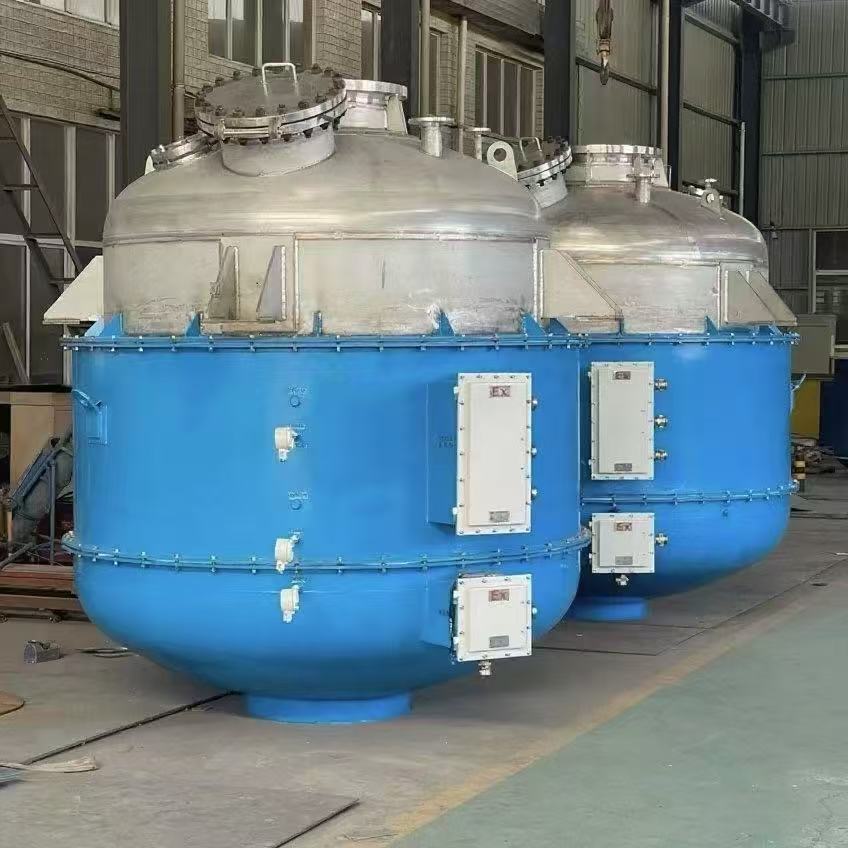
When a reactor system arrives with seemingly minor deviations from the spec sheet, the temptation to rationalize it as "close enough" can be overwhelming. Bolts that don't quite match the material grade, a slightly thinner vessel wall than ordered, or control instrumentation that falls short of the promised accuracy—these shortcuts masquerade as immediate savings. But in process-critical environments, those initial discounts almost always come with a multiplier effect later on. A subpar feed nozzle that fails under thermal cycling doesn't just cost the part itself; it triggers unscheduled downtime, scrap losses, and potential safety incidents that ripple across the entire plant's bottom line for months.
The deeper issue often lies in the supply chain opacity that enables these corners to be cut in the first place. When an offshore fabricator substitutes materials without clear documentation, or when quality control checkpoints are bypassed to meet a delivery deadline, the owner-operator inherits a latent defect that may not surface for years. The cost of tracing the problem back through layers of supplier agreements, performing metallurgical failure analysis, and retrofitting a system that was never designed for field modifications can dwarf the original purchase price. And that's before considering the loss of production capacity while the reactor sits idle.
Perhaps the most overlooked cost is the erosion of institutional trust and operational predictability. Every unplanned outage and every near-miss investigation erodes the confidence operators have in their equipment. That psychological toll translates into conservative operating envelopes, unnecessary maintenance cycles, and a reluctance to push for throughput targets that the original design was meant to handle. In the long run, the reactor system that seemed like a bargain becomes the bottleneck that keeps the entire process from reaching its potential, quietly siphoning profitability year after year.
What Most Buyers Overlook When Sourcing Heating Reactors Abroad
When sourcing heating reactors internationally, buyers tend to fixate on the big-ticket specs—capacity, temperature range, and pressure ratings—but the subtle configuration details often make or break the system’s long-term reliability. For instance, the placement and type of temperature sensors can dramatically influence process control, yet many assume a standard thermocouple port will suffice. In reality, the immersion depth, sheath material, and response time must match the specific reaction profile; overlooking this can lead to hot spots, sluggish feedback loops, or even runaway reactions that compromise both safety and yield.
Another blind spot is the auxiliary infrastructure that’s rarely spelled out in bids but proves critical during commissioning. Buyers forget to factor in the local power supply’s stability and phase balance, which can cause uneven heating or trip the reactor’s controllers if not explicitly accommodated in the design. Similarly, the compatibility of gaskets, seals, and even the thermal fluid with the intended chemistry is often taken for granted; what works in a European pilot plant might fail in a humid Southeast Asian factory due to subtle differences in ambient conditions or raw-material purity. The cost of rectifying these mismatches post-installation far exceeds the price of getting the details right at the quoting stage.
Finally, the human element—training and documentation—gets deprioritized in the rush to secure a bargain. You can import the finest German-engineered heating reactor, but if your operators can’t interpret its control logic or troubleshoot a simple sensor fault, you’ll face costly downtime. Comprehensive, jargon-free manuals, remote diagnostics support, and a handful of hands-on training days can prevent weeks of fumbling. The suppliers willing to provide this level of after-sales partnership are often the ones who’ve already engineered these nuances into the equipment, making their proposal worth far more than a lower sticker price might imply.
Installation Mistakes That Undermine Even the Best Reactor Designs
Even a perfectly engineered reactor can fail if the foundation isn’t up to the task. One common blunder is pouring concrete pads that aren’t level—just a fraction of an inch off can create stress points in the vessel shell over time. Another is skimping on anchoring bolts, leaving the entire structure vulnerable to shifting during thermal cycling. Too often, installers underestimate ground vibration or soil settlement, assuming the static load is the only thing that matters. When the ground moves in ways the design never accounted for, cracks or misalignment become almost inevitable.
Pipework and nozzle connections are where a lot of installations go sideways. It’s tempting to force a fit when flanges don’t line up perfectly, but that extra torque on bolts transfers stress right into the nozzle, eventually leading to leaks or fatigue cracking. Some teams overlook the need for expansion loops or flexible connectors, especially on hot lines—rigid piping that can’t stretch with temperature swings acts like a giant lever working against the reactor. Even the sequence of welding can create enough distortion to throw off alignment, and if that’s not corrected before final bolting, you’re building in a failure point from day one.
Instrumentation and control wiring might seem like an afterthought, but sloppy routing can undermine the entire safety system. Bundling sensor cables next to high-voltage power lines introduces electrical noise that scrambles readings, making it impossible to tell if a temperature spike is real or just interference. Transmitters mounted without proper standoff or heat shielding drift out of calibration quickly, leading operators to overcorrect or ignore warnings. And when someone drills holes for conduit without sealing around them, moisture and corrosive vapors find their way into sensitive electronics. These aren’t design flaws—they’re installation shortcuts that slowly eat away at reliability long after the warranty expires.
Extending Reactor Life Without Sacrificing Performance
A quieter approach to longevity often lies in the metal itself. Small adjustments in alloy composition, particularly the careful distribution of trace elements like niobium or tantalum, can dramatically slow neutron-induced embrittlement. It’s not about overthrowing proven materials but nudging their microstructure toward a slower aging process. When the crystal lattice resists void swelling more stubbornly, the same power output can be sustained for additional decades without creeping into unsafe territory. The trick is in that delicate balance—strengthening without making the steel too brittle to handle thermal cycling.
Monitoring has moved well beyond scheduled inspections. Embedded fiber optics and acoustic sensors now map stress and temperature gradients in real time, feeding data into physics-informed models that trace fatigue almost grain by grain. Operators can then shift coolant flow or adjust power distribution to ease hotspots before they carve out damage. This isn’t predictive maintenance in the buzzword sense—it’s more like a continuous dialogue with the machine, letting it run at full clip while subtly guiding it away from the wear patterns that used to set retirement dates.
Sometimes the simplest mechanical rethink yields the biggest gain. By designing internal components as independently replaceable modules, utilities can swap out a worn baffle or reflector without derating the whole core. It’s a Lego-like philosophy that acknowledges different parts age at different speeds, and it sidesteps the old trade-off where keeping one component alive meant choking the whole system. Paired with cooler-running fuel designs that maintain high burnup without pushing cladding temperatures to their limits, the reactor keeps its original performance envelope while its internal calendar stretches further than the original blueprints ever assumed.
Matching Reactor Capabilities to Industrial Process Needs
Industrial processes demand reactors that can adapt to a wide range of conditions—temperature, pressure, mixing intensity, and residence time are rarely one-size-fits-all. A poorly matched vessel leads to inefficient heat transfer, uneven mixing, or even safety risks. That’s why engineers often start by mapping the reaction kinetics and phase behavior directly to hardware features: jacket geometry for exothermic control, impeller type for gas-liquid dispersion, or specialized internals for catalyst retention. It’s a deliberate pairing that turns chemistry into reliable production.
Beyond the obvious thermal and mechanical fit, long-term flexibility separates robust installations from those that bottleneck when product lines shift. Reactors designed with interchangeable components—such as modular baffles, variable-speed drives, or multi-purpose nozzle arrangements—let operators fine-tune performance without costly rebuilds. This approach proves especially valuable in fine chemical and pharmaceutical settings, where campaign lengths are short and changeover frequency is high. Early collaboration between process development and equipment engineering uncovers these needs before capital is committed.
Material compatibility often becomes the deciding factor that undercuts even a perfectly sized unit. Corrosion, erosion, and stress cracking can turn an elegant design into a maintenance headache if the wetted surfaces aren’t matched to the chemistry. Alloy selection, glass-lining, or exotic coatings must align with not only the primary reaction but also cleaning cycles and potential byproduct exposure. Successful matching is rarely about finding the most advanced reactor on the market—it’s about understanding the subtle demands of the process and configuring the vessel to meet them without overcomplication.
FAQ
Imported reactors often feature advanced emitter materials like ceramic-encapsulated carbon fibers, delivering faster heat-up times and a broader, more uniform wavelength distribution. This directly improves heat transfer efficiency in sensitive chemical processes, while domestic models may rely on simpler quartz tubes that degrade under prolonged high-load cycling.
Matching the peak emission wavelength to the absorption spectra of reactants minimizes energy waste. For instance, many organic reactions absorb strongly in the 6–14 μm range; an imported reactor with precisely tuned ceramic emitters can cut energy use by up to 30% compared to generic broadband units, and it reduces thermal side products caused by unnecessary heating of reaction vessel walls.
Beyond basic CE or UL marking, examine pressure vessel certifications like ASME Section VIII if the reactor operates above 15 psi, and ATEX/IECEx ratings for explosive atmospheres. Overlooking material traceability certificates (e.g., EN 10204 3.1) can lead to customs holds or re-testing costs that erase the initial purchase savings.
Infrared-transparent windows made from sapphire or quartz must resist attack from process vapors; a single overlooked incompatibility with a chloride-bearing stream can pit a window within weeks, causing costly downtime. Imported designs frequently offer multi-layer protective films or coated reflectors that extend lifespan in aggressive environments, but these require verification against specific chemical resistance charts.
Request third-party test reports with direct power-to-heat-output measurements under load, not just no-load electrical specs. A practical field check involves simultaneously monitoring power draw and reactor skin temperature rise via thermal imaging over a standardized batch cycle, then comparing against the manufacturer's modeled efficiency curves for your exact fluid volume and agitation pattern.
Voltage phase imbalance from local supplies can silently derate emitter output, and mismatched control signal protocols (e.g., 4–20 mA vs. 0–10 V) often cause startup delays. Installers frequently overlook the need for dedicated cooling air paths around power cabling, leading to insulation breakdown within months. Commissioning must include IR camera scans at full load to detect hot spots from contact resistance in imported junction boxes.
Conclusion
Far infrared heating reactors have transformed industrial heat transfer by delivering energy directly to materials, slashing warm-up times and boosting uniformity. This leap in efficiency isn't just about speed—it reshapes how manufacturers approach system imports. Too often, buyers chase lower upfront costs, ignoring the hidden expenses of subpar components and poor thermal control. A cheaply built reactor may underperform, waste energy, or fail early, wiping out any initial savings. When sourcing abroad, it's crucial to look past glossy spec sheets and scrutinize real-world performance data, material durability, and local support. Many also overlook voltage compatibility, spare parts availability, and regional safety certifications, leading to costly retrofits or compliance headaches later.
Even a brilliantly designed reactor can underperform due to installation oversights—think inadequate ventilation, misaligned reflectors, or improper clearance. These simple mistakes throttle the output and shorten the system's working life. To maximize longevity without throttling back on throughput, regular maintenance must go beyond cleaning: it includes monitoring emitter degradation, recalibrating controls, and promptly swapping worn insulation. Pairing the reactor exactly to the process is what truly seals the return on investment. Whether it’s curing coatings, drying textiles, or preheating composites, the wavelength, power density, and configuration must match the material’s absorption profile and the line speed. Over-engineering wastes energy; under-specifying bottlenecks production. A thoughtful import strategy weaves together all these threads—technical diligence, operational fit, and lifecycle planning—to deliver a heating system that consistently meets industrial demands without surprise costs or downtime.
Contact Us
Contact Person: Mr. Wang
Email: [email protected]
Tel/WhatsApp: 8613705299955
Website: https://vip.e-baixing.com/szhgyw