
Export Rotary Concrete Reclaimer to Global Markets with Confidence
2026-08-19
You can read a hundred export guides and still freeze when the first container of rotary concrete reclaimers reaches a foreign port. That's the moment confidence is earned—or lost. At Sinou, we approach global markets differently, focusing on the three things that actually determine whether your equipment is welcomed or warehoused.
What Actually Changes When a Rotary Reclaimer Replaces a Settling Pit
A settling pit works on patience and gravity. Solids drift to the bottom, water gets drawn off the top, and everyone hopes the schedule doesn't move too fast. The moment a rotary reclaimer enters the equation, that whole quiet rhythm disappears. Instead of waiting for material to separate on its own, a rotating drum actively lifts, de-waters, and discharges solids in a continuous loop. The change is less about replacing one machine with another and more about abandoning a passive mindset.
Operationally, the shift shows up in space and labor. Pits need room for sludge to accumulate, plus regular shutdowns for digging and hauling. A rotary reclaimer shrinks that footprint and removes the manual cleanup cycle almost entirely. What often goes unnoticed is how much smoother downstream processing becomes. Because the reclaimer delivers material at a steady moisture level rather than in unpredictable batches, pumps, conveyors, and filters stop seeing sudden surges or dry spells. The whole line starts behaving like a designed system instead of a series of workarounds.
There is also a subtle change in how operators think about recovery. With a settling pit, anything that sinks is a cost until someone removes it. With a rotary reclaimer, that same material becomes a stream that can be measured, adjusted, and returned to the process. The machine doesn't just replace a hole in the ground; it changes the plant's relationship with its own waste.
Regional Demand Signals for Concrete Reclaimers Worth Reading Before You Quote
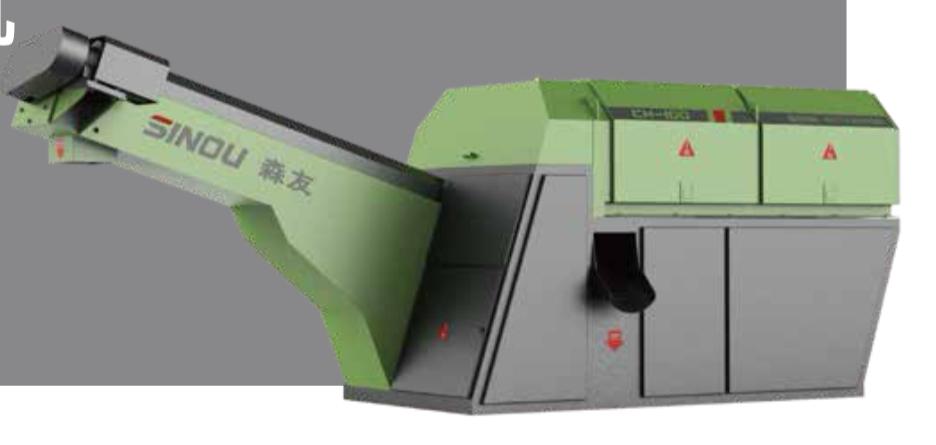
Demand for concrete reclaimers rarely tracks national construction spending alone. In fast-growing markets like central Texas, Phoenix, and parts of the Southeast, plant expansions create a baseline of interest, but the conversion to quotes often follows local water permit reviews. When a ready-mix site faces tighter limits on suspended solids or higher fees for off-site slurry hauling, the reclaimer shifts from optional equipment to a line item in the plant upgrade budget.
The Midwest and Intermountain West tell a different story. There, aggregate shortages and rising sand prices make material recovery the sharper selling point. Buyers in those regions tend to ask about payback periods tied to reclaimed aggregate tonnage rather than environmental compliance. Quoting into these areas without referencing local aggregate indices or disposal costs will usually miss the real trigger.
A third signal comes from state and county enforcement patterns. Regions that have issued recent fines for concrete washout runoff or that are phasing out temporary washout pits tend to see a six-to-twelve-month lag before reclaimer inquiries rise. Monitoring those regulatory shifts—not just the headline construction numbers—gives you a better sense of which quotes will face serious buyers and which will stall.
Build Specs and Compliance Markers That Calm Customs and Site Inspectors
Nothing puts an inspector at ease faster than documentation that speaks their language before they even ask. Build your specs around the exact tolerances, material grades, and test methods referenced in the local building code, then add a short compliance note next to each line item. When the customs officer flips through the paperwork and sees familiar clause numbers, the whole conversation shifts from suspicion to verification.
Markers matter as much as the content. Use consistent stamps, colored tabs, or bold headers on every page that correspond directly to the checklist the inspector carries. A red tab for fire ratings, a blue one for structural loads, a green one for electrical schematics—once they learn your system, they move through the site faster. It sounds simple, but most delays come from inspectors having to hunt for proof, not from missing compliance.
Calm also comes from showing that you anticipated the next question. Attach a one-page summary at the front of the spec package: key design assumptions, deviations and how they were resolved, and the name of the engineer who signed off. Include a phone number and offer a walk-through time slot. When an inspector feels like you’ve already done half their job, they stop looking for reasons to hold the shipment or shut down the site.
Voltage, Climate, and Layout Adjustments That Keep Export Machines Running
Export machines rarely meet a uniform grid. A unit built for 480 V three-phase service in Ohio might land in a Southeast Asian plant where nominal supply drifts between 380 V and 415 V, with frequent sags. Rather than swapping entire drive systems, many builders fit multi-tap transformers and wide-input power supplies, then program the PLC to monitor phase balance and shut down gracefully if one leg drops more than 12%. That keeps motors from cooking insulation and lets the same base frame serve customers on four continents.
Climate is the quieter killer. High humidity plus salt air along a coastline will corrode unprotected connectors within months, while a high-altitude site in the Andes reduces air density enough to derate cooling fans by a fifth. Practical fixes include conformal coating on control boards, stainless or sealed connectors, and using positive-pressure enclosures with filtered intakes. Some shops also add space heaters inside cabinets to drive out condensation during overnight shutdowns—a cheap addition that prevents a lot of intermittent faults.
Layout adjustments tend to be overlooked until installation day. A machine designed around a 2-meter service aisle won't fit into an older factory where columns sit 1.7 meters apart. Export-focused builders now design control cabinets with side-access panels, route cables through removable top plates, and split large frames into bolt-together modules that clear standard doorways. They also leave extra cable loops at hinge points and specify quick-disconnect fittings, so the crew in another country can reposition the unit without custom fabrication.
Where the Payback Actually Shows Up in a Ready-Mix Operation
The most reliable payback in a ready-mix operation rarely shows up on the invoice. It hides in batch tolerances—when moisture probes on sand and stone are recalibrated weekly instead of monthly, a plant can trim 6 to 10 kilos of cement per cubic meter without touching strength. That small adjustment adds up to a loaded cement tanker every few weeks, and it comes straight off the cost line.
The next place returns appear is at the back of the truck. A tighter handle on slump before dispatch cuts the water added on site, which in turn lowers the chance of rejected loads and callbacks for low cylinders. Fewer trucks parked at the pump for an extra twenty minutes means the same fleet covers more pours per day, and that’s where a ready-mix operator actually feels the difference—not in a report, but in the daily schedule.
Support Without the Distance: Spare Parts and Remote Troubleshooting Done Right
When a machine goes down in the field, the last thing you want is a support line that treats you like a ticket number. Our approach strips away the usual runaround. Instead of forcing you through endless phone trees or waiting days for a callback, we connect you directly with a technician who knows your equipment—often the same person who helped install it. The goal is simple: get you back online without making you explain the problem five times.
Spare parts are a common sticking point, but they don’t have to be. We keep a lean inventory of the components that actually fail in real-world conditions, not just the ones that look good on a spreadsheet. If we don’t have the part on hand, we’ll tell you straight away and give you an honest lead time—no vague “should ship soon” promises. For remote troubleshooting, we use live video and screen sharing to walk you through diagnostics step by step. You’ll see exactly what we see, and we’ll only recommend a replacement part after ruling out simpler fixes like a loose cable or a dirty sensor.
Distance stops being an excuse when the process is built around clarity. We send you labeled photos, short videos, and torque specs before you even touch a wrench. If a part is backordered, we’ll suggest a temporary workaround that keeps you running—like swapping a module from a less critical unit or adjusting a parameter remotely. That’s what done right looks like: no fluff, no finger-pointing, just a support team that treats your downtime as their own.
FAQ
It needs to handle a wide range of aggregate sizes and slurry consistencies, comply with common safety and electrical standards, and be built with corrosion-resistant materials for long sea freight and varied site conditions.
We configure motors and control panels to match the local power supply—whether 380V/50Hz, 460V/60Hz, or other common combinations—and include clear wiring diagrams so local electricians can commission the unit without guesswork.
A commercial invoice, packing list, bill of lading, certificate of origin, and sometimes a CE or equivalent conformity document. We also provide a detailed parts list and installation manual to speed up inspection.
Yes, if ordered with the right options. We offer cold-weather packages with heated water lines and insulated tanks, and high-temperature packages with upgraded cooling for hydraulic and electrical components.
Each unit is shrink-wrapped, secured to a steel skid, and treated with anti-rust coating. Critical components are braced internally, and we use moisture-absorbing desiccants inside the control cabinet to prevent condensation damage.
Remote commissioning via video call, a dedicated technical contact for troubleshooting, and a stocked spare parts program with express shipping options. We also offer on-site training through regional partners when feasible.
Production typically takes 30-45 days, and sea freight adds another 2-6 weeks depending on the destination. We provide a confirmed shipping schedule and tracking updates once the vessel departs.
Some countries require additional electrical certifications or local agent representation. We check the destination’s import regulations before quoting and can supply necessary test reports or third-party inspections.
Conclusion
Swapping a settling pit for a rotary concrete reclaimer changes much more than the cleanup routine. Instead of paying to haul sludge and watching fresh water disappear into wash-down, a plant starts separating sand, aggregate, and cement slurry within minutes. That material goes back into the batch, and the clarified water gets pumped straight into the next mix. Before quoting any export order, though, it pays to read the demand signals carefully. The Middle East and Southeast Asia currently lead in retrofit projects because water scarcity and tighter environmental enforcement make reclaimers a budget line, not an option. Latin American buyers often prioritize simpler control panels and 60 Hz motors, while European importers expect full CE documentation and ISO-aligned weld inspection reports. Those compliance markers do not just please customs; they give site inspectors a reason to sign off without weeks of back-and-forth.
Getting the machine onto a container is only half the story. A reclaimer built for a mild coastal climate will not survive a desert yard or a sub-zero winter unless voltage, cooling, and corrosion protection are adjusted early. Export-ready units often need IP65 enclosures, tropicalized control boards, and layouts that match local truck approach angles. The payback in a ready-mix operation shows up fastest in disposal savings: fewer truck washouts sent off-site, less fresh water purchased, and recovered aggregate that offsets raw material costs. Many plants reach full return in under eighteen months. After delivery, support matters more than the initial price. Remote troubleshooting through a VPN link, a local stocking partner for wear plates and seals, and short video calls during commissioning keep downtime to hours instead of weeks. That is what makes exporting a rotary reclaimer feel less like a one-off sale and more like a long-term partnership.
Contact Us
Contact Person: HaiYan
Email: [email protected]
Tel/WhatsApp: +86 18957325588
Website: https://www.senyoubeton.com/