DGENIUS Flyknit Bag Exporter Delivering Premium Quality Worldwide
2026-11-02
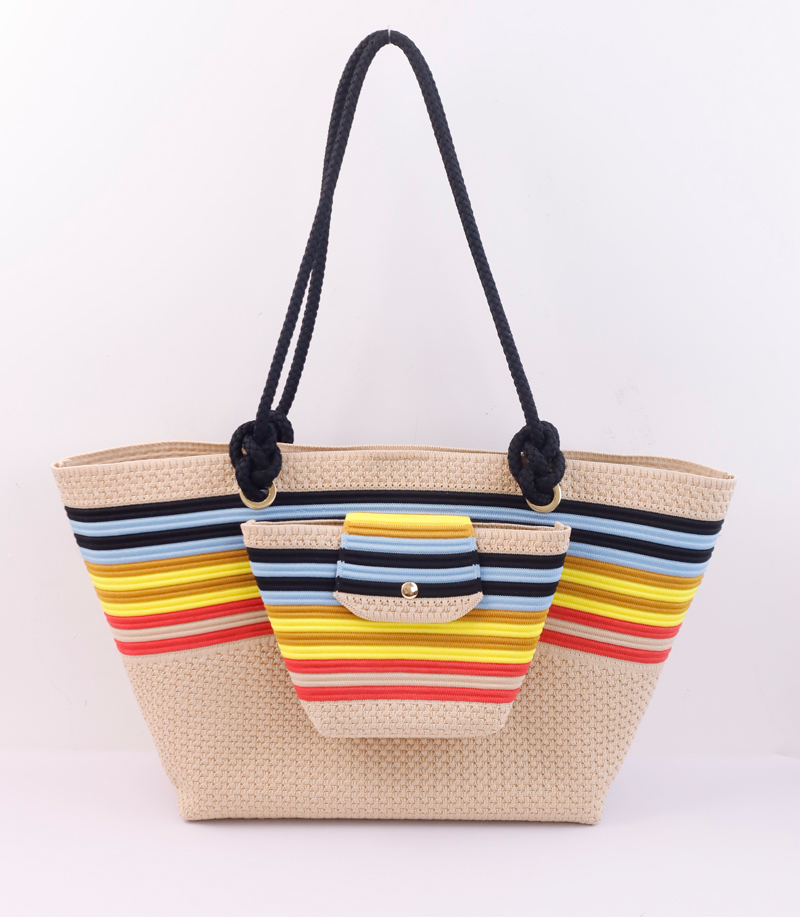
When a simple bag becomes a statement of precision, you know the maker sees things differently. That’s the quiet confidence behind every DGENIUS Flyknit Bag we ship from YONGFENG — not just another exporter, but a partner obsessed with details most brands overlook. From the first thread to the final stitch, our Flyknit technology bends form and function into one seamless experience. And as the world demands more from every product, we’re here to prove that premium quality doesn’t have to be complicated. Stick around to see how a bag crafted with intention ends up in the hands of customers who demand nothing less.
Inside the Flyknit Difference: Why Our Bags Feel Broken-In on Day One
Most bags demand a breaking-in period—stiff corners, unyielding straps, fabric that fights you for weeks. Flyknit changes that equation entirely. The material is engineered as a single, seamless piece, so there are no bulky seams or rigid panels digging into your shoulder or back. From the very first lift, the bag moves like it’s already memorized your body.
That broken-in feel isn’t a coincidence; it’s built into the knit structure itself. The weave flexes and recovers instantly, contouring to what you carry without sagging into a shapeless heap. You get the soft, lived-in comfort of a bag you’ve owned for years, minus the scuffs, stretched-out pockets, and faded color that usually come with them.
We’ve skipped the “new bag stiffness” stage completely, because your gear shouldn’t need a warm-up. Whether it’s tossed into an overhead bin or slung across your back for a commute, the Flyknit shell adapts in real time. It feels familiar on day one, and it only gets better from there.
Your Container, On Time: The Export Logistics Behind 43 Countries and Counting
When a shipment leaves our warehouse, it isn't just a box with a tracking number. It's a promise that somewhere in Rotterdam or Lagos or Busan, someone's production line won't stall. That promise starts with the unglamorous work of export logistics: the customs paperwork filed at 2 a.m., the last-minute call to re-route a container away from a congested port, the pallet stacked so precisely that it survives a rough sea crossing without a scratch.
Moving goods to 43 countries hasn't come from chasing volume. It's come from learning the quirks of each border—how a phytosanitary certificate gets an extra stare in one country, while another only cares about the harmonized code's sixth digit. Our team treats those quirks as local knowledge, not obstacles. That's why the same container that clears customs in under six hours in Singapore can also navigate a multi-day inspection in Mombasa without triggering demurrage fees.
On time doesn't mean early or late. It means respecting the chain: the truck that arrives before the warehouse dock opens, the vessel that berths during a narrow tidal window, the importer who can plan production because the ETA hasn't shifted by three days. Behind every one of those 43 countries is a person who stopped checking the tracking page after the third on-time delivery. That's the export logistics we actually sell—not containers, but the absence of worrying about them.
OEM/ODM Without the Runaround: Custom Flyknit Bags That Ship in Weeks, Not Months
Most suppliers make you chase confirmations, re-explain your design, and wait through endless back-and-forth before a custom flyknit bag even enters sampling. That runaround eats months and patience. We cut it out from the first conversation. You send the specs or a rough sketch, we handle material sourcing, knitting patterns, and hardware selection in-house, and your first physical sample lands in your hands within days, not quarters.
The secret is a vertically integrated flyknit workshop where the same team runs the knitting machines, cutting tables, and assembly line. No outsourcing to third-party factories, no waiting for a middleman to translate your changes. Adjust a thread color or change a zipper pull? The new sample ships the same week. Minimum order quantities stay low, so you can test a market or launch a small batch without committing to a container load just to see if the design works.
That means your branded flyknit backpack, tote, or crossbody goes from finalized spec to packed cartons in two to three weeks, not the usual five or six months. You keep your launch date. You keep your sanity. And when a customer asks for a tweak mid-season, you can actually offer it without apologizing for a lead time that kills the deal.
The 12-Point Check We Run on Every Seam (And Why It Matters for Your Brand)
Every seam tells a story before the customer ever tries the garment on. Our 12-point check starts at the needle and follows the thread through tension, stitch length, edge finishing, and stress-point reinforcement. A missed loop or a slightly uneven feed might not show up on the hanger, but it will after a dozen washes. By catching those flaws now, we keep returns low and trust high.
The list isn't a marketing gimmick. It exists because a brand's reputation often hangs on the weakest seam in a single order. We measure seam allowance, check for puckering, test stretch recovery on knit seams, and compare every run against the approved sample. If point seven or point nine fails, the piece doesn't ship until it's reworked. That kind of consistency is what lets you put your label on something without holding your breath.
For you, the payoff shows up in repeat customers and fewer complaint emails. For us, it's a discipline that removes guesswork from quality control. The 12-point check may sound detailed, but it's really just a promise made stitch by stitch: if it's not good enough for our own name, it's not good enough for yours.
Lightweight Bags, Heavyweight Durability: The Hidden Specs Our Competitors Miss
On paper, most lightweight bags look identical: similar dimensions, similar capacity, similar weight claims. But the real story is in the materials that never make it to the spec sheet. Things like the density of the ripstop weave, the coating on the zippers, or the way the shoulder straps are stitched at stress points. These are the details our competitors gloss over, but they're exactly what separates a bag that survives years of daily abuse from one that starts fraying after a single season.
Take the base fabric for example. We use a 210D nylon with a dual-sided silicone treatment, not just a one-sided PU coating. That means water beads off from the outside while the inside stays smooth enough to prevent abrasion on your gear. Most brands list "water-resistant nylon" and call it a day. We list the denier, the thread count, and the abrasion test cycles. Because if you're hauling your life around in a bag, you shouldn't have to guess whether it will survive a downpour or a rough airport conveyor belt.
Then there's the hardware. Our zippers are coil-style with a matte finish, not because it looks better, but because a matte finish hides the micro-scratches that eventually lead to corrosion. The pulls are oversized so you can grab them with gloves on. The buckles are glass-filled nylon, not standard acetal, which means they won't snap in freezing temperatures. None of this shows up in a marketing photo. But after three years, you'll feel the difference every time you open the main compartment and the zipper still glides like it did on day one.
From Sample to Sea Freight: What a First Order with DGENIUS Actually Looks Like
Your first order with DGENIUS usually starts small: a sample request. You pick a product, ask for a sample, and it arrives by courier within a week or two. Once you check the build, materials, and labeling, you confirm the bulk order with any tweaks. This step often takes longer than people expect, but it prevents costly surprises later.
After the down payment clears, production begins. DGENIUS sends weekly photo or video updates from the line, so you can see the units being assembled and packed. If you requested custom packaging or a specific carton size, that gets finalized here. Quality control happens before boxing, and you can request a third-party inspection if you want extra assurance.
When the goods pass inspection and the balance is paid, the order moves to sea freight. A forwarder books the container, the factory loads it, and you receive a set of shipping documents—bill of lading, commercial invoice, packing list. Transit time depends on the destination port, but you can usually track the vessel. Your first delivery typically lands 30 to 45 days after the container sails, depending on the route and customs clearance.
FAQ
Each bag uses a tightly woven knit fabric that keeps weight down while staying resistant to daily wear. The lining and zippers are picked to match the same standard.
Every batch passes through stitch inspection, pull tests, and a final visual check. Only bags that meet the spec leave the facility.
Yes, custom dyeing and logo placement are available. The team works from your design file and sends a pre-production sample before the full run.
Standard orders ship within 15-20 days after sample approval. Larger quantities may need a little extra time, but the schedule is confirmed at the quote stage.
The company ships to markets across North America, Europe, and parts of Asia, with reliable forwarding partners for each region.
They focus on lightweight Flyknit construction and honest communication. You know the production timeline, material source, and final cost before committing.
Bags can be individually poly-bagged, placed in branded boxes, or shipped flat to save space. The packaging is adjusted to protect the knit surface during transit.
Yes, the typical MOQ is 300 pieces per color, but smaller trial orders can sometimes be arranged for first-time buyers.
Conclusion
DGENIUS has built its name on a simple promise: Flyknit bags that feel broken-in from the first wear, yet survive years of daily use. The Flyknit difference isn't marketing fluff—the fabric is woven to flex and soften immediately, so there's no stiff, boxy break-in period that customers quietly resent. That comfort is backed by a 12-point check on every seam, catching weak spots most factories ignore. The lightweight build hides reinforced stress panels and dense, abrasion-resistant yarns, the kind of hidden specs competitors miss. For your brand, that means fewer returns, stronger reviews, and a product that genuinely stands apart.
The export side runs just as deliberately. We've delivered to 43 countries on schedule by treating logistics as part of the product, not an afterthought. OEM/ODM clients skip the usual runaround—custom Flyknit bags go from approved sample to sea freight in weeks, not months. A first order follows a clear path: sample approval, a transparent production timeline, then consolidated shipping with real tracking. You get premium quality, practical customization, and delivery that respects your launch calendar, all without the typical supplier delays.
Contact Us
Contact Person: Mr Deng
Email: [email protected]
Tel/WhatsApp: +86-18926872657
Website: https://www.uniyongfeng.com/