
Custom Cycling Socks: The Ultimate Performance and Style Upgrade
2026-06-01
Every cyclist knows that the right gear can make or break a ride, but one often-overlooked hero is the humble sock. Beyond basic comfort, custom cycling socks are emerging as the secret weapon for performance and self-expression. Whether you're chasing seconds on a climb or turning heads at the coffee stop, personalized socks blend technical fabrics with unique designs that stock options simply can't match. Enter Mingjun, a brand reshaping how riders think about what goes on their feet—combining advanced moisture control, targeted cushioning, and limitless style possibilities. In this post, we'll explore why custom socks are your next upgrade, how they boost both performance and aesthetics, and what makes Mingjun's approach stand out in a crowded market.
Why Generic Socks Fall Short on Long Rides
Slide a pair of generic cotton socks into your cycling shoes, and for the first twenty minutes you might not think twice. But stretch that ride into something serious and those one-size-fits-all foot wrappers start to protest. They bunch up under your arch, rub raw against your heel, and after an hour you’re adjusting your toes more than your cadence. It’s not that they’re broken—they were never built for the repetitive pressure and forward-leaning posture of a long ride.
The real trouble lives in the fabric itself. Cotton hangs onto moisture like a grudge, turning sweat into a slick, clammy layer inside your shoe. That dampness softens the skin just enough to invite friction blisters, and without any targeted cushioning, every pedal stroke drives heat straight into the ball of your foot. There’s no arch grip to hold things in place, no mesh panels to flush out the heat, so you end up with that numb, swollen feeling that creeps in after mile forty.
On a short coffee run, it barely registers. But when you’re hours deep into a century ride, bad socks become a silent distraction that chips away at your focus and power. You start compensating, shifting weight to ease a hot spot, and suddenly your whole form suffers. Cycling-specific socks aren’t just a luxury—they’re a cheap fix for a problem that generic socks create out of thin, clingy air.
Mapped to Your Foot’s Every Move
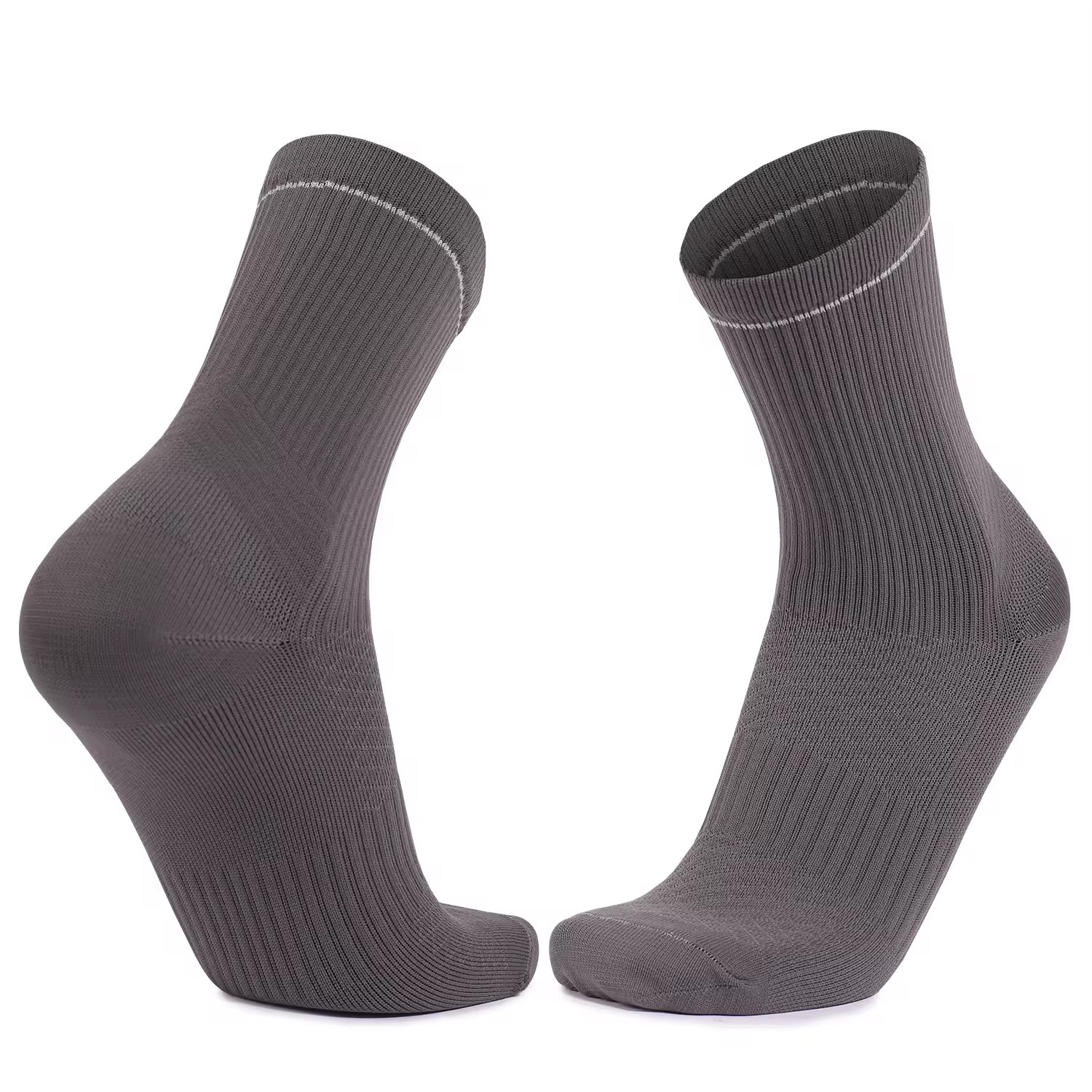
Every step you take tells a story, and our design listens. Rather than relying on broad size charts, we’ve engineered a dynamic fit that responds to the unique pressure points and contours of your foot. As you walk, the material subtly shifts and adapts, ensuring that no two steps feel exactly the same—just like your gait.
It’s not just about cushioning; it’s about understanding how your weight transfers from heel to toe. The layered construction mirrors the natural rolling motion of your stride, reducing strain on your arches and allowing for a smoother push-off. You’ll notice the difference the moment you lace up, as the shoe feels less like an accessory and more like an extension of your own movement.
Long days on your feet shouldn’t end in fatigue. By mapping the micro-movements that happen inside your shoe, we’ve created a system that actively supports where you need it most. Whether you’re navigating city streets or standing for hours, the result is a subtle, continuous dialogue between your foot and the ground—one that keeps you going without thinking twice.
The Fabric Blend That Handles Sweat and Speed
You know that sticky, weighed-down feeling mid-run? This fabric blend is designed to cancel it out. It pulls moisture off your skin fast and lets it evaporate before you even notice. The result is a dry, barely-there sensation that keeps your focus on the road ahead, not on clinging layers.
Instead of fighting your motion, the material stretches with every stride. Four-way give means no pulling at the shoulders or riding up at the waist. It’s cut to move like a second skin, but durable enough to hold its shape after countless washes and miles.
Breathability isn’t an afterthought — it’s woven into the structure. Tiny vents open up as your body heat rises, channeling air where you need it most. Even on sweltering days, you’ll stay cool without sacrificing the sleek, streamlined fit that cuts through the wind.
Your Kit, Your Colors, Your Way
We believe your gear should reflect who you are—not just what you do. From the moment you open your kit, the choice of colors sets the tone for every adventure. Whether you lean toward bold primaries or subtle earth tones, the palette is entirely yours. No presets, no rigid combos. Just a spectrum that lets you decide how your tools look and feel, right down to the smallest clip or strap.
Mixing and matching is part of the fun. Swap out panels, switch up accents, or keep it sleek and monochrome—the system is designed to adapt to your taste, not the other way around. Every piece works together seamlessly, so you can reconfigure your kit whenever the mood strikes. It's a reflection of your style, built into the very fabric of the gear you carry every day.
Overlooked Features Racers Actually Care About
When pushing limits on the track, it's not just horsepower and lap times that matter. Subtle design choices often become the difference between a car that feels like an extension of your body and one that fights you at every corner. A well-shaped shift knob that fits perfectly in your palm, pedal placement that allows effortless heel-toe downshifts, or steering with just the right amount of feedback—these are the details racers obsess over, yet rarely get the spotlight. They might not appear on spec sheets, but they directly shape confidence and control when every millisecond counts.
Another deeply undervalued aspect is how a car communicates. Racers crave that direct, unfiltered connection through the seat, wheel, and pedals. It's the subtle vibration that tells you the rear is about to break loose, the way the chassis settles into a turn, or the immediate response when you feather the brake. Modern cars often mask these signals with layers of driver aids, but purists seek out machines that reward feel over technology. A car that talks to you, rather than hiding its limits behind a veil of electronic interference, inspires the kind of trust that leads to faster, more consistent laps.
Then there's the visceral experience inside the cockpit. The tone and placement of the engine's induction noise, the absence of excessive road roar that fatigues you over long stints, and even the way the seat holds you during high-g corners—all of it contributes to a racer's rhythm and focus. Many overlook how a dash layout can either help or hinder split-second decisions; gauges that are easily read at a glance, controls that fall naturally to hand without requiring thought. These features may seem minor, but they reduce mental load, letting the driver stay in the zone. In the pursuit of speed, it's these carefully orchestrated sensations that turn a good race car into an unforgettable one.
From Coffee Runs to Centuries Without Changing
In the everyday scramble of office life, the humble coffee run has become a quiet ritual—a brief, informal pause that stitches together the monotony of screen-bound hours. Yet there's something almost timeless about it, a thread that connects us to centuries past where the act of procuring and sharing a warm, bitter brew has barely deviated. The mugs change shape, the beans travel farther, but the core gesture of steeping, pouring, and offering a moment of warmth remains stubbornly intact, untouched by the frantic push of progress.
Consider the 17th-century coffeehouse and its modern echo in the corner café—both served as civic arenas where ideas bubbled alongside the brew. Back then, a penny bought you entry and a dish of coffee, and you'd overhear arguments about politics or science. Today, the clatter of keyboards may have replaced the thud of broadsheets on wooden tables, but the sound of a spoon against ceramic, the half-smile exchanged while waiting for an espresso shot, is still a quiet rebellion against the culture of speed. It’s a ritual that refuses to be automated into meaninglessness.
What other daily ritual has such a seamless link to its own history? The clothes we wear, the tools we use, the languages we speak—all have shifted drastically. Yet the coffee break, from a street vendor's cart in a bustling medina to a minimalist pour-over bar in a warehouse district, hinges on the same deliberate pause. It’s a small, defiant act of slowing down that has outlasted empires and algorithms, reminding us that some things are simply too human to need an update.
FAQ
They blend technical fabrics with personalized designs, giving you both comfort and a unique look on the road.
Moisture-wicking materials keep feet dry, while targeted compression supports blood flow and reduces fatigue.
Absolutely—choose any colors, patterns, or logos to match your kit or express your style.
Yes, reinforced heels and toes, plus high-quality stitching, ensure they hold up ride after ride.
From road racing to gravel adventures, the ergonomic fit and breathable construction suit any discipline.
Machine wash cold and air dry to preserve the elasticity and vibrant prints over time.
Conclusion
Most riders start out in basic socks, only to discover how quickly they become a liability. Generic options bunch under the arch, trap heat, and slide down mid-pedal stroke, turning a long ride into a distraction. Custom cycling socks flip that script. They’re engineered with a foot-mapped fit that mirrors your every move—compression zones hug the arch and ankle while a seamless toe box prevents friction, so you forget you’re wearing them. The real workhorse is the fabric blend: a targeted mix of moisture-wicking synthetics and just enough compressive yarn to shrug off sweat and keep your feet cool during hard efforts. Racers also notice the small things, like a flat toe seam that doesn’t dig in, a cuff that stays put without strangling your calves, and reflective threads hidden in the design for low-light visibility—features that never make the spec sheet but make all the difference at mile eighty.
Beyond pure function, custom socks turn your kit into a statement. You dictate the palette, the pattern, even the placement of subtle logos, so your bike and body tell one cohesive story. That personal touch doesn’t sacrifice versatility: the same pair that looks sharp on an espresso run handles a full century without losing shape, cushion, or color. They resist fading, dry in a flash after a rain shower, and transition from race wheels to café tables without a second thought. Instead of packing multiple pairs for a weekend of mixed riding, you grab one that works as hard as you do. It’s the kind of upgrade that goes unnoticed until you realize you’ve stopped thinking about your feet entirely—and that’s exactly the point.
Contact Us
Contact Person: Tiga
Email: [email protected]
Tel/WhatsApp: 8613058331729
Website: https://www.china-socksfactory.com/