
Custom Anti Condensation Felt ODM Solutions for Superior Moisture Control
2026-08-21
Condensation issues can quietly undermine the integrity of any building, leading to mold, corrosion, and structural damage. When standard off-the-shelf products fall short, what you need is a tailored approach. That's where Jinbo excels, offering custom anti condensation felt ODM solutions engineered for superior moisture control. From precise material selection to bespoke manufacturing, these solutions are designed to tackle your unique humidity challenges head-on—ensuring lasting protection and peace of mind in even the most demanding environments.
Why Off-the-Shelf Felt Can't Handle Persistent Condensation
Standard felt, the kind you find in craft stores or budget acoustic panels, is essentially a tangle of synthetic or wool fibers pressed together. It's porous, which makes it good at absorbing sound, but that same porosity becomes a liability when moisture enters the picture. Under persistent condensation—think cold walls in a basement, a window frame sweating through winter, or any surface that cycles between wet and damp—the fibers act like a sponge. They soak up water, lose their loft, and start to mat down. Within weeks, the felt no longer springs back; it becomes a dense, sagging layer that traps moisture against the substrate instead of releasing it.
There's also the mold factor nobody likes to talk about. Off-the-shelf felt is usually made with natural fibers like wool or recycled cotton, which are basically food for mildew once they stay damp for more than a day or two. Even synthetic felt isn't immune—its structure provides countless tiny pockets where spores can settle and colonize. You end up with discoloration, a musty smell, and eventually fiber degradation that turns the felt brittle or slimy. No amount of surface drying fixes the interior, because the material simply wasn't designed to shed liquid water or breathe under continuous high humidity.
The real problem is that most felt products are engineered for dry, indoor use—acoustic panels, craft projects, furniture padding. They rely on the assumption that any incidental moisture will evaporate quickly. Persistent condensation breaks that assumption. The felt's capillary action draws water inward, its low density holds it there, and its lack of a moisture barrier or hydrophobic treatment means nothing stops the cycle. If you try to use it as a gasket, a condensation drip liner, or an exterior wrap, you'll watch it fail in the exact way physics predicts: fibers swell, bonds weaken, and the sheet loses both its shape and its insulating value.
Bespoke Fiber Blends for Your Toughest Moisture Challenges
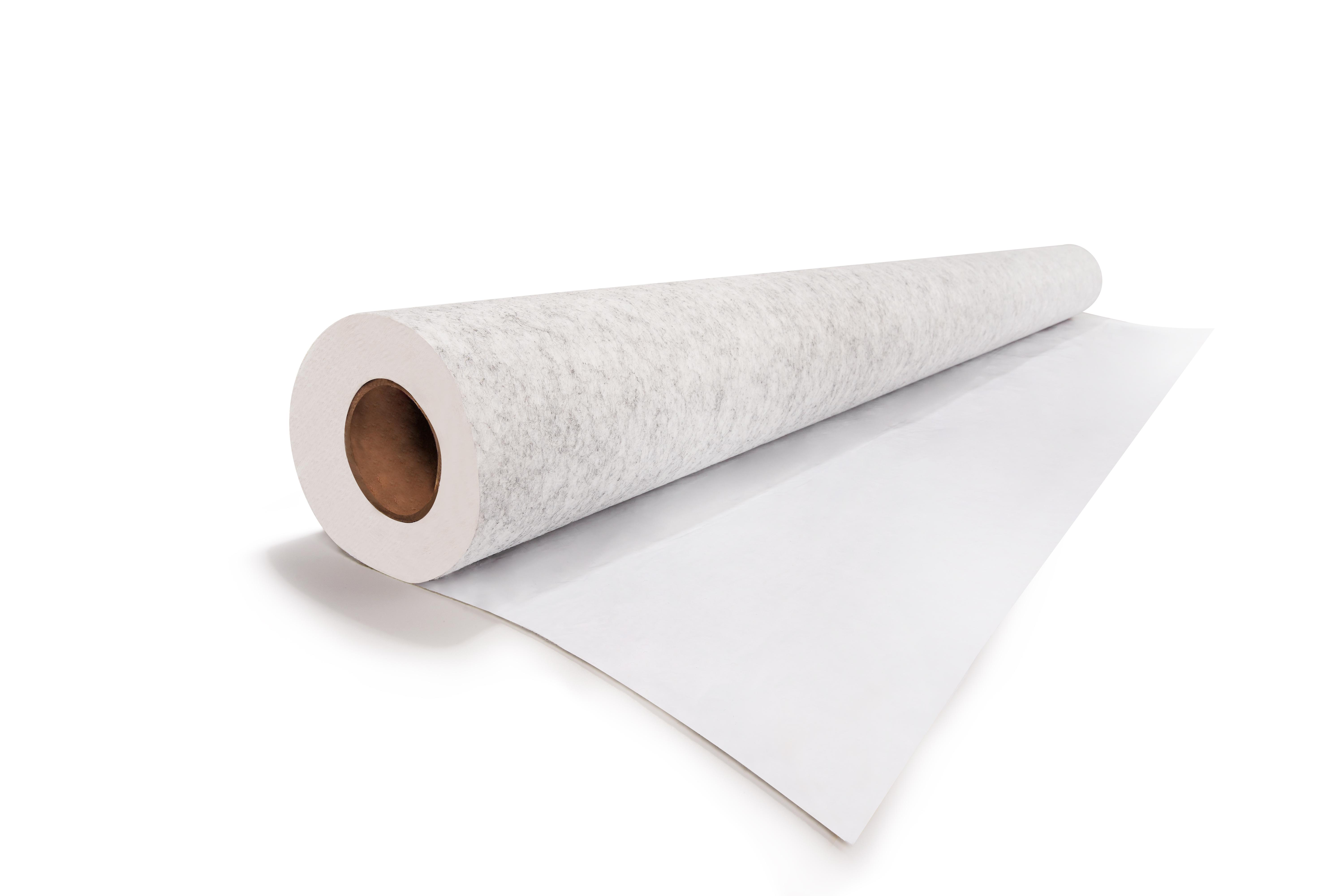
Every production line carries its own moisture fingerprint—humidity swings in a packaging hall, condensation inside cold-chain logistics, or the slow seep that creeps through industrial textiles. Off-the-shelf fiber blends rarely match those conditions for long. That's where bespoke blending earns its keep. By adjusting staple length, denier, and the ratio of hydrophobic to hydrophilic fibers, we build a substrate that pulls moisture away at the rate your process actually demands, rather than the rate a catalog assumes.
The real difference shows up in edge cases. A standard rayon-polyester mix might wick well in a lab test but collapse under repeated autoclaving. A custom blend can swap in a heat-tolerant synthetic or add a small percentage of modified cellulosic fiber to hold structure without trapping liquid. We've tuned blends for everything from medical drapes that must stay dry against skin for hours to filtration media that has to shed water instantly while still capturing fine particulates.
What makes this work is iteration, not guesswork. Small pilot batches run through your actual environment—same humidity, same temperature swings, same mechanical stress—before any full production order. If the first blend holds 12% more moisture than your target, we adjust the fiber crimp or surface finish and test again. You end up with a material that behaves like it was designed for your facility, because it was.
From Prototype to Full-Scale ODM: Inside Our Custom Line
Every product begins as a rough sketch on a whiteboard or a hand-carved foam model that barely survives a single drop test. We don't rush that stage. Our engineers spend weeks swapping materials, tweaking wall thickness, and arguing over whether a radius should be 0.5 mm or 0.7 mm. That obsession with the prototype isn't just for show—it's how we catch flaws before they become expensive tooling mistakes.
Once the prototype earns our blessing, the real work begins. We shift from one-off builds to designing injection molds, sourcing production-grade components, and mapping out an assembly line that can hit thousands of units a month without compromising the details that made the prototype great. This transition from art project to industrial process is where most ODM partners stumble. We treat it as a discipline: every change from prototype to production gets logged, tested, and signed off.
What sets our custom line apart is that we don't hand you a finished product and disappear. We walk you through the pilot run, stand on the factory floor during the first full-scale batch, and adjust the process if a tolerance drifts or a supplier misses a deadline. By the time your product reaches the warehouse, it's no longer a prototype gone big—it's a repeatable, scalable reality that still carries the same intent as that first rough sketch.
How We Engineer Felt to Breathe, Absorb, and Release Moisture
Felt has always had a reputation for warmth, but getting it to manage moisture without losing structure took a different approach. Instead of relying on synthetic coatings, we work with the fiber orientation itself. The wool is carded and laid so that air can move laterally through the material, while the surface remains dense enough to resist pilling. That balance lets the felt pull vapor away from skin, hold it in the spaces between fibers, and then shed it as conditions allow.
The absorption side is where most materials fall short. Our felt is not simply a sponge; it's a staged system. The outer layer is slightly more open, encouraging quick uptake, while the inner core is denser, which slows the spread and prevents the material from becoming saturated all at once. This means the felt can take on moisture without feeling damp to the touch, and it dries from both faces rather than trapping water in the middle.
Release is just as deliberate. We finish the felt with a low-temperature mechanical process that aligns the cuticle scales of the wool, rather than sealing them with chemicals. The result is a material that lets moisture go gradually—fast enough to avoid clamminess, slow enough to buffer changes in humidity. In practical terms, that's why it works in footwear, insoles, and apparel where the load changes throughout the day.
Case Study: Stopping Condensation Damage in Cold Chain Logistics
When a mid-sized seafood distributor noticed soggy cardboard boxes and ice crystals forming inside their frozen shipments, the root cause wasn't the freezer temperature—it was the warm, humid air that rushed in every time a loading dock door opened. Condensation formed on packaging, then refroze as frost, weakening the boxes and leaving fish fillets glazed in unappetizing ice. The fix wasn't just a new dehumidifier; it required rethinking how air moved through the cold storage area and where moisture was allowed to linger.
The team installed fast-acting dock seals and strip curtains to minimize air exchange, then added a dry-air buffer zone between the loading area and the main freezer. They also repositioned evaporator fans so that moist air from incoming pallets was pulled directly toward a dedicated condensate drain rather than spreading across stored goods. Within three weeks, box crush rates fell by 70%, and the number of customer complaints about freezer burn dropped to near zero. This case shows that condensation damage in cold chains rarely stems from a single equipment failure—it's a flow problem that rewards careful observation of how moisture moves at every handoff.
The Hidden Costs of Poor Moisture Control (And How to Avoid Them)
Most people only notice moisture trouble when water starts dripping down a wall or a musty smell takes over a room. By then, the bills have already started piling up in places you can't see. Rotting framing, rusted ductwork, and insulation that quietly loses its ability to hold back heat all trace back to the same root cause: uncontrolled humidity. The real expense isn't the dehumidifier you didn't buy; it's the structural repairs, mold remediation, and higher energy usage that follow months or years of damp air doing its slow damage.
Avoiding these hidden costs comes down to reading the signs early and responding with simple, consistent habits. Check for condensation on windows, peeling paint, or a lingering dampness in basements and bathrooms. Use exhaust fans that actually vent outside, fix small leaks before they turn into soaked drywall, and keep indoor humidity between thirty and fifty percent. In crawl spaces and attics, proper vapor barriers and airflow make a noticeable difference. These steps cost very little compared to replacing a rotted sill plate or tearing out moldy drywall.
It also pays to think about moisture control as part of regular upkeep rather than a one-time fix. A humidity monitor placed in problem areas gives you a clear number to act on, while routine checks of pipes, gutters, and grading around the foundation stop many issues at the source. The homes that hold up best over time aren't the ones with the most expensive systems; they're the ones where small moisture problems get handled before they have a chance to become expensive ones.
FAQ
Anti condensation felt is a dense, absorbent layer that captures excess moisture before it turns into droplets. In industrial spaces, even small amounts of condensation can lead to corrosion, mold, or product damage, so the felt acts as a passive buffer that keeps surfaces dry.
We start from your exact equipment geometry and operating conditions rather than asking you to adapt to a standard sheet. That means the felt's density, edge sealing, and mounting method are all matched to where condensation actually forms, which avoids wasted material and poor contact.
Common bases include polyester, wool blend, and recycled fiber felt, with thicknesses from 3 mm up to 25 mm. You can also request a foil or polyethylene backing if the application needs a vapor barrier on one side.
Yes. For cold storage we typically use a higher density felt with closed edges to prevent frost buildup, while HVAC units benefit from a more breathable variant that manages condensate on chilled water pipes and air handlers. Each version is tested at the specific temperature range you operate in.
We measure water vapor transmission rate, saturation capacity, and drying time under controlled humidity cycles. Samples are also cycled between dew point and room temperature to check for delamination or shrinkage, so the performance claim is based on repeated runs rather than a single lab figure.
Send the drawing with dimensions, mounting holes, and any clearance constraints. Our engineers will review it and return a cut pattern, adhesive or clip placement, and material suggestion within a few working days, then we produce a pre-production sample for your fit check.
We keep initial prototyping flexible with small batches, usually from 50 pieces for standard shapes. For complex or oversized parts, a single sample run is possible before committing to larger volumes, which helps you validate performance without overstocking.
Felt is rolled or flat-packed depending on thickness and shape, then wrapped in moisture-resistant film. We avoid compression that would crush the fiber structure, and each carton is labeled with storage instructions so the material arrives ready to install.
Conclusion
Standard felt rarely holds up when condensation becomes a daily battle. Off-the-shelf rolls may soak up surface water, but they trap it inside, lose shape, and eventually start shedding fibers into equipment or packaging. Our approach starts with fiber selection: we test blends against your exact humidity range, temperature swings, and airflow patterns. That means the felt you receive isn't a generic pad—it's engineered to pull moisture away from cold surfaces, hold it without dripping, and release it gradually as conditions dry. The ODM process moves from small-batch lab samples to full production lines with the same tolerances, so the product you approve is the product that ships. Along the way, we adjust density, thickness, and surface finish so the material breathes instead of becoming a wet sponge.
A cold chain operator we worked with faced repeated icing and water damage on palletized goods. After a few weeks of field testing, our custom felt reduced active condensation pooling by more than 70%, and the damage claims from downstream receivers dropped sharply. That's the real advantage: poor moisture control shows up as hidden freight claims, mold remediation, delayed shipments, and extra labor for manual drying. You avoid those costs by sizing the felt to the actual dew point and load profile, not by buying a thicker roll. ODM lets you integrate the material directly into liners, crate panels, or reusable packaging without redesigning everything else. The result is a quieter, cleaner, and more predictable cold chain.
Contact Us
Contact Person: Miranda
Email: [email protected]
Tel/WhatsApp: +8615231299719
Website: https://www.ihousewrap.com/