
CPP Film Masterbatch: Which One Is Actually Good and How to Pick It
2026-08-22
If you've ever seen haze, gels, or inconsistent slip on a CPP film line, you already know the masterbatch isn't a minor additive—it quietly decides whether your film runs clean or turns into scrap. Yet many products look identical on paper. So which one is actually good, and how do you pick without burning through trial batches? Below, we break down the few practical checks that matter. They're the same criteria we use at Xinwancai before recommending any CPP film masterbatch.
The Real Difference Between a CPP Masterbatch That Works and One That Doesn't
A CPP masterbatch that actually performs doesn't just tint the resin—it carries additives that survive the shear and heat of extrusion without clumping or degrading. Poor batches show up as fisheyes in cast film or uneven gauge, and the moment you push line speed, they start separating at the die lip. The one that works stays fully dispersed down to the primary particle size, holds viscosity steady across a 20-degree processing window, and lets you switch between gauges without purging every hour.
The failing type often hides behind a clean lab spec sheet but falls apart on the floor because the carrier resin doesn't match the host's melt flow. That mismatch creates visible streaks and lowers dart impact, especially in thin-gauge CPP for lamination. A masterbatch that works is built on a carrier that mirrors the base polypropylene's rheology, so it slips into the melt stream instead of fighting it. You notice the difference in edge trim waste and in how often the winder jams from film wander.
In the end, the real difference is repeatability from lot to lot and shift to shift. One that doesn't work forces you to tweak screw speed, back pressure, or blend ratios every delivery, and your converters start complaining about seal strength or haze drifting. The one that works just disappears into the process—it lets you run 24 hours at full output and still hit the same COF, clarity, and heat-seal initiation the customer signed off on. That quiet consistency is what separates a masterbatch that actually earns its place from one that only looks good on a quote sheet.
Warning Signs Your Current Film Shows When the Masterbatch Is Wrong
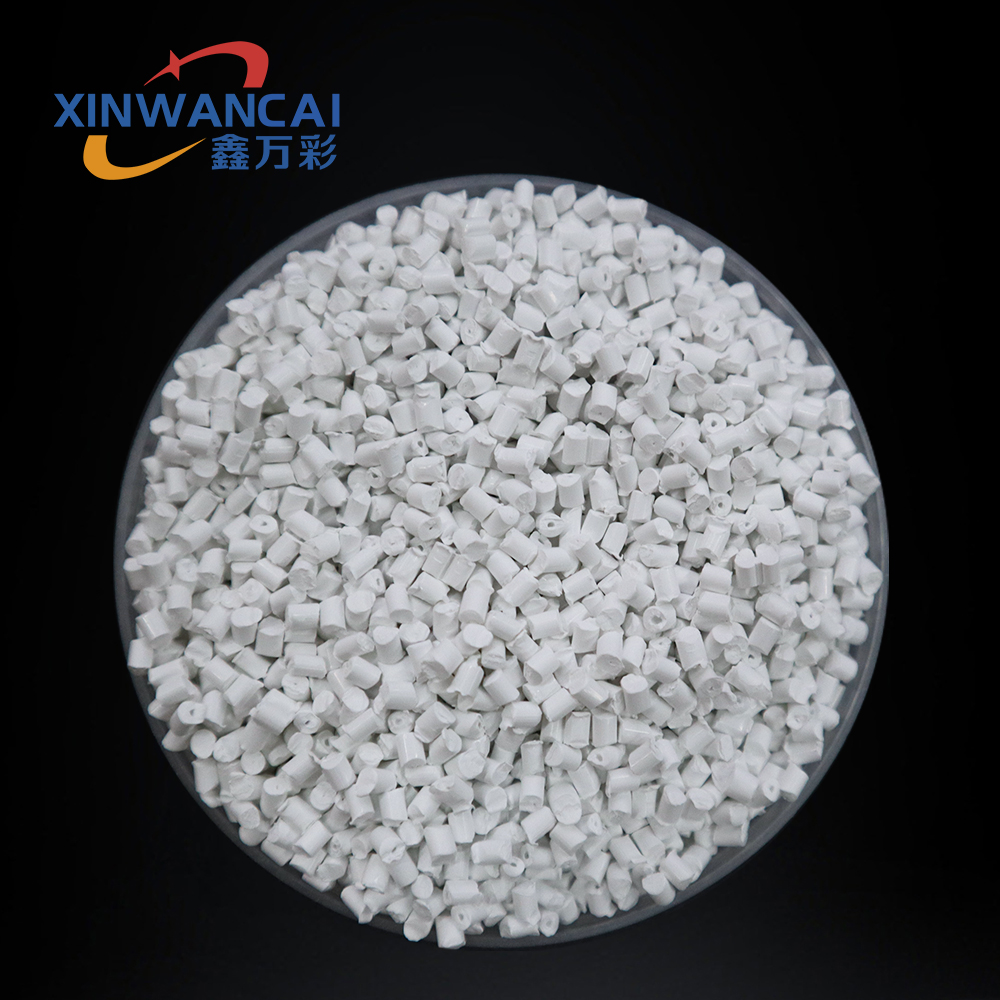
在挤出或吹膜过程中,细微的色斑往往是最早出现的迹象。它们不像正常颜料那样均匀融入树脂,而是以针尖大小的深色颗粒残留在薄膜表面。如果用手轻抚,能感觉到轻微凸起,这通常意味着色母粒中的颜料团聚未能充分打开,载体树脂与基体相容性不足。
另一个容易被忽略的警告是薄膜光泽度的局部下降。当色母粒配方中的分散剂失效或添加比例错误时,原本应呈镜面反射的膜面会出现雾状区域,尤其在深色薄膜上更为明显。这种雾斑在收卷后经时效会进一步扩展,而不是像正常薄膜那样保持稳定。
此外,注意薄膜厚度方向上的颜色波动。若将薄膜对着光源倾斜观察,发现颜色深浅交替的条纹,说明色母粒在挤出机中未完全塑化或喂料系统存在脉冲。这种条纹在印刷或复合后会被放大,导致最终产品批次间色差难以控制。
Simple Trials That Reveal Masterbatch Quality Before You Buy
Before you commit to a full shipment, run a few quick, low-cost bench tests on your own line. A spec sheet can say anything, but your extruder, your resin, and your process conditions will tell you the truth. You don't need fancy lab gear—just a small batch of polymer, a hot press or small extruder, and a careful eye for what comes out the other end.
Start with a simple let-down test in the polymer you actually use. Mix the masterbatch at your normal ratio, process it at your usual temperature and screw speed, then press or blow a thin film. Hold that film up to a light. Specks, faint streaks, or uneven color mean the pigment isn't dispersing properly, or the carrier resin isn't compatible. A good masterbatch should melt into the base polymer cleanly, leaving nothing behind but the color you wanted.
If you suspect cheap fillers, burn a small sample in a crucible and weigh the leftover ash. Compare that to what the supplier claims—if the ash content is much higher than expected, the masterbatch has been stretched with something that won't add value. And don't skip the filter test: extrude through a fine screen and watch the pressure. A quick spike means agglomerates and oversized particles that will clog your filters or ruin surface finish later.
Matching Additive Packages to Your Exact Cast Film Demands
Cast film production rarely follows a one-size-fits-all recipe. Surface friction, clarity, seal initiation temperature, and even the subtle haze that appears under retail lighting can shift based on polymer grade, line speed, and downstream converting steps. Matching an additive package starts with mapping your specific film's journey—whether it's a stretch hooder gripping a pallet, a high-speed form-fill-seal pouch running through a hot jaw, or a lamination layer needing controlled COF for unwind. The most effective packages are built backwards from these end-use touchpoints, not from a generic datasheet.
Beyond the primary slip and antiblock loadings, consider how secondary additives interact. A migratory slip that blooms too quickly can compromise print adhesion or heat seal strength, while an aggressive antiblock might create micro-scratches that show up as haze on clear barrier films. Film producers often overlook the influence of processing temperature on additive performance: a package optimized for a chill roll at 18°C may behave differently when the same resin runs on a line with a 25°C water bath. Testing under your actual thermal profile—not just a lab-scale cast line—reveals whether the slip needs a higher molecular weight carrier or the antiblock requires a different particle size distribution.
Customization also means balancing cost with performance without over-engineering. If your film is converted within days, a fast-blooming slip might be unnecessary; a slower, more durable slip could reduce blocking in the roll while still meeting the converter's COF target. Conversely, films destined for long storage in warm warehouses may need a tailored antioxidant package alongside the surface modifiers to prevent color shift or gel formation. Working with an additive supplier who can run small-scale cast trials using your resin lot and your target gauge—then adjust the formulation based on measured COF, haze, and seal strength—is what turns a standard package into one that fits your exact demands, rather than forcing your process to adapt to the additives.
Why Cheaper CPP Masterbatches Often Cost More in the Long Run
When a CPP masterbatch comes with a price tag that seems too good to be true, it usually is. Low-cost formulations often rely on lower-grade carrier resins, inferior pigments, or reduced additive loadings. While the initial savings look appealing on paper, these compromises quickly surface in production. You might notice inconsistent melt flow, poor dispersion, or colour drift between batches. Each of these issues forces line stoppages, rework, and higher scrap rates, eating away any upfront discount.
Beyond the processing floor, cheap masterbatches can undermine the physical properties of the finished film. Inadequate antioxidant packages, for example, lead to premature yellowing or brittleness after weeks of UV exposure. Poor pigment stability causes fading that customers notice on retail shelves. These failures trigger returned shipments, lost contracts, and damage to brand reputation that far exceeds the cost difference of a quality masterbatch.
The real cost reveals itself over months rather than days. A converter using a budget masterbatch might save a few dollars per kilogram but lose tens of thousands through downtime, wasted substrate, and customer complaints. Smart buyers evaluate total cost of ownership: consistent melt viscosity, predictable colour, and reliable long-term performance. In that calculation, the cheaper masterbatch is rarely the economical choice.
What to Ask a Supplier Before Committing to a CPP Masterbatch
Before signing anything, dig into the masterbatch's actual melt flow index and how it behaves at your specific processing temperatures. A supplier should be able to share not just a datasheet, but real trial data from a line similar to yours. Ask whether the carrier resin matches your base polypropylene grade; a mismatch here can cause visible streaks or uneven film thickness that only show up after you have already committed to a bulk order.
You also need clarity on batch-to-batch color consistency, especially if you are running long campaigns for branded packaging. Request a documented tolerance range for the pigment loading, and find out if they retain samples from each production lot. Equally important is their stance on regrind compatibility—can you reuse edge trim without shifting the final shade? Lastly, pin down their response time for technical issues: a CPP line that sits idle waiting for a replacement batch costs more than any per-kilogram saving.
FAQ
A dependable masterbatch holds up on a production line, not only in a lab plaque. You want to see consistent melt viscosity so the letdown ratio does not drift, minimal die lip build-up after several hours, and no sudden jump in gel counts when the extruder runs at full speed. If a supplier only shows you a hand-pressed chip, ask for trial data from a cast film line.
Haze often comes from poor pigment wetting or a carrier resin that is not fully compatible with the film grade. Even at 2-3% addition, agglomerates scatter light. A better masterbatch uses a carrier with a similar melt flow and crystallinity to the film resin, plus enough dispersant to break down pigment aggregates before they reach the die.
For CPP, a PP-specific carrier is almost always safer. Universal carriers may contain polyethylene or waxes that can change the film's stiffness, sealing behavior, or surface treatment. If you need low seal initiation temperature, a random copolymer carrier often works better than a homopolymer one.
For thin film, the key is hiding power without large particles. A good white masterbatch uses fine titanium dioxide with a narrow particle size distribution and a high pigment loading so you can run at a low letdown ratio. Watch for screen pack pressure rise; if it climbs fast, the masterbatch is not dispersing well.
Some plate-out can come from low-molecular-weight additives or waxes migrating to the surface. Occasional light haze may be normal, but heavy deposits within a few hours point to an unsuitable formulation. Ask the supplier to reduce wax or switch to a more heat-stable slip package.
Not always. Metallized film demands extremely low gels and a very smooth surface, so the masterbatch needs stricter filtration and lower volatile content. A grade that works fine in clear film may still create pinholes or poor metal adhesion. Run a short metallization trial before committing.
The masterbatch carrier should be close to the film resin's MFR. If the carrier is much higher, you may see uneven distribution at low letdown ratios; if much lower, it can create melt fracture or visible streaks. A difference within roughly 5-10 g/10 min is a practical starting point.
Run a controlled trial at fixed temperature and screw speed, then compare gel count, haze, coefficient of friction, and die lip build-up over at least four hours. Also check the film's heat seal strength because some formulations change sealing behavior. A masterbatch that saves cost but weakens seals is not worth it.
Conclusion
Choosing a CPP film masterbatch that actually works comes down to understanding the subtle chemistry and processing behavior that separates a reliable product from a costly failure. A masterbatch that performs well doesn't just disperse pigment or additive uniformly; it maintains stable melt viscosity, avoids filter pressure buildup, and preserves the cast film's optical clarity and seal strength. In contrast, a poor masterbatch often reveals itself through visible defects on the film line—gels, fisheyes, die lines, or inconsistent haze—signaling poor carrier resin compatibility or inadequate dispersion. Before committing to a supplier, run simple trials on a small extruder: check for screen pack plugging, measure film coefficient of friction, and test heat seal performance after aging. This reveals whether the additive package is truly matched to your exact cast film demands, whether you need slip, antiblock, antistatic, or a custom combination for high-speed packaging.
Many buyers are tempted by cheaper CPP masterbatches, but those savings often evaporate through increased downtime, higher scrap rates, and customer complaints about inconsistent film performance. A low-cost masterbatch may use lower-grade carrier resins or over-loaded pigments that cause plate-out on chill rolls or compromise film clarity. Instead, ask your supplier specific questions: what carrier resin is used and how it matches your base CPP resin, what dispersion quality standards they guarantee, and whether they can provide batch-to-batch consistency data. Request a certificate of analysis for each lot, and clarify how the masterbatch behaves at your exact processing temperatures. The right choice isn't the cheapest per kilogram—it's the one that keeps your cast film line running smoothly, reduces rejection, and delivers consistent optical and sealing properties roll after roll.
Contact Us
Contact Person: JACK
Email: [email protected]
Tel/WhatsApp: 86 18650130917
Website: https://www.xinwancai.com/