
Commercial Heat Pump System Maker Insights for Efficient Building Climate Solutions
2026-11-02
Across the commercial building sector, the quest for efficient climate control has never been more pressing—energy costs are climbing, regulations are tightening, and occupants expect comfort without compromise. At the heart of this shift are the systems that quietly manage heating and cooling, where heat pump technology is rewriting the rules. While many manufacturers offer equipment, few provide the kind of actionable insights that help building owners, consultants, and contractors truly optimize performance. That’s where Tongbaote enters the conversation—not just as a maker of commercial heat pump systems, but as a source of field-tested knowledge that turns efficiency goals into measurable outcomes. In this blog, we’ll unpack what separates a generic supplier from a partner that understands the real-world variables of building climate solutions, from load profiles to defrost cycles to long-term serviceability. Whether you’re retrofitting an aging facility or specifying equipment for a new development, the insights ahead aim to challenge assumptions and spark fresh thinking about what’s possible when a manufacturer shares what it has learned.
Why Oversized Heat Pumps Quietly Drain Building Efficiency
Heat pumps tend to get sized with a cushion, sometimes 20 to 30 percent above what the building's actual load calls for. That extra capacity sounds harmless on paper, but in practice it forces the compressor into short bursts of activity. Those frequent on-off cycles eat more electricity than a properly matched unit running longer, steadier stretches, and they also accelerate wear on components that were never designed for constant starts and stops.
Another quiet inefficiency shows up in part-load performance. An oversized unit rarely reaches the lower modulation range where variable-speed compressors operate most efficiently. Instead, it hovers near the upper end of its capacity curve for only minutes at a time, then shuts down. The result is that the system spends a surprising amount of its life in a no-man's land—too big for the current demand, too small to justify running at full tilt, and never settling into the sweet spot where heat exchange happens with minimal losses.
Buildings with oversized heat pumps also suffer from comfort swings that drive occupants to override controls. When a unit blasts hot or cool air in short pulses, rooms tend to overshoot their setpoints. People respond by cranking thermostats up or down, which pushes the equipment into even less efficient operating patterns. Over time, the energy penalty compounds quietly: the meter keeps spinning faster than it should, while maintenance logs fill with premature capacitor failures, contactor pitting, and refrigerant leaks caused by repeated thermal stress.
The Refrigerant Choice Most Manufacturers Don't Talk About
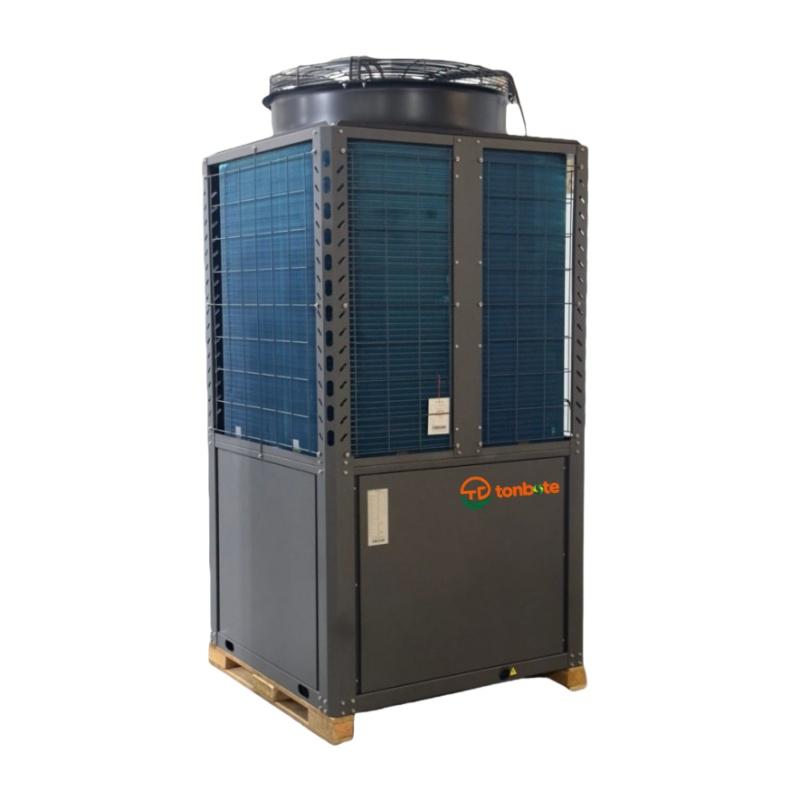
Walk down any appliance aisle and you’ll see bold claims about energy efficiency, smart features, and sleek design. What you won’t see is a label telling you the global warming potential of the refrigerant sealed inside. Most major manufacturers quietly stick with R-134a or R-410A because they’re cheap, familiar, and easy to handle in existing production lines. The problem? Those gases can have a climate impact thousands of times greater than CO2, yet you’ll rarely hear a brand volunteer that detail.
There are better options already on the market — R-290 (propane), R-600a (isobutane), and even CO2-based systems. These natural refrigerants have near-zero global warming potential and often improve cooling performance. So why aren’t they everywhere? Because switching means retooling factories, retraining service technicians, and dealing with flammability concerns that scare off corporate legal teams. A few smaller European and Asian brands have made the leap, but most global giants prefer to keep the conversation focused on kilowatt-hours instead of leaked refrigerant.
If you’re buying a fridge or heat pump, ask what’s inside the sealed system. The answer might be uncomfortable for the salesperson, but that silence tells you everything. Manufacturers don’t talk about refrigerants because the honest conversation would force them to admit that their “green” appliance still relies on a potent greenhouse gas when it eventually leaks or gets scrapped. The next time you compare models, treat the refrigerant type as a make-or-break spec — not an afterthought.
How Smart Load Sharing Extends Commercial Heat Pump Life
Smart load sharing shifts runtime across multiple heat pumps, preventing any single unit from bearing the full brunt of demand. In a typical commercial setup, one heat pump often cycles on and off far more frequently than its siblings. That uneven workload leads to premature compressor wear, repeated thermal expansion stress on coils, and faster degradation of contactors and relays. By dynamically distributing the heating or cooling load, each unit sees fewer start-stop events and operates within a narrower, more efficient band. The result is not just a theoretical gain—service logs from facilities using load-sharing controllers consistently show reduced failure rates on the historically overworked unit.
Beyond simple rotation, intelligent load sharing accounts for real-time factors such as outdoor temperature, return water temperature, and each heat pump’s current amp draw. For example, on a mild spring morning, instead of firing up one large heat pump at full capacity, the system may run two smaller units at partial load. This approach avoids short cycling, which is a known killer of compressors, and keeps oil properly circulating in the refrigerant loop. It also prevents the scenario where one unit is always first on and last off—a pattern that leads to uneven refrigerant charge distribution and accelerated seal wear.
The longevity benefit also shows up in reduced thermal shock. Heat pumps that start and stop abruptly experience large temperature swings in the evaporator and condenser. Over years, this causes micro-fractures in braze joints and weakens the structural integrity of copper lines. Load sharing smooths out these transitions by staging units gradually. When demand rises, the controller ramps up an additional heat pump only after the lead unit reaches a set efficiency threshold. When demand falls, it shuts down the least efficient unit first, avoiding simultaneous hard stops. This gentle sequencing keeps internal pressures stable and extends the life of expansion valves and reversing valves, which are costly to replace in commercial systems.
The Maintenance Blind Spot Behind Unexpected Repair Bills
Most drivers stick to oil changes and tire rotations, convinced they're covering the essentials. Yet lurking in the owner's manual is a list of intervals that rarely get a second glance: transmission fluid, brake fluid, coolant, differential oil, and timing belts. These are the items that don't trigger a dashboard warning light until something is already failing. By the time you notice a harsh shift or a whine from the axle, the damage is done—and the repair bill is four or five times what a simple fluid swap would have cost.
The real blind spot is that these components degrade gradually, so the car feels normal right up until it doesn't. Brake fluid absorbs moisture over time, quietly corroding calipers and master cylinders from the inside. Coolant becomes acidic, eating away at head gaskets and heater cores. Timing belts don't stretch or squeal; they just snap one morning, bending valves and destroying the top end of the engine. None of these failures announce themselves early, and that's exactly why so many people are caught off guard.
A smarter approach is to treat the maintenance schedule as a map, not a suggestion. Pull out the manual, find the severe-service section (most daily driving qualifies), and actually follow those intervals. A $150 transmission service or a $120 coolant flush feels unnecessary when the car drives fine. But compare that to a $3,500 transmission rebuild or a $2,800 head gasket job, and the math becomes painfully obvious. The blind spot isn't the car—it's the assumption that if nothing feels wrong, nothing is wearing out.
Designing for Part-Load Conditions Where Heat Pumps Actually Work
Most heat pump selections chase a single full-load capacity point at design outdoor temperature, yet real operation lives almost entirely in part-load territory. Designing for that reality means pivoting from nominal COP toward seasonal metrics and accepting that the compressor will rarely run flat out. Variable-speed or digitally modulated compressors, oversized heat exchangers relative to peak demand, and controls that prioritize long, low-intensity run cycles over rapid starts and stops tend to deliver far better field performance than a perfectly sized single-stage unit.
Short cycling remains the quiet enemy of part-load efficiency, and it often stems from oversizing or aggressive setback recovery logic. A better approach is to map the building's actual load duration curve before committing to equipment, then use thermal storage, buffer tanks, or zoned staging to keep the heat pump operating within its most stable modulation range. Inverter-driven systems with turn-down ratios above 3:1 handle this well, but pairing them with oversized distribution loops can cause unnecessary pump energy use if flow isn't decoupled from compressor speed.
Refrigerant-side behavior also shifts at reduced capacity. Electronic expansion valves, suction line accumulators, and oil return strategies tuned for low-flow conditions prevent lubrication failures and uneven coil distribution that rarely show up in a full-load lab test. Defrost logic matters too: at part load, frost accumulates differently, and demand-based defrost with variable intervals can save more energy than fixed timers. Testing across a realistic load profile, not just a single rating point, exposes these weak spots early and leads to designs that actually perform where heat pumps spend most of their hours.
What Real-World Performance Data Says About Manufacturer Claims
Manufacturer spec sheets often read like best-case scenarios, but actual usage tells a different story. Independent testing across varied environments—temperature swings, sustained workloads, mixed network conditions—regularly shows a measurable gap between lab numbers and field results. For instance, a device rated for 12 hours of battery might deliver 8 to 9 under typical brightness and background app activity. The discrepancy isn't necessarily deception; it's the difference between controlled optimization and messy reality.
Real-world data collected from thousands of users reveals patterns that standardized benchmarks miss. Peak processing speed may hold for a few minutes before thermal throttling kicks in, a nuance rarely covered in promotional materials. Similarly, wireless range claims often assume open-air line of sight, whereas concrete walls and competing signals cut effective coverage by a third or more. These gaps matter more for daily reliability than any headline number.
Savvy buyers have learned to discount the top-line figures and look for third-party telemetry instead. Community dashboards and long-term reviews often expose whether a product sustains its promised performance or only shines in short, favorable bursts. That erosion between claim and lived experience—sometimes 15 to 30 percent—should shape purchasing decisions far more than the sticker specs.
FAQ
A dependable maker will share real performance data from buildings similar to yours, not just lab ratings. Check whether they offer inverter-driven compressors, cold-climate options, and modular cabinets that let you expand capacity without replacing the whole plant. Response time for replacement parts also matters more than marketing claims.
They increasingly use variable-speed compressors and fans that match output to actual load, avoiding constant on-off cycling. Some systems recover heat from areas that need cooling and send it to zones calling for heat. Smart defrost logic and low-ambient controls also prevent needless electric resistance backup from kicking in.
Yes, it shifts both capacity and efficiency at different outdoor temperatures. Low-GWP options like R-32 or R-454B often deliver strong cooling performance, but a manufacturer's cold-climate engineering around the refrigerant—such as vapor injection or cascade staging—matters just as much as the refrigerant name on the spec sheet.
Absolutely. Four-pipe heat recovery units or multi-pipe systems can move heat from server rooms, kitchens, or sun-exposed zones into areas that need warmth. This avoids paying for heating and cooling at the same time from separate boilers and chillers, which is a common inefficiency in mixed-use properties.
Adjust the setpoints and defrost intervals based on actual outdoor conditions instead of leaving factory defaults. In cold climates, confirm that the system has low-ambient capability and won't silently switch to expensive strip heat. In humid coastal areas, ask for coated coils and schedule regular checks for airflow restriction.
The biggest stumbling block is communication protocol mismatches—like a new heat pump speaking Modbus while the BMS expects BACnet. Sensor placement also causes trouble: if the outdoor temperature sensor sits in direct sun or next to an exhaust vent, the unit runs on bad data. A short commissioning period with actual trend logs beats a handshake and a quick sign-off.
Commercial buildings rarely run at full load for long. A unit that looks great at 100% capacity might be mediocre at the 30-50% loads where it actually operates most of the year. Look at IPLV or NPLV values, and ask the maker for part-load curves rather than a single headline COP.
They're moving beyond basic on/off schedules. Some now embed algorithms that learn a building's thermal inertia and pre-cool or pre-heat when electricity is cheaper. Remote diagnostics can flag refrigerant charge drift or fouled coils before energy bills spike. The real value is fewer surprise failures and less manual guesswork for facility teams.
Conclusion
Commercial heat pump systems are frequently oversized because specifiers anchor to extreme peak loads rather than how buildings actually operate. That mismatch forces compressors into short cycling, prevents the unit from reaching steady-state efficiency, and accelerates wear on key components. Real building loads spend most hours well below design extremes, so part-load behavior is the true test of a maker's engineering. Smart load sharing across multiple smaller units keeps each compressor running in its efficient range for longer stretches and distributes runtime evenly, extending overall system life. Manufacturers that understand this typically offer modular staging and controls tuned for partial loads instead of pushing a single large chassis.
Refrigerant choice is another quiet decision with lasting cost consequences. Some refrigerants perform better at low ambient or suffer less glide, but they get skipped because of upfront price differences. Meanwhile, a common maintenance blind spot—fouled coils, drifting sensors, and ignored filter pressure drop—quietly reduces capacity and drives up repair bills long before a fault alarm appears. Field performance data often tells a sharper story than lab ratings: installed COP and EER can fall short of published numbers once piping losses, control settings, and local weather variability enter the picture. A maker that publishes honest part-load curves, supports remote monitoring, and designs for straightforward service access will deliver efficient building climate solutions that hold up beyond the first year, not just on paper.
Contact Us
Contact Person: Wanshu Chen
Email: [email protected]
Tel/WhatsApp: +86-13662871206
Website: https://www.mbcee.com