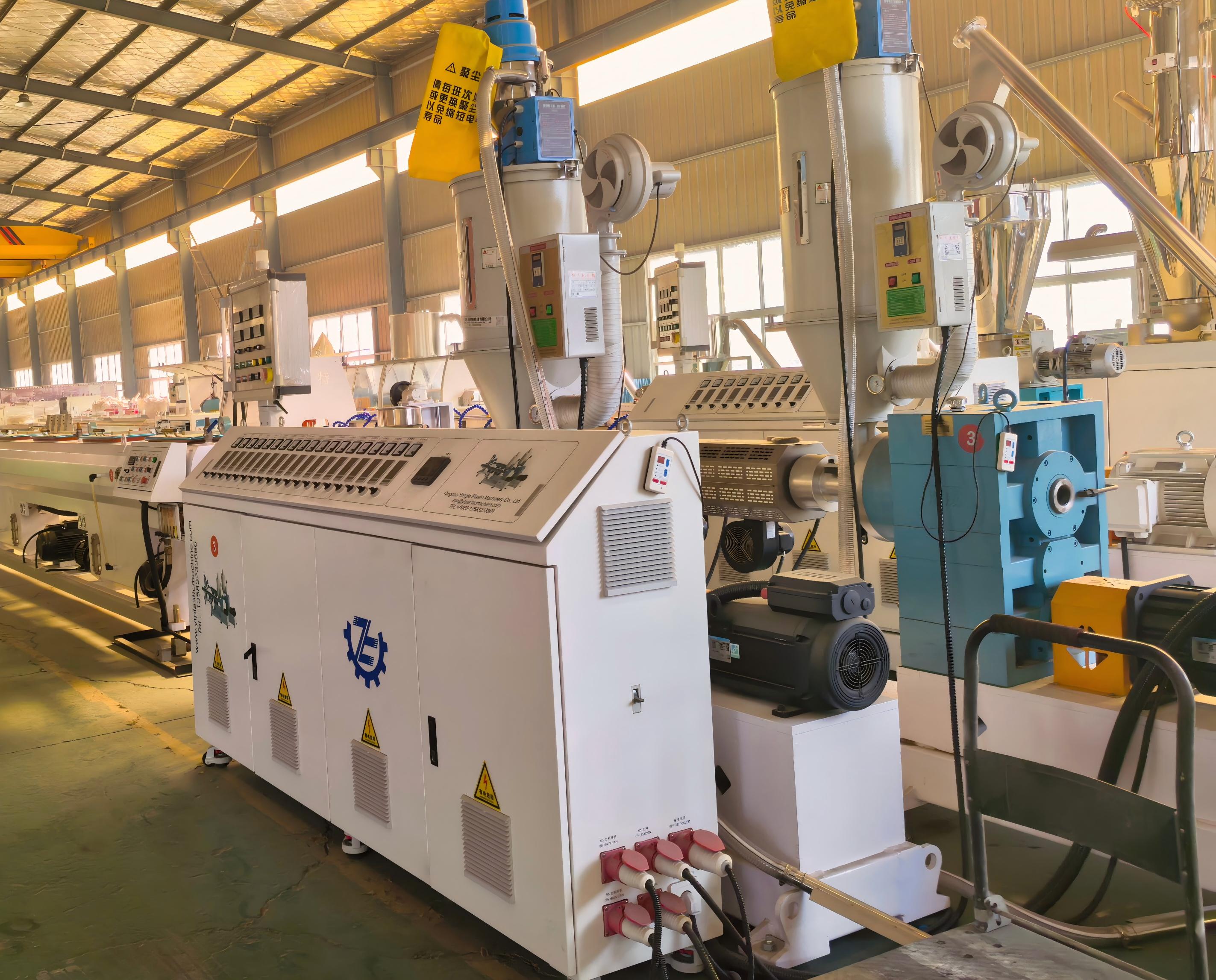
China WPC Door Machine Solutions for High-Quality Door Manufacturing
2026-08-21
If you're still fighting warped panels, uneven edges, or painfully slow cycle times in WPC door production, the problem often isn't your operators—it's the machinery behind them. China has become the global hub for WPC door manufacturing, but only a few suppliers truly understand what high-quality door lines demand. That's where Yongte stands out. With a focus on precision extrusion, stable temperature control, and smart automation, Yongte's WPC door machine solutions are built to help manufacturers move from constant troubleshooting to consistent output. In this article, we'll break down what separates average lines from truly high-performance setups—and why Yongte deserves a closer look.
Why WPC Door Machines from China Are Quietly Replacing Traditional Wood Lines
For decades, solid wood remained the default choice in door manufacturing, but the arrival of Chinese WPC door machines has shifted that assumption at the production level. These systems consolidate extrusion, embossing, and cutting into compact lines that a mid-sized factory can operate without hiring specialized carpenters. The real change isn't just speed—it's that the output looks and feels enough like painted timber to satisfy buyers who never inspect the door's core.
Traditional wood processing depends on kiln drying, finger jointing, and manual sanding, each step adding labor and scrap. A WPC line from China replaces most of that with continuous foaming and calibrating, so a door blank emerges already smooth and dimensionally stable. Factory owners who switch often mention the same detail: they can run night shifts with a fraction of the previous crew, and the reject rate drops below what any wood shop could maintain during humid months.
There's also a quieter economic logic at work. Imported oak or maple fluctuates with logging restrictions and freight costs, while WPC compounds use recycled polymer and plant fiber at a predictable price. Chinese equipment makers have pushed this advantage by designing machines that accept local filler materials, so a plant in Southeast Asia or Eastern Europe can cut raw material expense without changing the line. The result is a door that undercuts solid wood on cost, installs with standard hinges, and never warps enough to complain about.
Inside the Mixing and Extrusion Steps That Decide Door Core Strength
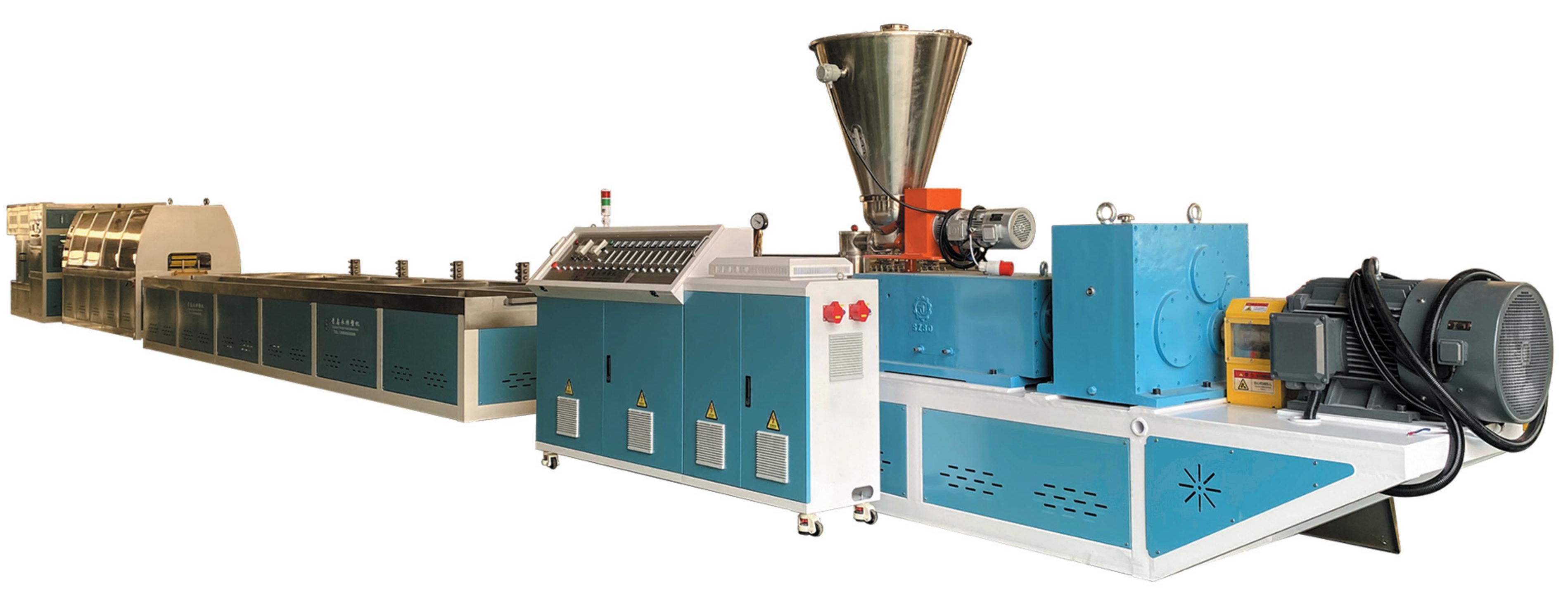
Door core strength is rarely the result of a single ingredient. In the mixing stage, wood fiber, recycled material, and thermosetting resin are combined under controlled shear rather than simply stirred. The goal is to coat each particle evenly without overworking the fiber, which can raise the temperature and kick off curing too early. A short, low-speed mix often leaves dry pockets that turn into weak spots after pressing, while a long, aggressive cycle creates resin-rich clumps that burn during extrusion. Operators watch the torque curve and moisture readings more than the clock; an abrupt spike usually means the batch is fighting the blades and losing the particle length that gives the core its backbone.
Extrusion then forces this mixture through a die under pressure, but the step is less about shaping than about densification. The screw geometry does most of the work: a deeper feed zone pulls material in without pulverizing it, a compression zone squeezes out trapped air and aligns the fibers, and a short metering zone builds just enough backpressure to fuse the resin without degrading the wood. If the melt temperature climbs too fast, the outer surface skins over while the center stays crumbly, and that gradient shows up later as warped stiles or soft spots near lock blocks. Adjusting barrel heat in small increments—often only three to five degrees—can shift the final core from brittle to properly dense.
What separates a consistent door core from a marginal one is how the two stages are allowed to interact. Mixing sets the moisture and resin distribution; extrusion tells you whether that distribution was right. A core that exits the die with a uniform matte surface and a clean snap at the saw cut usually indicates the material held together through the pressure drop at the die lips. In contrast, a glossy or pitted surface suggests uneven flow, resin starvation, or steam escaping from wet pockets. Because these defects are locked into the profile before cooling, the most reliable adjustments happen upstream: recalibrating the mixer blade clearance, trimming feed rates, or shifting the temperature profile in the barrel. That is where the actual strength of the door core is created, long before it ever faces a hinge or a handle.
Moisture, Heat, and Impact: Stress-Testing WPC Doors Before They Ship
Moisture testing here is not a light mist. Each WPC door gets sealed in a chamber where relative humidity stays pinned at 95% for a full 48 hours. Technicians check thickness at ten fixed points across the face, edges, and stile joints. If any spot swells more than 0.4%, the door is pulled from the line and the batch is flagged. Edge seals take the brunt of this test because that is where composite cores usually fail first.
Heat stress comes next, but it is the rapid swing that matters more than the peak. Doors move between a cold room at -10°F and a heat rack at 140°F, with a 20-minute hold at each end. Four cycles in a row. The frame has to stay square within 2mm, the veneer or laminate cannot lift, and any adhesive smell is an automatic fail. This catches the doors that would arrive warped after a summer in a hot container.
Impact testing is the last gate. A 30-pound pendulum swings into the center of the panel, then into the corners, from a set distance. After that, the same door takes a 10-pound steel ball drop from waist height. No cracks, no dent deeper than 1mm, no separation between layers. The reasoning is simple: if the door cannot survive a moving dolly or an excited dog, it does not ship.
Where Automation Actually Pays Off in WPC Door Production
Automation in WPC door manufacturing doesn't deliver equal returns everywhere. The real gains show up in repetitive, precision-heavy steps like edge trimming, hinge slot cutting, and consistent surface finishing. These areas involve high variability when done by hand, leading to wasted material and uneven quality. By targeting these bottlenecks first, producers see lower scrap rates and more predictable output without overhauling the entire line.
Another overlooked payoff zone is material handling between workstations. Manually moving heavy WPC panels between cutting, pressing, and assembly creates downtime and risks surface damage. Simple automated conveyors or robotic arms keep panels flowing steadily, which raises throughput without needing faster machines. This kind of integration often pays for itself within months because it removes idle time that no amount of worker speed can fix.
Finally, automated inspection systems bring a different kind of return. WPC surfaces can hide micro-cracks, color shifts, or inconsistent density that human eyes miss until final assembly. Installing vision-based checkpoints after key stages catches defects early, preventing costly rework or customer rejections. The payoff isn't just in saved labor—it's in protecting the brand's consistency claim, which manual checks can't guarantee at high volumes.
Custom Veneers and Profiles Without a Complete Line Overhaul
Ripping out a working production line for the sake of a fresh surface look is rarely the sensible move. Custom veneers and edge profiles let you change what customers actually see and touch—grain direction, sheen, edge radius, accent strips—without replacing presses, reconfiguring conveyors, or retraining operators on an entirely new setup.
The range runs from paper-thin real wood veneers with bespoke staining to high-pressure laminates that mimic raw concrete or brushed metal. Matching edgebands and T-mouldings can be produced in widths and thicknesses that your existing trimming and buffing stations already handle, so trial runs stay short and scrap rates stay flat.
That kind of modular update also makes small-batch experimentation practical. You can roll out a limited matte charcoal oak line for one distributor, then switch to warm walnut with a fine aluminium inlay for another, all while the core cabinet construction stays unchanged. It keeps the catalogue moving without turning the factory floor upside down.
The Maintenance Habits That Keep Chinese WPC Door Machines Running for Decades
Regular lubrication of moving parts, especially the extrusion screw and calibration blocks, is not just a routine chore but the backbone of long-term reliability. Operators who follow a bi-weekly greasing schedule with high-temperature synthetic grease rarely face seized bearings or uneven panel thickness. More importantly, they learn to listen: a slight change in the hum of the gearbox often signals the need for a viscosity adjustment before any visible wear appears.
Daily cleaning of the die heads and cooling tanks prevents the slow build-up of PVC residue that can distort profiles and strain the haul-off unit. Many experienced technicians keep a simple logbook where they note water temperature fluctuations and vacuum pressure readings. Over the years, these handwritten records become a diagnostic map, making it possible to spot tiny deviations and fix them in minutes rather than days.
What truly sets decade-old machines apart is the habit of replacing wear parts before they fail. Swapping out barrel heaters or thermocouples at scheduled intervals instead of waiting for breakdowns keeps the heating zones uniform and the material flow stable. Combined with quarterly alignment checks on the cutting saw and monthly calibration of the control panel, such proactive habits turn a Chinese WPC door machine into a quiet workhorse that rarely surprises its owner.
FAQ
Chinese WPC door lines often combine extrusion, embossing, and cutting in one continuous setup, which reduces floor space and labor. The key is not just the hardware but the tuning of barrel temperatures and cooling zones. When those are set correctly, you get consistent board density and fewer warping issues.
Most lines use closed-loop controls for melt pressure and haul-off speed. That keeps the profile dimensions within tight tolerances even when running for long shifts. Operators still need to watch raw material moisture, though — too much moisture creates surface bubbles that no machine setting can fully hide.
Yes, if the downstream calibrators and cutting saws are adjustable. Chinese suppliers often offer modular calibrator blocks and quick-change embossing rollers, so switching from a simple flat door skin to a deeply textured panel takes less than half a day. The limitation is usually the extruder output, not the profile shape itself.
Daily checks on the vacuum vents and screw wear make a bigger difference than most people expect. A blocked vent causes porosity in the board, while a worn screw quietly drops output by 10 to 15 percent. Replacing the die lip seals before they leak also prevents burnt material from contaminating the surface.
Ask for a factory that runs its own trial line, not just sells drawings. A supplier that produces its own WPC doors will already understand moisture control, cooling rate, and profile shrinkage. Also check whether they provide the complete downstream equipment — cooling tank, haul-off, cutting table, and stacking — because mixing brands can create speed mismatches.
Yes, many Chinese WPC door machines are built to handle higher filler loadings, including wood flour, rice husk, or recycled polyethylene. The feed section is often lengthened and the venting is stronger than on standard plastic extruders. However, recycled materials can vary batch to batch, so a gravimetric dosing unit is worth adding.
For a standard line with one main extruder, expect around four to six weeks from arrival to stable production. The first week goes to mechanical assembly and alignment, the second to electrical wiring and no-load testing, and the rest to trial runs with your actual raw materials. If the supplier's engineers cannot stay for material trials, schedule delays often follow.
Conclusion
The shift from traditional wood processing to WPC door production rarely starts with a press release. It begins on the factory floor, where a twin-screw extruder takes over the heavy lifting once done by jointers and planers. Chinese WPC door machine builders have earned a quiet reputation for lines that slot into existing setups without forcing a complete overhaul. The real advantage shows up in the mixing and extrusion stage. Getting the wood fiber and polymer ratio right determines whether the door core can shrug off moisture and daily impact. Many plants keep their custom veneer and profile station intact while adding a WPC core module, which gives them the best of both worlds.
Before any door ships, stress-testing is non-negotiable. Chinese manufacturers routinely cycle panels through high-humidity chambers, thermal swings, and repeated impact rigs to catch weak points in the core bond. Automation pays off most where precision matters: material feeding, temperature control, and thickness calibration. A well-tuned line can hold tolerances that manual processes simply cannot. The longevity of these machines often comes down to unglamorous habits—daily screw and barrel inspection, consistent lubrication, and filter changes. Plants that stick to these routines report WPC door lines still running strong after fifteen or twenty years. The mixing sequence, core testing, targeted automation, and long-term maintenance form a practical roadmap for high-quality WPC door manufacturing.
Contact Us
Contact Person: Ms Qin
Email: [email protected]
Tel/WhatsApp: 8613583233866
Website: https://www.yongteplast.com