
China Preserved Rose: The Secret to Flowers That Last Forever
2026-09-09
What if a rose could outlive every expectation, holding onto its velvet petals and rich color for years? In a world where fresh blooms fade within days, China preserved rose offers a quiet kind of magic—real flowers treated to last a lifetime. But not all preserved roses are created equal. Behind the most breathtaking arrangements lies a name you'll want to remember: PHLEEYA. Their secret? A meticulous preservation process that locks in nature's beauty at its peak, turning fleeting moments into forever keepsakes. Curious to know what makes these roses truly timeless? Keep reading—the secret is about to unfold.
The Quiet Chemistry Behind a Bloom That Never Wilts
There is a moment in every preservation workshop when the flower stops being a flower and becomes something closer to a mineral. The process is not loud. No kiln, no flame. A bath of polyethylene glycol quietly replaces the water inside each petal, molecule by molecule, until what remains is still soft, still flushed with color, but no longer subject to the clock.
The chemistry is less about freezing time and more about bartering with it. Glycerin and silica take turns drawing moisture from the stem while ethanol fixes the pigments in place. Even the slightest shift in temperature or humidity changes the outcome, which is why the best preserved blooms are treated less like products and more like patients in a slow, exacting recovery.
What makes a flower look alive years after it was cut is not a single miracle compound. It is the careful ordering of several unglamorous steps—dehydration, infusion, sealing—each one undoing a little of what nature intended, and replacing it with something quieter, more patient.
Why Chinese Preserved Roses Feel Different
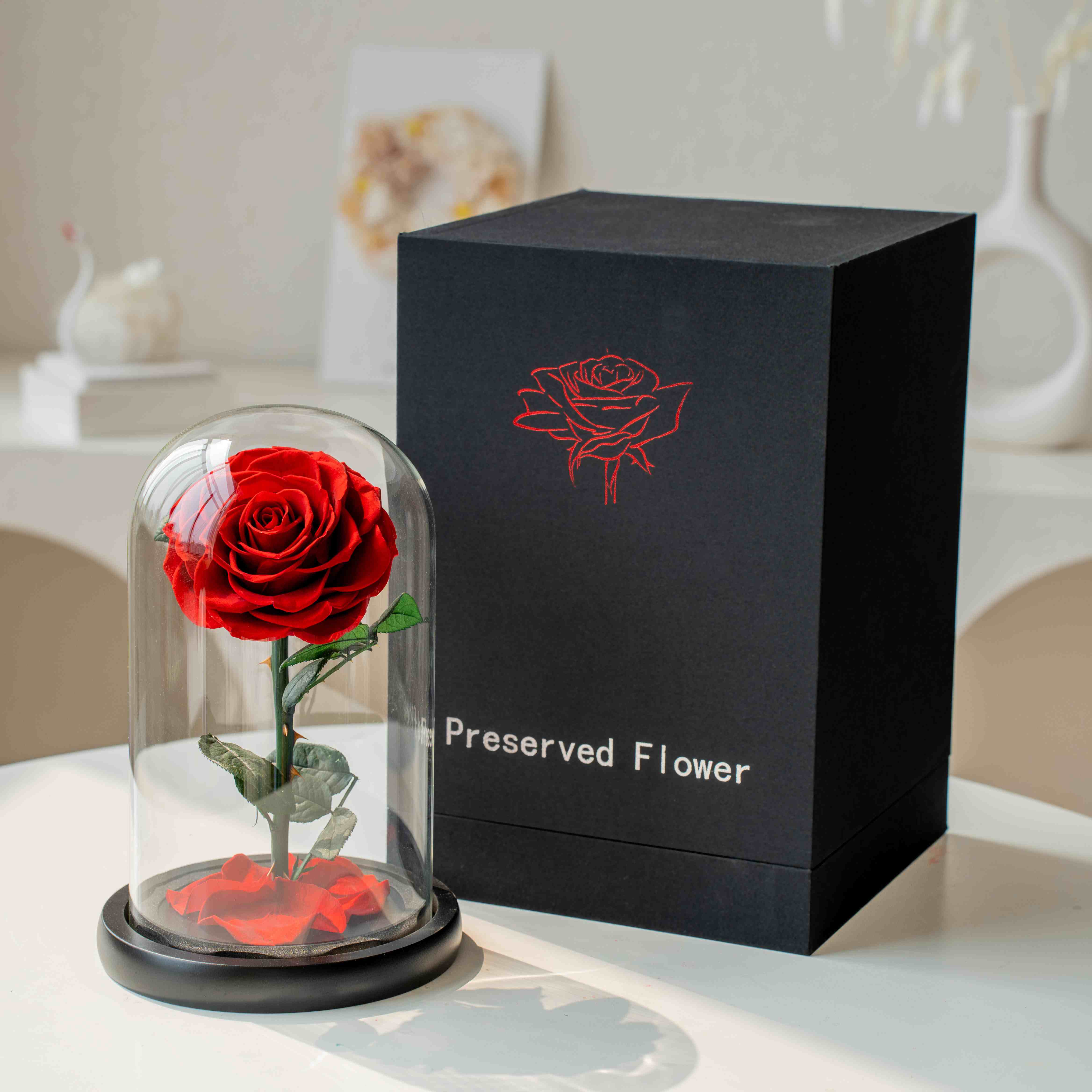
Many who handle Chinese preserved roses for the first time notice something beyond their visual appeal: the touch. Unlike some imported varieties that feel almost papery and stiff, these blooms retain a subtle springiness, closer to a fresh flower. The difference comes down to the glycerin solution and immersion time used by domestic producers, who deliberately leave a fraction of natural moisture in the petals so they stay soft for months, sometimes years.
Color treatment also shows a quiet restraint. Where Western preserved roses often chase hyper-saturated, almost artificial hues, Chinese makers tend to draw from local dye plants—pale yellows from gardenia, muted greens from tea leaves—resulting in a softer, more layered palette that shifts under natural light instead of shouting from a display case.
Perhaps the most striking difference is a cultural appreciation for imperfect beauty. Chinese florists frequently leave tiny specks or a slight curl on a petal, viewing them as marks of character and authenticity. By contrast, many international brands trim every rose into flawless symmetry. The result is that Chinese preserved roses feel less like mass-produced decor and more like a handwritten letter.
A Peek Inside the Preservation Studio
Step through the unmarked door at the back of the archive, and the air changes—cooler, drier, tinged with the faint sweetness of aged paper and the sharper bite of consolidation adhesives. The preservation studio isn't a sterile lab; it's a working room where brittle spines rest on foam cradles and cotton swabs sit in neat rows like surgical tools. Natural light is filtered through UV-blocking film, casting a muted glow over a long oak bench where a half-mended 18th-century ledger lies open, its tears aligned and waiting for a whisper of wheat-starch paste.
Along one wall, shelves hold rolls of Japanese tissue in varying weights, jars of methylcellulose, and bone folders worn smooth by decades of use. A small ultrasonic welder hums in the corner, ready to encapsulate a fragile map in polyester film. Here, every decision is reversible, every material chosen for its aging properties—not just strength, but how it will look and behave in fifty years. The conservators move with a quiet precision, pausing to examine a watermark under transmitted light or to test the pH of a washing bath with a strip that turns a reassuring olive green.
What strikes you most is the absence of hurry. A single page might take a week; a bound volume, months. In the center of the room stands a large suction table, its low drone the only constant sound, pulling moisture and dirt from a water-damaged diary. Beside it, a tray holds fragments of a shattered photograph, pieced together like a puzzle under a stereomicroscope. This is where patience becomes a physical practice—where the goal isn't to make things look new, but to let them keep their age without losing their story.
The Color Secrets Most Flower Shops Won’t Tell You
Most shops steer you toward reds and pinks because they’re safe sellers, but the real craft lies in what they quietly leave out. Those buttery yellow roses you never see promoted? They fade fast, bruise under bright lights, and a single day past prime turns them from sunrise to tobacco. Florists know browns, coppers, and muted terracottas hold their structure longer than most pastel hybrids, yet they rarely build front displays around them because customers have been trained to expect cheerfulness, not character.
There’s also a quiet inventory logic behind color choices. Blue flowers—naturally blue, not dyed—are biological edge cases. Delphiniums, cornflowers, and a handful of gentians read as cool, expensive, and quietly demanding. Shops don’t tell you that their “blue” bouquets often lean on dyed white carnations or tinted chrysanthemums, because a true blue petal is far rarer than the marketing suggests. When you do find one, the color tends to shift under artificial light, turning electric in photographs but flat on a kitchen table.
The most honest flower color secret is that white is never just white. Ivory, cream, and paper-white blooms reflect surrounding hues, which means a white arrangement can turn gray in a blue-walled room or dirty yellow under warm bulbs. Shops rarely mention this because it complicates a supposedly foolproof choice. If you want a color that keeps its promise, start with deep plums, bitter chocolate cosmos, or rust-colored ranunculus—they forgive poor lighting and still look intentional three days later.
Arrangements That Make Forever Blooms Feel Effortless
For a look that feels straight from the garden, skip the tight, uniform bunches and let each stem fall where it wants. A mismatched trio of bud vases on a kitchen shelf, each holding a single blush rose or a sprig of dried lavender, does more than a crowded centerpiece ever could. Leave the stems slightly uneven, and don't trim every leaf—those little imperfections are what make the arrangement feel alive rather than styled.
Texture matters just as much as color. Pair the velvety petals of preserved peonies with the crispness of dried eucalyptus or the soft fluff of pampas grass. Stick to a muted palette—think oat, sage, and dusty pink—so the blooms blend into your space instead of shouting over it. A linen napkin under a small stoneware pitcher, or a wreath hanging from a brass hook, pulls the whole scene together without a hint of effort.
The best forever blooms don't demand a special occasion; they just show up where you least expect them. Tuck a single stem behind the bathroom faucet, rest a tiny arrangement on a stack of books by the bed, or let a few dried branches lean against the corner of a mirror. When they're placed like an afterthought, they stop being decor and start feeling like part of the room's own breath.
How to Keep a No-Maintenance Rose Looking Its Best
Keeping a no-maintenance rose at its best is less about constant fussing and more about smart setup from the start. Choose a spot with at least six hours of direct sunlight and well-draining soil, then let the plant settle in without hovering. A thick layer of organic mulch around the base locks in moisture, keeps weeds down, and slowly feeds the roots as it breaks down. Once the rose is established, it can handle dry spells and temperature swings on its own, so resist the urge to water on a strict schedule—only reach for the hose when the top few inches of soil feel dry.
Pruning is where many people overdo it, but these roses are bred to keep a tidy shape with minimal intervention. Instead of heavy cutting, simply snip off any dead or damaged canes in late winter or early spring, and remove spent blooms if you want to encourage a second flush. Let the plant's natural habit guide you; if a stray branch shoots out, trim it back to just above an outward-facing bud. The goal is to remove what's truly necessary, not to sculpt a perfect form. This light touch helps the rose stay vigorous without triggering weak, spindly growth.
Feeding a no-maintenance rose should feel like an afterthought, not a chore. A slow-release granular fertilizer scratched into the soil once in early spring is usually enough for the whole season. If you notice fewer blooms or pale leaves by midsummer, a light top-up of compost or a diluted liquid feed can give it a gentle boost. Avoid high-nitrogen products, which push leafy growth at the expense of flowers. Beyond that, keep an eye out for common issues like black spot or aphids, but don't rush for sprays—a strong blast of water or simply leaving beneficial insects to do their work often solves the problem. The less you interfere, the better these roses perform.
FAQ
A China preserved rose starts as a real, freshly cut rose that undergoes a process to replace its natural sap and water with a mixture of glycerin and dyes. This keeps the petals soft and pliable, unlike dried flowers that become brittle and fade quickly. Many workshops in China select blooms at their peak and treat them by hand to maintain a lifelike look.
If kept away from direct sunlight, high humidity, and rough handling, a preserved rose from China can hold its shape and color for two to three years, sometimes longer. Over time the color may soften a little, but it won't wilt or drop petals the way a fresh flower would.
China has a strong cut-flower industry, especially in regions like Yunnan, where the climate supports large-scale rose cultivation. That, combined with skilled labor and efficient processing facilities, allows Chinese producers to offer preserved roses in large quantities while still doing much of the preparation by hand to keep quality consistent.
Yes, they are genuine roses. Growers typically use high-quality rose varieties bred for strong stems and full blooms. After cutting, the roses are preserved before they begin to decay, so what you see is a real flower, not an artificial silk or plastic imitation.
Treat it as a no-maintenance keepsake: don't water it, keep it out of direct sun, and avoid placing it in bathrooms or other damp areas. Dust can be removed with a soft brush or a cool, low-speed hair dryer. Also try not to touch the petals too often, since natural oils from your skin can affect the color over time.
Many suppliers offer a wide palette of colors, from classic reds and pinks to unusual blues and purples, and some will even match a specific shade for events. You can also choose from different packaging options like glass domes, gift boxes, or loose stems for DIY projects.
Most preserved roses have little to no natural fragrance because the preservation process replaces the plant's fluids. Some vendors add a rose-scented oil or perfume to enhance the experience, but if you prefer no added scent, that's usually available as well.
Conclusion
Most blooms fade within days, but China preserved roses hold their shape and softness for years. It's not magic—it's a careful swap: the natural sap and water are replaced with a plant-based solution that locks the cellular structure in place. Chinese producers have refined this process over decades, working in small studios where each rose is treated by hand. That's why these flowers feel different from mass-produced imports: petals keep a slight give, stems stay flexible, and the bloom doesn't turn brittle or waxy. A peek inside a preservation studio shows rows of fresh-cut roses sorted by stem length and openness, then dipped and dried in temperature-controlled rooms. No two batches look exactly alike, and that imperfection is part of the charm.
Instead of painting petals after drying, many Chinese studios feed dye through the stem while the rose is still alive, so color penetrates each cell. This avoids the flat, artificial look common in cheap preserved flowers. You get deep wine reds, dusty blues, and even two-tone edges that stay true for years. For arrangements, the best designs lean into the "forever" quality: a single preserved rose in a glass cloche, or a low vase with three stems and dried grasses. Keep them away from direct sun, high humidity, and heavy touch. A light dusting with a soft brush is all they need. No water, no trimming, no worry—just a bloom that keeps its secret long after the season ends.
Contact Us
Contact Person: Mr. Luo
Email: [email protected]
Tel/WhatsApp: 86 18100895505
Website: https://www.feiliyaflowers.com/en/