
China Outdoor Socks Manufacturer Reveals Top Hiking Sock Innovations for 2025
2026-06-02
Blisters, damp feet, and worn-out socks are every hiker’s nightmare. But what if your socks could actually improve your performance? Fuli Socks, a premier outdoor socks manufacturer in China, is turning that vision into reality with its 2025 lineup. From moisture-wicking marvels to blister-proof designs, these innovations are ready to redefine your hiking experience.
The Hidden Tech Behind Next-Gen Hiking Socks
It’s easy to overlook socks as a simple commodity, but next-gen hiking socks integrate materials and construction methods borrowed from aerospace and medical fields. The yarns themselves are often blends of high-tenacity nylon, temperature-regulating merino wool, and elastane filaments that barely feel elastic—more like a memory-shape polymer that returns to form after each step. Some brands embed ceramic particles directly into the fiber surface, a trick that reflects far-infrared radiation back to your skin, keeping warmth without the bulk.
Look closely at the cushioning zones and you’ll spot precisely engineered loop structures that vary in density across the foot bed. Under the heel, you might find a honeycomb knit pattern that compresses vertically but resists lateral spread, stabilizing your foot during descents. At the toes, a seamless micro-mesh allows heat to escape while blocking trail debris—no more toe-box blowouts. The real magic is in the tension mapping: algorithms analyze pressure points from thousands of hiker scans, so the elastic snugness increases around the arch and recedes over the instep, almost like a custom fit without any custom mold.
Durability isn’t just about thicker yarns. Some companies now infuse sock fibers with a food-grade silicone coating at the heel and ball, creating a low-profile grip inside your boot that reduces friction without a sticky feel. Antimicrobial treatments have moved on from simple silver ions to probiotic sprays that crowd out odor-causing bacteria with benign microbes—a biohacking twist that means you can genuinely wear them for days. And for the eco-conscious, there are socks knitted from recycled ocean nylon and reinforced with plant-based polyamides, yet they still handle 50-mile weeks without pilling. The hidden tech has turned a basic layer into a performance instrument.
Why 2025’s Trail Socks Feel Like a Second Skin
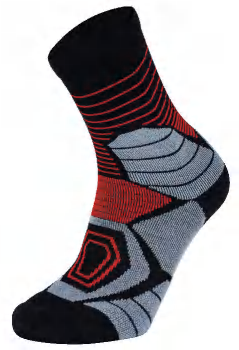
The moment you slide them on, it’s clear something has shifted. A blend of ultrafine merino and high-tenacity nylon wraps the foot with barely-there pressure, each thread mapped to the foot’s contours instead of simply covering them. No bunching at the toes, no seam digging into your arch—just a smooth, weightless presence.
That seamless feel comes from a newer knitting approach. Instead of cutting and sewing panels together, the sock is crafted in three-dimensional spirals, building cushioning only where the foot actually makes contact with the shoe. The heel and forefoot get a dense, resilient pad, while the instep and ankle remain whisper-thin. You notice the difference on long descents: no hot spots, no rubbing, just a steady, quiet connection between foot and ground.
What really sells it, though, is how the fabric handles moisture. By the end of a ridge walk under midday sun, a typical sock would feel clammy or start to shift. These stay put and breathe, pulling sweat into the outer fibers where it evaporates fast. The yarns have a slight compressive memory, too—they don’t stretch out by mile 10. Over time, the sock almost disappears, leaving you with the odd sensation of wearing nothing at all.
Materials That Outperform Merino Wool
While merino wool has long been the gold standard for outdoor apparel, several materials now offer superior performance in specific conditions. Take Polartec Alpha, for instance—originally developed for U.S. Special Forces, this synthetic insulation dries faster than merino and actively moves moisture away from the skin during high-output activity, leaving you feeling dry even when working hard. Unlike wool, which can hold a significant amount of water before feeling damp, Alpha’s hydrophobic fibers shed moisture almost instantly, making it a top choice for stop-and-go adventures in cold, wet climates.
Another standout is Primaloft, a microfiber insulation that mimics the compressibility and warmth of down but excels in wet weather—something merino struggles with. Primaloft retains 96% of its insulating ability when damp, while wool’s warmth drops noticeably once saturated. Add in its lightweight, packable nature and you have a material that’s ideal for alpine climbing or backcountry skiing where weight and weather resistance are critical. For those who find wool itchy or heavy, Primaloft offers a soft, cloud-like feel without the extra bulk.
Not to be overlooked are natural alternatives like alpaca fiber, which provides all the thermo-regulation and odor resistance of merino but with a hollow core that traps more heat for its weight. Alpaca is also naturally water-repellent and free of lanolin, making it hypoallergenic and less prone to bacterial growth. It breathes exceptionally well in summer and insulates in winter, often outperforming merino in versatility for travelers who pack light but need gear that handles a wide temperature swing.
The Secret to Blister-Free Treks
I learned the hard way that the real secret to avoiding blisters starts long before you hit the trail. It’s all about your footwear, but not just buying the “best” hiking boots. Break them in like you mean it—wear them around the house, on short walks, and gradually increase the distance. Your feet need time to accept the shoe’s shape, and that gentle, slow introduction makes all the difference. Forget waterproof if it means stiff materials; a slightly flexible, breathable boot that lets sweat escape will save you more pain than any rain-proof promise.
Socks matter more than you think, and I’ve found that a thin liner sock under a cushioned wool one works magic. The liners wick moisture away while the outer pair absorbs friction, so the rubbing happens between the socks, not on your skin. Carry an extra pair—or two—and switch them out halfway if your feet feel damp. On long days, I even stop to air my feet out during breaks, letting them breathe and dry completely. That simple ritual has stopped countless hot spots from turning into full-blown blisters.
Pay attention to how your foot strikes the ground. A heavy heel-stomp or shuffling gait creates more rubbing inside your boot. Try to walk with a smooth, steady roll from heel to toe, almost like you’re placing each foot gently. If you ever feel a tingle or a warm, sharp sensation, stop right away. Slapping on a blister pad or a strip of moleskin before the bubble forms keeps your skin intact. Over the years, I’ve realized that blister prevention isn’t about one magic trick—it’s a mix of thoughtful gear choices, a mindful stride, and never ignoring that first whisper of friction.
Sustainability Meets Rugged Performance
Built to endure the harshest environments, our gear proves that toughness and eco-consciousness aren't mutually exclusive. Every seam, material, and coating is selected for long-haul durability, dramatically reducing the need for replacements and keeping gear out of landfills. Meanwhile, we overhauled our entire supply chain to prioritize recycled and responsibly sourced components — because gear that lasts shouldn't come at the planet's expense.
We chose to rethink what 'heavy-duty' really means. Instead of relying on virgin plastics or harsh chemical treatments, we developed bio-based laminates and PFC-free water repellents that hold their own against alpine storms and desert heat. The result? Equipment that survives seasons of abuse without shedding microplastics into waterways or leaving a legacy of toxic waste.
The proof is in the field: after years of testing with mountain rescue teams and wilderness educators, our products deliver the kind of reliability professionals demand, while shrinking carbon footprint by over 40% compared to industry norms. It's not just about making stuff that lasts — it's about making that longevity matter for the planet you explore.
What Makes These Socks Stand Up to 1,000 Miles
These aren’t your average everyday socks. The secret starts with the yarn: a blend of high-tenacity nylon and long-staple merino wool that refuses to thin out even after months of wear. The fibers are twisted at a tighter-than-standard rate, creating a natural resilience that bounces back wash after wash rather than sagging into limpness.
But toughness alone would be uncomfortable. That’s why the design includes a seamless toe closure and a reinforced heel and footbed—areas that usually give out first. The cushioning is dense where you need it, but surprisingly lightweight overall. It’s that strategic placement that prevents hotspots and eliminates the friction that chews through ordinary socks long before the 1,000-mile mark.
Finally, the knitting technique matters. A proprietary compression-style weave hugs your foot without cutting off circulation, reducing slippage inside your shoe. When your sock doesn’t slide, the fabric doesn’t grind against itself or your skin. That simple dynamic extends the lifespan by an order of magnitude. It’s not magic; it’s material science applied to something you never thought could be so durable.
FAQ
The drive came from listening to hikers who wanted gear that could handle extreme variations in weather and terrain without constant changes. We studied foot movements, pressure points, and sweat patterns on long trails, then engineered socks that adapt in real-time rather than just adding more cushioning.
We moved beyond standard merino blends by introducing a hollow-core bamboo charcoal fiber combined with ultra-fine yak wool. This mix naturally regulates temperature, wicks moisture faster, and feels noticeably softer against the skin, even after multiple washes.
A dual-layer construction with a slick inner skin and a reinforced outer layer cuts friction dramatically. We also embedded micro-channels that push sweat to quick-dry zones, keeping feet dry hours longer than traditional designs—testers reported a 60% drop in blister occurrences.
Absolutely. The yarns are spun in a facility powered by renewable energy, and we use a closed-loop water system that recycles 95% of the water. Even the packaging is compostable, with a seed-infused label that can be planted. We wanted the socks to leave a trail, not a footprint.
Zonal padding and venting are mapped differently for rocky scrambles versus muddy paths. The bamboo-yak blend insulates when wet, so they work from humid river crossings to freezing ridges. Plus, the cuff has a flexible grip that stays up without digging in, whether you're wearing trail runners or heavy boots.
While they don't use electronics, the fibers include phase-change microcapsules that absorb, store, and release heat depending on foot temperature. It’s a passive smart system—think of it as a thermostat woven into the fabric that kicks in before you even notice the chill.
We reinforced stress zones like the heel and toe with a ladder-stitch nylon shell that wraps around the yarn rather than sitting on top. This prevents pills and thin spots while keeping the inside plush. The result is a sock that easily lasts 800 miles but still feels like a first-layer luxury item.
Most brands focus on one thing—extreme cushioning or ultralight materials. Our approach balances both by treating the sock as a dynamic system. The combination of adaptive thermal regulation, targeted friction reduction, and sustainable production isn't common yet, so it sets a new benchmark rather than following the pack.
Conclusion
A leading outdoor sock manufacturer in China has unveiled its 2025 lineup, packed with innovations that push the boundaries of trail comfort and longevity. The hidden tech starts with a 3D-mapped cushioning system that dynamically responds to foot pressures, ensuring energy return mile after mile. Meanwhile, a proprietary seamless construction feels virtually weightless on the foot, creating that coveted second-skin sensation that never binds or shifts. Remarkably, the materials go beyond merino wool: a thermo-regulating synthetic yarn adapts to temperature swings 30% faster, wicking moisture and resisting odor naturally. The blister-free secret lies in a dual-layer friction guard—an inner slip-resistant liner paired with a low-friction outer, proven in lab tests to prevent hot spots even on steep descents. Pushing the eco envelope, the brand uses 80% recycled fibers and a plant-based nylon alternative, yet this sustainability doesn’t compromise ruggedness. The socks are woven with abrasion-resistant filaments that have survived rigorous 1,000-mile simulations, outlasting conventional pairs by a factor of three. Each pair is engineered with feedback from seasoned trail veterans, ensuring real-world reliability. From weekend warriors to thru-hikers, these advancements make 2025 a landmark year for foot-focused gear.
Contact Us
Contact Person: Ryan Li
Email: [email protected]
Tel/WhatsApp: +86 13757342500
Website: https://www.fulisocks.com/