
China Filling Machine Supplier: What to Look for Before Buying
2026-11-02
Scrolling through endless China filling machine supplier listings? Most look identical until you ask the right questions. Whether you're upgrading a single line or planning a full-scale expansion, the real differences show up in frame materials, valve precision, and how quickly a supplier responds when something goes wrong. This guide cuts through the sales talk. You'll learn what to inspect before buying—and why teams that start with INTOP Machinery tend to shorten their search considerably.
Know Your Filling Viscosity and Container Type Before You Shop
Before you even look at filling equipment, check how your product behaves at room temperature and under typical line pressure. A thin water-like liquid moves fast and can splash or foam, so it needs different nozzles and valve timing than a thick paste or gel that barely levels itself. If you're working with something like honey, mayonnaise, or a gritty scrub, you'll want a machine that can handle high viscosity without air pockets or clogging.
Container shape matters just as much. A wide-mouth jar is forgiving, but a tall narrow bottle with a small neck will slow down filling and may trap air. Think about how much headspace you need, whether the container tapers, and how stable it is on the line. The wrong combination of product thickness and container geometry can lead to drips, uneven fills, or frequent stoppages.
Spend a little time testing before you commit. Run a small batch through a sample filler or even a manual setup, and watch how the product enters the container, how quickly it settles, and whether the fill level stays consistent. Adjusting nozzle size, fill speed, or container angle early will save you a lot of frustration once you're running at full speed.
Ask for a Live Video Demo with Your Actual Product
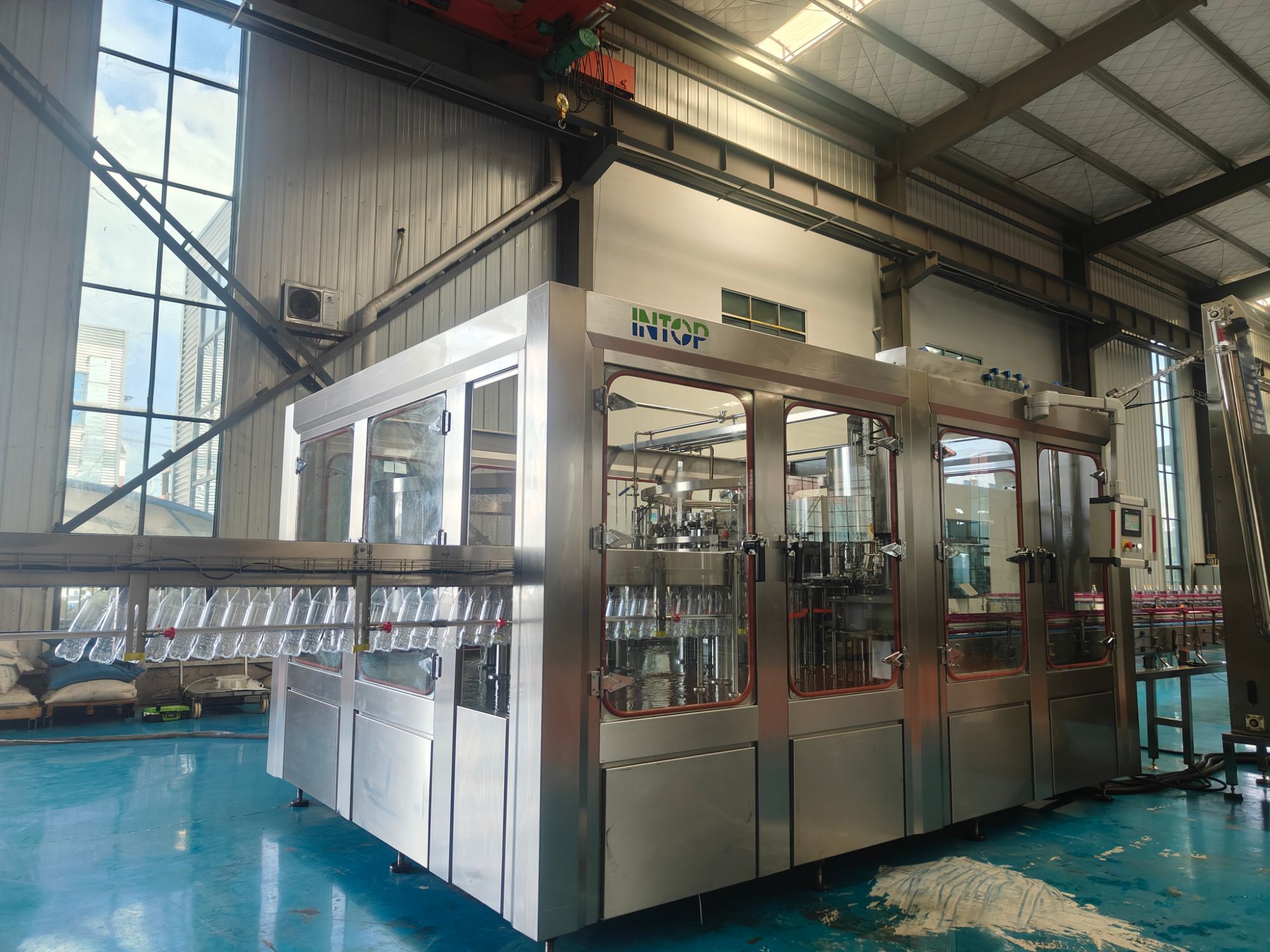
Most polished demo reels are edited to hide the rough edges, but a live video call forces everything into the open. Ask the supplier to set up a camera in front of the exact unit you'd be buying—not a showroom sample or a prototype—and run it through the same tasks you plan to use it for. Watch for stutters, odd noises, or moments where the operator has to step in and adjust something that shouldn't need adjusting.
During the call, don't just sit back and nod. Have them tilt the camera to show the serial number, your custom labels if any, and the surrounding work area. Request a specific change on the spot: increase the speed, swap a minor component, or feed it a material you know is tricky. Their willingness to do this, and the results you see without a cut or a pause, tell you more than any spec sheet.
If a supplier hesitates, says the camera isn't working, or suggests a recorded video instead, treat that as a data point. Solid manufacturers who believe in their product will typically say yes because they know the machine can handle it. The ones who dodge the request often have something to hide, whether it's a performance gap or a unit that isn't actually built yet.
Find Out Which Components Are Imported and Which Are Local
Start by scanning the import paths in your codebase. Anything that points to a bare module specifier like 'react', 'lodash', or '@scope/package' comes from an external dependency. Imports that begin with './', '../', or an absolute path like '@/components/Button' are local files within the project.
A quicker way is to check your package.json and lockfile. Every imported package needs to be listed under 'dependencies' or 'devDependencies' — if a name appears in your imports but not in package.json, it's either missing, a built-in Node module, or a local alias you forgot to add. Running a command like `npm ls` or `yarn why
For deeper clarity, tools like dependency-cruiser, madge, or a simple Webpack/Vite bundle analyzer can generate a visual graph that colors imported vs local modules differently. This removes guesswork and exposes any accidental reliance on external code where a local component should have been used instead.
Test Their Flexibility on Nozzle Count and Drip Control
Forget the spec sheet for a moment and actually watch how the liquid leaves the nozzle. Some setups lock you into a single count, while others let you run two, three, or even a showerhead pattern without swapping parts. That range often gets buried in manuals, but it changes how evenly you can wet the grounds or how fast you can rinse a filter.
Drip control is just as telling. Crank the flow down to a near-stop and see if it holds a steady bead or breaks into uneven pulses. The best designs give you a smooth, repeatable adjustment—not a stiff dial that jumps from fast to slow with nothing in between. If you can fine-tune the drip to match a slow, blooming pour or a quick rinse, the machine feels far more capable in daily use.
Pay attention to whether the nozzle count actually serves a purpose. More isn't automatically better. A flexible design lets you drop from a wide, multi-nozzle saturation to a single focused stream with minimal fuss. If that switch requires extra attachments or an awkward reset, you're probably dealing with a rigid platform dressed up as a versatile one.
Get Spare Parts Pricing and Lead Times in Writing
A quick phone call might give you a rough idea, but until the price and delivery window show up in an email or on letterhead, there's always room for confusion. Asking for a written quote forces the supplier to commit to a specific part number, quantity, unit cost, and shipping timeline. That simple step filters out the "should be around" answers and replaces them with numbers you can actually plan around.
Written pricing also makes it easier to compare vendors without relying on memory. When you have three quotes side by side, the differences in lead time, freight terms, and minimum order quantities become obvious. It's not just about the lowest sticker price—sometimes a slightly higher quote with a guaranteed two-week delivery beats a cheaper one with a vague eight-to-ten-week range.
Finally, keep the written quote in your records before issuing a purchase order. If a part arrives late or the invoice doesn't match, the document gives you a clear reference point. It turns a "he said, she said" situation into a simple review of what was actually promised.
Clarify Who Handles Installation and Operator Training
Nothing derails a new system faster than discovering on go-live day that nobody actually knows who's supposed to bolt the machine to the floor or teach the shift leads how to run it. Too many purchase orders stop at the hardware and software line items, leaving installation and operator training as vague verbal promises. Pin down the exact party for each task: the equipment vendor might handle physical placement and power-up, but a local integrator may need to configure the network drops, and your own maintenance crew should be scheduled for follow-up adjustments. Write these owners into the timeline, not just the contract.
Operator training deserves the same scrutiny. If the vendor says "training included," ask how many hours, for how many people, at what location, and whether the trainer will be the same engineer who did the install or someone from a call center reading slides. A better route is to split training into two tiers: a hands-on session run by the installer before handover, and a refresher held two weeks later after the operators have logged real runtime. That second session flushes out the questions nobody thought to ask on day one.
Finally, avoid the trap of assuming your internal team can pick up the slack without a named owner. Assign one person on your side to shadow the installation crew and one to track training completion against a checklist. If a third-party contractor is involved, have them sign off on a simple handover document that states what was installed, what was tested, and what remains open. Clarity here costs a few hours up front and saves weeks of finger-pointing later.
FAQ
Ask for a live video tour of the workshop floor with machines in various stages of assembly—not just a polished showroom. A real manufacturer can usually show you raw frames, control cabinets being wired, and a testing area. Also check whether they have their own engineering team on site; if they hesitate to let you speak with an engineer directly, you're probably dealing with a middleman.
Request a video of the exact model running with your product or a close substitute, ideally filmed continuously with a visible date stamp and the supplier's company name written on a whiteboard in the background. Pay attention to the frame material thickness, the brand of PLC and pneumatic components (Siemens, Mitsubishi, Festo, SMC, etc.), and whether the machine shakes or leaks during operation. Ask for close-ups of welds, tubing, and electrical panels—those details reveal a lot about assembly standards.
Don't just ask if they offer support—ask what happens on a Sunday afternoon six months after installation. A reliable supplier should give you a clear escalation path, usually via WeChat or WhatsApp with an assigned engineer, and should be willing to send replacement parts by air courier within days. Ask them to list the top ten wear parts for the machine and confirm they keep those in stock, not made to order.
For food and beverage lines, look for food-grade contact materials (304 or 316 stainless steel, FDA-approved seals) and ask for material certificates. For pharmaceuticals, many buyers require GMP-compliant design with smooth crevice-free surfaces and validation documentation. CE marking matters if the machine will be installed in Europe, but note that some Chinese suppliers hold only a self-declared CE, not third-party certification, so request the certificate number and verify it with the notified body.
A capable supplier will ask detailed questions about your containers—height, diameter, neck finish, foil seal compatibility—and about the product, including viscosity, temperature, foaming tendency, and whether it contains particles. They should offer to run a free test with your actual product and containers, then send you a video and a signed test report. If they promise “one machine fits all” without asking for samples, that's a warning sign.
Watch out for quotes that bundle everything into one number without itemizing the control system brand, voltage, conveying length, or number of filling heads. Some suppliers quote a low base price and then charge extra for essentials like a conveyor, capping unit, or CE documentation. If the salesperson answers every technical question with “yes, no problem” but cannot provide drawings or a spec sheet, walk away. A serious supplier will send a detailed technical proposal before asking for payment.
Ask for references from customers in your exact niche—not just “beverage filling machines” but specifically carbonated drinks, high-viscosity creams, or corrosive chemicals. A good supplier will introduce you to at least one past customer who can speak about their experience. You can also ask about typical challenges in your industry, such as foaming control for beer or drip-free nozzles for cosmetic serums; if they can't discuss these specifics, they probably haven't done many similar projects.
Avoid paying 100% upfront. A common structure is 30% deposit, then 60% before shipment after you approve a comprehensive video inspection, and 10% after installation and training. Use trade assurance or a letter of credit for larger orders. For shipping, ask whether the quote is FOB, CIF, or DAP—your local port charges and import duties are not the supplier's responsibility unless clearly stated. Also confirm the machine will be packed in a wooden crate suitable for sea freight, not just cardboard.
Conclusion
Before you commit to a filling machine supplier in China, start with the details that really decide whether the equipment will work on your line. Know the viscosity of your product and the exact container you plan to run, because a machine tuned for thin liquids behaves very differently with thick pastes, foamy sauces, or irregular bottle shapes. Ask for a live video demo that uses your actual product rather than a generic substitute, and watch closely how the nozzles fill, whether the machine drips between cycles, and how easily the nozzle count can be changed later. While you are at it, find out which components are imported and which are produced locally inside the frame, since that mix affects long-term reliability and the speed of future repairs.
The real test often comes after the sale. Get spare parts pricing and lead times in writing before you sign anything, so you are not caught off guard when a seal, sensor, or drive part needs replacement. Clarify who will handle installation and how operator training is delivered, whether the supplier sends a technician, works through a local partner, or expects your team to follow remote instructions. A supplier that is vague about these points may be unprepared to support the machine once it leaves the factory floor. Combining a practical demo with clear written commitments on components and service helps you avoid the most common and expensive mistakes buyers make when sourcing filling equipment from China.
Contact Us
Contact Person: Laura
Email: [email protected]
Tel/WhatsApp: +86 13957758832
Website: https://www.intopmachinery.com