
Ceiling Fans for Warehouses from China: The Ultimate Guide to Industrial Cooling Solutions
2026-07-12
Warehouse heat doesn’t just drain energy—it drains productivity. Yet many facilities still rely on outdated cooling methods that hike costs without delivering real comfort. There’s a smarter way, and it’s hanging right overhead. Industrial ceiling fans from China, particularly from innovators like VINDUSFAN, are redefining large-space climate control. Whether you’re battling stagnant air or skyrocketing bills, this ultimate guide breaks down exactly how to choose and harness the right fan for lasting industrial cooling.
Why HVLS Fans Are the Unsung Heroes of Warehouse Cooling
In the vast, open interiors of warehouses, traditional air conditioning systems often struggle to maintain a consistent temperature without incurring staggering energy costs. This is where high-volume, low-speed (HVLS) fans step in, quietly transforming the environment. Unlike conventional fans that merely stir up pockets of air, HVLS fans generate a massive, gentle column of air that flows horizontally across the floor before rising back up, creating a continuous cycle that equalizes temperatures from floor to ceiling. This destratification process pushes warm air trapped near the ceiling down to the occupied level during winter, and in summer, the steady breeze accelerates evaporative cooling on the skin, making workers feel several degrees cooler without actually lowering the thermostat.
The unsung nature of HVLS fans lies in their ability to deliver comfort with remarkable efficiency. A single large ceiling fan can cover an area equivalent to dozens of floor fans, yet it consumes a fraction of the energy. Warehouses that adopt these systems often find themselves able to raise their thermostat setpoints by 5 to 8 degrees Fahrenheit in summer while maintaining the same perceived comfort, leading to substantial reductions in cooling costs. Moreover, the near-silent operation and low maintenance requirements mean they simply blend into the daily rhythm of the workplace, steadily improving conditions without drawing attention to themselves. It’s this combination of silent, cost-effective performance that earns them the title of unsung heroes.
Beyond thermal comfort, HVLS fans also address issues like stagnant air, humidity, and condensation—common problems in large storage facilities that can damage goods and create safety hazards. The constant air movement discourages mold growth, keeps floors dry, and even helps repel flying insects. Employees, often overlooked in discussions about warehouse efficiency, experience fewer heat-related complaints and a more comfortable working environment, which can translate into better productivity and morale. While the sleek units hanging overhead may not grab headlines, their impact on both the operational budget and the wellbeing of the workforce makes them indispensable allies in the quest for smarter warehouse management.
Reading Between the Lines: Sourcing Fans from China Without the Guesswork
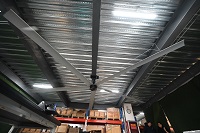
When you're sourcing fans from Chinese manufacturers, the spec sheets rarely tell the whole story. You need to pick up on the subtle cues—hesitation in response to technical questions, a factory's willingness to share third-party test reports, or the offhand mention of which materials they actually keep in stock. These unspoken signals often separate a reliable partner from one that just wants to close a deal.
Direct communication helps, but not in the way you might think. Instead of asking if they can meet your requirements, ask how they would solve a specific performance challenge. The silence before an answer, the follow-up questions they pose, and whether they reference past projects voluntarily all reveal their real depth of experience. Over time, you learn to trust the patterns—a supplier who asks about your installation environment before quoting is already thinking beyond the transaction.
The Physics of Comfort: How Blade Design and Speed Redefine Airflow
The way air moves through a room isn’t just a matter of brute force—it’s a delicate balance shaped by blade curvature, pitch angle, and rotational speed. A well-designed fan blade slices through the air with minimal resistance, generating a smooth, wide column of breeze rather than a turbulent gust. Subtle variations in the sweep and twist of each blade can direct airflow more evenly across a space, eliminating stagnant pockets and reducing the need for higher speeds. The result is a sensation that feels less like a mechanical wind and more like a natural, cooling draft.
Speed plays an equally nuanced role. Faster rotation doesn’t always equal better cooling; it can create noisy, choppy air that’s uncomfortable against the skin. By fine-tuning motor output and blade geometry, modern designs achieve a consistent, low-turbulence stream even at slower settings. This gentle movement encourages a layer of air to glide over the skin, accelerating evaporation without a blustery assault. The comfort comes not from sheer volume of air moved, but from how steadily and silently that air is delivered.
When blade design and speed work in harmony, the entire character of a room changes. The sound profile drops into a whisper, and the airflow becomes felt rather than heard. It’s this seamless integration of form and function that transforms a simple spinning mechanism into an almost architectural element—one that quietly defines the thermal comfort of a space without ever calling attention to itself.
Beyond the Price Tag: Unpacking the Lifecycle Costs of Industrial Fans
Industrial fans are more than just a one-time purchase; their true cost unfolds over years of operation, maintenance, and eventual disposal. While the initial price tag may catch your attention, it’s the ongoing energy consumption that quietly drives up expenses. A fan’s motor efficiency, blade design, and control systems heavily influence how much electricity it draws day after day. Over a typical lifespan of a decade or more, even small differences in efficiency can translate into thousands of dollars in additional utility bills, making the energy cost the single most significant factor in total ownership expense.
Beyond energy, maintenance demands and downtime carry hidden price tags that are often overlooked. Fans operating in dusty, corrosive, or high-temperature environments require more frequent inspections, component replacements, and labor hours. Belts, bearings, and motors wear out; improper sizing or lower-quality materials accelerate the decline. Each unplanned repair not only incurs direct costs but also disrupts production or ventilation, leading to lost productivity that far exceeds the repair bill. Factoring in these operational interruptions reveals a stark contrast between a cheap fan and one engineered for durability and ease of service.
Finally, the end-of-life scenario rounds out the lifecycle costs, from decommissioning to disposal or recycling. Fans built with modular components and recyclable materials can reduce environmental fees and salvage value, while those designed without such foresight may become a costly liability. Additionally, technological shifts—such as new efficiency standards or automation demands—can render a fan obsolete long before it mechanically fails, forcing premature replacement. A truly economical choice weighs all these phases, ensuring that the lowest upfront price doesn’t mask a lifetime of hidden expenses.
From Logistics Hubs to Food Storage: Cooling Tactics That Actually Work
Moving perishables through a logistics hub without a solid cooling plan is like playing roulette with your inventory. The real winners aren't relying on generic cold chain advice—they're using a mix of phase-change materials, strategic pre-cooling, and real-time thermal mapping to cut loss rates by double digits. It's not about having the biggest chiller, but knowing exactly where heat sneaks in during those 90-second pallet transfers on the dock.
When it comes to food storage, the gap between theory and practice gets wider by the week. Too many operations still treat their cold rooms like giant refrigerators, ignoring things like air curtain positioning, shelf-level airflow, and the fact that ethylene-producing produce can wreck an entire shipment of leafy greens if the rack layout isn't right. The fixes aren't always expensive—sometimes it's just about rearranging inventory so the coldest air hits the most sensitive items first.
The shift toward modular, energy-smart cooling is quietly reshaping both distribution centers and walk-in coolers. Instead of blasting everything at 2°C and praying, smart warehouses are zoning temperatures within single spaces, using insulated curtains and portable blast freezers to handle hot arrivals without destabilizing the rest of the load. For food storage, the same logic applies: treat your cold space like a climate zone, not a deep freeze. It saves power and extends shelf life in ways that a one-setting thermostat never will.
Installation Headaches and How to Avoid Them: Practical Field Notes
We had a job where the manual said “slide the bracket into place.” The bracket didn't slide—it needed to be angled in from the left while lifting a release tab no one could see without a mirror. That's the stuff they don't print. Over time, I learned to pull up actual install photos from forums or video comments before even unboxing. A quick reverse image search of the part number often surfaces real-world quirks that PDFs skip.
Another trap is assuming all mounting hardware is in the box. More than once, anchors and screws were packed for drywall when half the wall was plaster and lath. Now I check the weight of the unit and the wall type first, and pack my own toggle bolts and a small level with a magnetic strip. Carrying a $20 inspection camera on my phone saves dismantling half the job just to see what's behind a cavity.
The trickiest part isn't the tool—it's the wiring that's been monkeyed with by three previous owners. Colors mean nothing in an old house. I photograph everything with my phone before disconnecting, and I probe with a non-contact tester even when the breaker is off. If a diagram says “black to black,” but the original had white capped with black and a ground tied to neutral, I map it out on masking tape first. Ten minutes of labeling beats an hour of chasing ghosts later.
FAQ
Absolutely. High-volume, low-speed (HVLS) fans from China are engineered to move massive amounts of air — often covering up to 20,000 square feet with a single unit. They create a gentle, non-disruptive breeze that can make a 90°F warehouse feel closer to 75°F, thanks to the wind-chill effect. It's not air conditioning, but it dramatically improves comfort and productivity without the crazy energy bills.
Chinese manufacturers have refined HVLS fan production at scale, so you get advanced features — like direct-drive permanent magnet motors and custom airfoil blades — at a fraction of the price. Many also offer extensive customization: blade colors, lengths, controls integration, and even IoT monitoring. The value proposition is seriously hard to beat if you do your homework on the supplier.
Safety is a top priority. Reputable Chinese HVLS fans come with multiple layers of protection: reinforced mounting brackets, safety cables, blade retention systems, and vibration sensors. When installed at the recommended height (usually above 15 feet), they don't interfere with racking or equipment movement. Just make sure your installation crew follows the provided engineering guidelines.
It starts with mapping your floor plan. Industry rule of thumb: an 8-foot diameter fan covers around 3,000 sq ft, a 16-footer can handle 10,000 sq ft, and a 24-footer might cover 20,000 sq ft or more. But you also need to account for things like ceiling height, obstructions, and ventilation. Most serious Chinese suppliers will do a layout calculation for you if you send them your warehouse specs.
Honestly, not much. Direct-drive motors are sealed and brushless, so you pretty much just keep them clean. The blades might need an occasional wipe-down if you're in a dusty environment. The key is to buy from a supplier that uses quality bearings and offers a solid warranty — and there are plenty in China that do 5-year warranties on the motor and 2 years on electronics.
Due diligence is everything. Skip the Alibaba-only approach and actually talk to the factory via video call. Ask for client references in your country. Check if they have international certifications like CE, UL, or ISO 9001. A reliable supplier will be transparent about component sourcing (motors, PCBs, alloys) and will happily provide test reports. Also, consider using a third-party inspection service before shipment.
Modern Chinese HVLS fans are surprisingly tech-forward. Most support variable speed drives, and many can be integrated into building management systems via Modbus or BACnet. You'll find options with Wi-Fi modules, smartphone apps, and even temperature/humidity sensors that auto-adjust fan speed. If your warehouse has a specific control protocol, there's a good chance a Chinese manufacturer can accommodate it.
It varies, but a typical 24-foot fan uses about 1 kWh — similar to a hair dryer. If it replaces a dozen or more high-speed floor fans or reduces your AC runtime, the energy savings alone can repay the cost in 2–3 years. Add in gains from improved worker productivity and reduced product spoilage, and the payback often happens even faster.
Conclusion
In the vast, often sweltering expanse of warehouses, logistics hubs, and food storage facilities, High-Volume Low-Speed (HVLS) ceiling fans have quietly emerged as indispensable tools for maintaining airflow and worker comfort. Far from being simple air movers, these fans—many sourced from specialized manufacturers in China—leverage blade aerodynamics and slow, deliberate rotation to push massive columns of air evenly across enormous floors. The result is a tangible drop in perceived temperature and a noticeable reduction in stagnant hot spots, all while consuming remarkably little energy compared to rows of conventional high-speed fans. Yet, tapping into the Chinese supply chain requires more than just skimming catalogs; it demands a nuanced understanding of build quality, motor longevity, and the supplier’s ability to provide genuine technical support rather than just a low upfront quote.
Digging deeper reveals that the true value of these fans unfolds over years of operation. A thoughtful blade profile minimizes drag and noise, while variable-speed controls let facilities fine-tune airflow for everything from a bustling parcel hub to a climate-sensitive food store. The economics extend well past the purchase price: energy-efficient motors, durable bearings, and corrosion-resistant finishes drastically cut maintenance and power bills, turning a seemingly expensive fan into a lifecycle cost champion. Practical experience further shows that many installation nightmares—structural vibration, inadequate wiring, or clearance miscalculations—can be sidestepped with thorough pre-installation audits and close coordination with the engineering team, ensuring the cooling system becomes a seamless, low-fuss asset rather than a recurring headache.
Contact Us
Contact Person: Michael Danielsson
Email: [email protected]
Tel/WhatsApp: +1 951 565 7769
Website: https://www.vindusfans.com