
Bottom Pull Facial Tissue Machine Manufacturer Shares Proven Efficiency Strategies
2026-11-02
Every tissue producer knows the frustration of frequent downtime and inconsistent output. But what if the bottleneck isn't your raw material, but the machine itself? In this article, a bottom pull facial tissue machine manufacturer with decades of floor-level experience shares the efficiency strategies that quietly separate profitable lines from struggling ones. From tension control to knife geometry, DAXIN reveals the practical tweaks most manuals never mention—and why they matter more than you think.
Rethinking Paper Feeding Rhythms for Fewer Stoppages
Paper feeding is often treated as a steady, unchanging beat—same interval, same force, every sheet. But real paper varies: humidity changes stiffness, coatings alter friction, and even the stack height shifts pressure. Locking the feeder to a fixed rhythm ignores these small differences, and that's exactly when misfeeds and sensor trips start to pile up.
A more practical approach is to let the feeding cadence breathe. By reading subtle cues from the take-up rollers and the paper path, the drive can shorten or lengthen the gap between sheets on the fly. A slightly slower pulse after a heavy batch, or a quicker nudge when sheets are stiff and slippery, keeps the stream moving without slamming into stops.
The payoff shows up at the end of a shift: fewer crumpled corners, fewer manual clears, and no need to hover over the input tray. Rethinking the rhythm doesn't require a faster motor—just a smarter sense of when to pull the next sheet.
Fine-Tuning Fold Geometry Without Slowing the Line
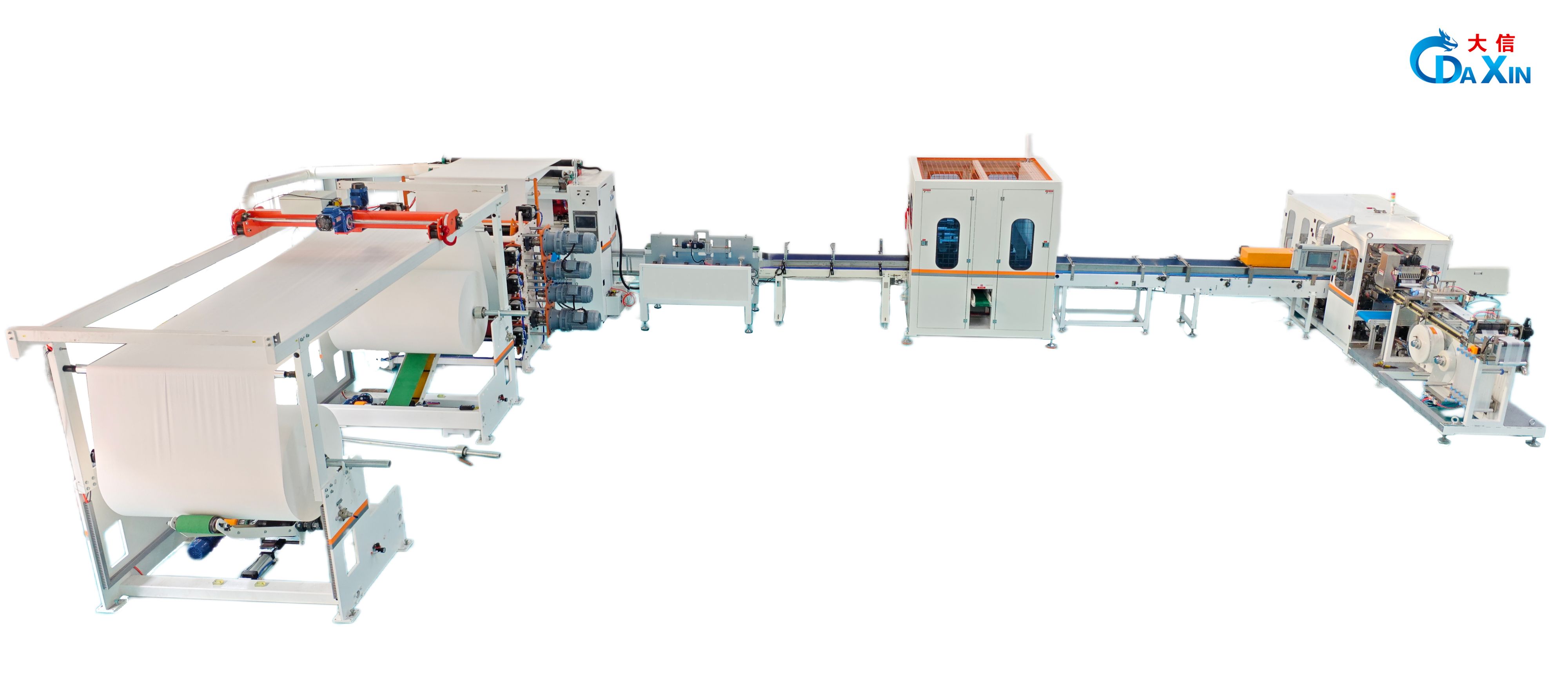
Fine-tuning fold geometry on a running line usually means working with the material's memory rather than against it. A slight bias in the fold angle at the former, paired with a barely perceptible change in guide roll pressure, can shift how the substrate breaks across the crease without adding any dwell time.
The real adjustment happens upstream, where tension and entry angle set the tone for the fold. If the web enters relaxed and square, the fold lands cleanly and holds its shape further down the line; if it enters tight or slightly skewed, even a perfect tool setting produces a lazy, wandering fold.
Operators who get this right tend to rely on small, repeatable corrections and immediate scrap-rate feedback. They adjust the geometry in fractions of a degree, watch how the fold behaves through downstream stations, and stop before the line loses its rhythm.
Smart Maintenance Windows That Keep Output Predictable
A well-chosen maintenance window is less about avoiding downtime and more about making it boring. The goal is to pick a time when your output is already low and your team is fresh enough to react if something drifts. For many production lines, that means mid-week, mid-shift, after the first rush but before the late-afternoon slowdown. You want a slot where a fifteen-minute pause feels like a blink, not a break.
The trick is to treat the window as a buffer, not a blank space. Build in enough margin to finish the usual checks and still have room for one unexpected fix. If your routine maintenance takes forty minutes, schedule sixty. That extra twenty minutes absorbs the small surprises—a stuck sensor, a slow-draining filter, a bolt that needs re-torquing—without pushing your next run into overtime. Predictable output comes from knowing the window will close on time, every time.
Finally, communicate the window like a weather forecast, not a secret. Let downstream teams know the exact start and stop, and stick to it. When people trust that the line will be back at 10:15, they plan around it. That trust is what keeps the whole day's output steady, even when the maintenance itself hits a snag.
Matching Raw Material Specs to Machine Temperament
Raw material data sheets list melt flow, moisture, filler loading, and particle size, but they never capture how a particular machine will actually digest those numbers. One extruder may handle a 45 MFI polypropylene without a twitch, while its twin on the next line surges and drools until the rear zone is pulled down twenty degrees. The only way to learn a machine's temperament is to feed it a known spec and watch where it complains—screw recovery time, vent flow, die pressure wobble, and the sound of the feed throat all tell you more than a lab report.
Start with small deliberate trials where you change one material variable at a time. If you raise the regrind fraction, keep the virgin resin lot identical and note the melt temperature drift. If you switch to a finer calcium carbonate, watch the hopper bridging tendency and the torque curve. Some machines tolerate wide spec ranges without complaint; others behave like a finicky old lathe that only cuts true within a narrow window of speed and feed. Build a handwritten pairing chart: material trait on one side, machine response on the other. Over time, that chart becomes more useful than any supplier's processing guide.
Eventually, you will know that this particular barrel likes a slightly drier material than the datasheet suggests, or that a certain screw design turns medium-viscosity nylon into beautiful parts only if the back pressure stays under half the usual setting. Those small tacit rules, passed between operators in notes and shift handoffs, are what separate a smooth-running line from one that fights itself every changeover. Match the raw material spec to the machine's temperament, not to some generic ideal, and you stop adjusting endlessly and start producing predictably.
Energy Recovery Tricks Most Floor Managers Overlook
Most floor managers focus on elevator maintenance contracts, never realizing that modern elevators can act as mini generators. Every time a fully loaded car descends, the motor works in reverse and produces electricity. Without a regenerative drive, that energy is burned off as heat through resistor banks. Retrofitting a regenerative unit or at least redirecting that power to charge emergency lighting batteries can cut elevator energy use by up to a third in high-traffic buildings. It's not exotic tech—it's a box that sits in the machine room—but it's rarely on anyone's checklist.
In manufacturing and workshop settings, air compressors often sit in a corner with a loud exhaust fan. The oil cooling loop can reach 80–90°C, and all that heat is simply dumped outside. A simple plate heat exchanger can tie into the compressor's oil circuit and preheat domestic hot water or feed a low-temperature heating loop. Even in summer, that heat can drive an absorption chiller or just bypass to a dry cooler. The payback is often under two years, yet most floor managers only look at compressed air leaks, not the heat they're throwing away.
Buildings with energy recovery ventilators often run them year-round without thinking. But in spring and fall, the enthalpy difference between indoor and outdoor air is so small that the ERV's enthalpy wheel adds fan energy without meaningful heat recovery. Installing automated bypass dampers—controlled by outdoor enthalpy sensors—can save that fan load. Pair that with a simple night purge sequence: open outside air dampers at 3 a.m. when outdoor temperatures drop, pre-cool the floor slab and stored goods, and the morning cooling load drops noticeably. These are low-cost tweaks, but they get skipped because they require someone to actually look at the control sequences.
Why Operator Feedback Beats Guesswork in Line Balancing
Line balancing on paper rarely survives first contact with the floor. Engineers can time every motion and plot takt times, but guesswork creeps in when they assume a station's workload is stable. Operators know which tasks actually take longer on night shift, when a fixture sticks, or when a certain part variant arrives slightly out of spec. Their feedback turns static charts into something closer to reality.
Instead of chasing averages that don't exist, teams that listen to operators can redistribute work based on patterns only visible from the line. A screw that's easy at 9 a.m. becomes a bottleneck at 2 p.m. as fatigue sets in, and the person doing that job already knows the fix—maybe rotating tasks or moving an inspection step upstream. That kind of adjustment can't come from a stopwatch alone.
The result isn't just a balanced line; it's a line that stays balanced because the people who run it help shape it. Guessing leads to plans that look neat on a screen but fall apart by mid-shift. Operator feedback, treated as a source of design data rather than a complaint, keeps rebalancing cheap, fast, and grounded in what actually happens.
FAQ
It usually comes down to how well the unwind, folding, and cutting stations are synchronized. High-efficiency units maintain consistent paper tension through servo-driven dancers and use quick-change anvil systems to keep blade swaps under two minutes, which directly reduces downtime.
A few practical moves include pre-staging the next parent roll on a dual unwind stand, using laser-guided core alignment, and standardizing fold plate settings across SKUs. Some plants also color-code quick-release guards so operators don't waste time hunting for tools.
Because the sheet is drawn downward instead of over the top, the web path is shorter and gravity assists the fold. This reduces drag and lets the machine run at higher strokes per minute without the sheet bunching or skewing, especially on 2-ply and 3-ply tissue.
Many lines lose material during start-stop cycles when tension spikes. The fix is a closed-loop tension loop that ramps speed gently instead of slamming the brake. Another hidden waste source is dull perforation blades that tear rather than cut cleanly, so blade life tracking matters more than people assume.
The lower web path puts more constant pressure on idler rollers and folding plates. A good program checks roller parallelism every 200 running hours and replaces vacuum belts based on a counter, not just visual wear, because slight belt stretch can ruin fold accuracy before it becomes obvious.
Yes, in many cases. You can add a bottom pull folding head and a servo-driven discharge section to an existing cutter bed. The key is matching the control architecture, so verify the PLC supports high-speed registration and has spare axes for the added servos. Expect a 15-25% throughput gain if the parent roll handling is also upgraded.
Track three numbers per shift: average strokes per minute, unplanned stops over five minutes, and grams of waste per case. These reveal problems early. If waste per case creeps up while speed stays flat, it's usually a sign of tension drift or blade wear, not an operator issue.
The best approach is a 30-day before-and-after comparison on the same SKU. You look at run time percentage, changeover time, and scrap rate together, not just output. A strategy that boosts speed but doubles scrap is not a win. Some plants also use OEE dashboards, but the raw numbers are often enough.
Conclusion
On the floor of a tissue converting plant, the difference between hitting quota and falling short often comes down to overlooked details. A bottom pull facial tissue machine manufacturer with decades of field data suggests rethinking paper feeding rhythms before chasing line speed. Instead of pushing rolls to the tension limit, plants that stagger unwind cycles and smooth out splice intervals see far fewer web breaks and jam-related stoppages. Pair that with a careful tune of fold geometry—adjusting plate angles and vacuum timing in small increments rather than large swings—and the line keeps its pace without the creases or misalignments that force rework. Smart maintenance windows then do the heavy lifting: rather than greasing bearings on a fixed calendar, sensors track actual wear and trigger short, targeted interventions during planned downtime. This keeps output predictable without the surprise of a four-hour unplanned stop.
Equally important is matching raw material specs to the machine's temperament. A sheet that's too stiff or too soft will fight the folding plates, causing jams that no amount of operator fiddling can fix permanently. The best plants work closely with their tissue suppliers to dial in caliper, tensile, and emboss pattern for the specific folder geometry. Energy recovery is another quiet win: capturing heat from the embossing rolls or vacuum pumps and routing it to pre-dry incoming parent rolls can cut gas bills by double digits without any production penalty. Finally, the manufacturer stresses that line balancing shouldn't be a guessing game. Operators who run the same machine daily know exactly where a carton stacker lags or a log saw hesitates. Their feedback, collected in short structured huddles, consistently beats theoretical models. Taken together, these strategies turn a floor into a system that holds its rhythm shift after shift.
Contact Us
Contact Person: Sam Xie
Email: [email protected]
Tel/WhatsApp: 86-18938538530
Website: https://www.daxin321.com/