
Best Gasoline Dispenser Pump Options for Reliable Fuel Flow
2026-10-16
Not all gasoline dispensers are built equal—and if you've ever watched a line form because a pump can't keep up, you know exactly what I mean. Reliable fuel flow isn't a luxury; it's the backbone of any gas station that wants to stay open and profitable. So what separates a workhorse dispenser from one that's constantly in the repair bay? We're about to walk through the top options, with a close look at what makes brands like BEILIN stand out for consistent, no-drama performance. Stick around—your next pump upgrade might be simpler than you think.
What to Check Before Choosing a Fuel Dispenser Pump
Start by measuring the actual flow rate against the claimed specification. A pump might say it delivers 40 liters per minute on the brochure, but hook it up under real pressure and watch how the number drops. Ask the supplier for a test rig demonstration, not a PowerPoint slide. If they hesitate to run fuel through it in front of you, that tells you everything about what they're hiding.
Next, open the cabinet and look at the hose retractor and the meter assembly. Check whether the nozzle boot has a proper drip catcher or just a plastic cup that cracks in six months. Feel the weight of the housing — thin sheet metal dents easily and invites corrosion around coastal fuel stations. Also confirm the display can be read in direct sunlight, because a cheap LCD that washes out at noon will cause arguments at the till every single day.
Finally, verify the safety shutoff mechanism and the emergency breakaway coupling. A fuel dispenser is not just a meter; it is the last point of failure before a spill or a fire. Ask for the certificate number for the breakaway coupling, and make sure the shear valve is rated for the exact hose length you plan to use. If the manual mentions "self-diagnostic mode" but the technician cannot explain what error code 34 means, walk away and find a brand that trains its local service partners properly.
How Flow Rate Affects Daily Fueling Operations
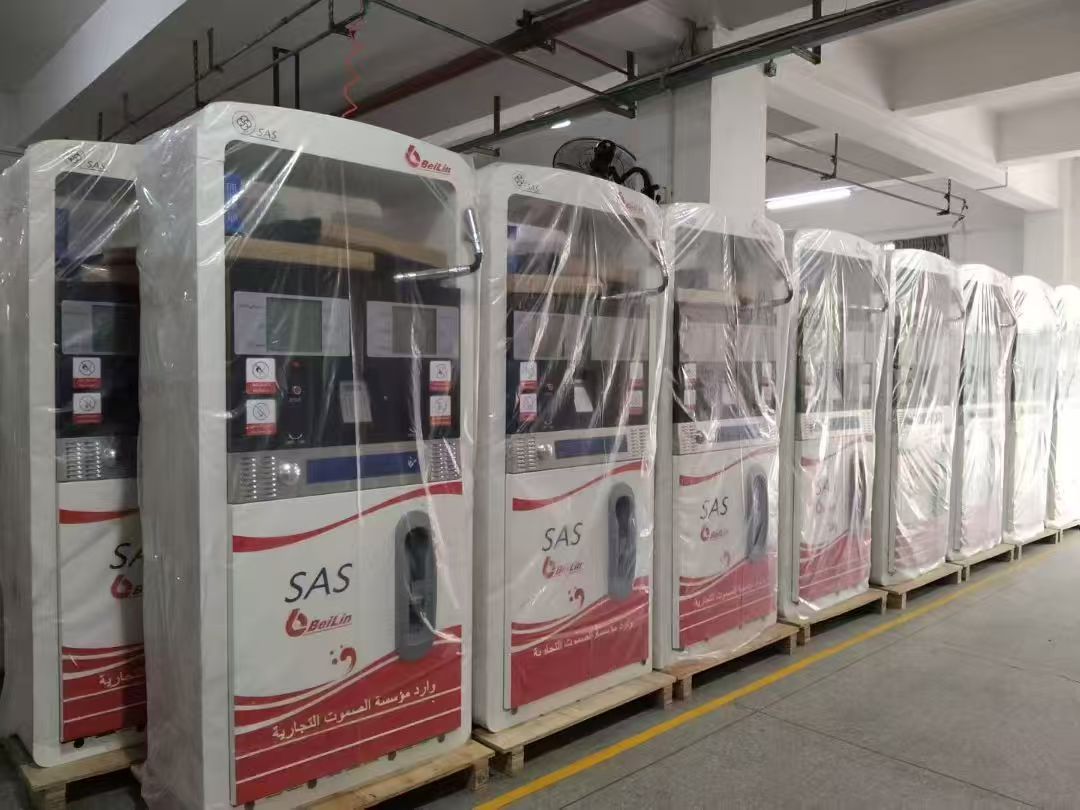
A pump rated for 40 gallons per minute rarely hits that number once you factor in hose length, nozzle restrictions, and back pressure from the vehicle tank. On a busy site, the gap between rated and actual flow decides whether the line moves or drivers start looking for another station. Operators who time fills during peak hours tend to notice that even a 10 percent drop adds several minutes to every transaction.
Slower flow also changes the rhythm of the forecourt. Attendants get pulled away for longer stretches, card readers time out more often, and small spills become more likely as people rush or reposition the nozzle. Matching pump speed to the expected vehicle mix, such as high-flow diesel for trucks or standard gasoline for cars, keeps the day from backing up during the lunch rush.
Daily reconciliation gets easier when flow data is checked against sales records. A pump that falls below its normal output often has a clogged filter or a failing meter, and catching that before the afternoon rush avoids lost revenue and frustrated customers.
Why Metering Accuracy Matters More Than Maximum Output
A device that claims a massive peak output often gets all the attention, yet that number tells you almost nothing about how it behaves in everyday conditions. Most equipment runs at partial load for the vast majority of its life, and it is there — at 20%, 40%, or 60% of the rated maximum — that small measurement errors quietly pile up. A meter that drifts by just a fraction of a percent can distort billing figures, throw off process controls, or push a system into an unsafe operating window without anyone noticing until the damage is done.
Precision in metering shapes decisions. When you know exactly how much energy, fluid, or signal is passing through a line, you can spot leaks, optimize scheduling, and avoid overpaying for capacity you do not need. Maximum output, by contrast, is a single point on a curve — useful for sizing, but nearly irrelevant after installation. Two units with the same headline rating can perform very differently in real-world duty cycles if one of them reports accurately at low flow and the other only behaves near full scale.
The real cost is often hidden. An inaccurate meter can make a process look efficient when it is actually wasting resources, or it can trigger false alarms that erode trust in the entire monitoring system. By the time someone cross-checks the numbers, the damage has already accumulated across thousands of small transactions. A slightly lower maximum output with trustworthy readings almost always beats a flashy spec sheet number that falls apart when it matters most.
A Practical Look at Suction vs. Submersible Pump Setups
When you're deciding between a suction pump and a submersible, the core difference comes down to where the pump sits and how it moves water. A suction pump stays above the water source and pulls liquid up through a pipe, which means atmospheric pressure limits your vertical lift to roughly 25 feet at sea level. Go deeper than that and you'll hit cavitation or just won't get water at all. Submersibles, on the other hand, are designed to rest under the surface and push water upward, which removes that lift ceiling entirely. That alone rules out suction pumps for most deep wells, but for shallow ponds or tanks under 20 feet, a suction unit can be perfectly adequate.
Beyond raw lift capacity, the day-to-day realities of each setup differ significantly. Suction pumps need a foot valve or check valve at the intake to hold prime, and if that valve gets stuck open from a bit of sand or a cracked seal, you'll be re-priming the pump every time it cycles. They also tend to lose prime after power outages or if the suction line has a pinhole leak above the waterline. Submersibles avoid priming altogether since the impeller is already submerged, but they demand better cable insulation and shaft seals because any water ingress fries the motor. That means a submersible failure often requires pulling the whole unit out of the well or sump, which is more labor than swapping a bearing on an above-ground suction pump.
From a cost and energy standpoint, submersibles usually win for deep or high-head applications because pushing water from below is more efficient than pulling it. However, a quality suction pump is cheaper upfront and easier to winterize if you can drain it fully. If your water source is shallow, clean, and within 20 feet of the pump, a suction setup with a good foot valve and rigid piping can run for years with minimal fuss. But once you're dealing with depths beyond 25 feet, fluctuating water tables, or multiple points of use uphill, the submersible's lack of priming headaches and higher pressure capability makes it the more practical choice.
The Hidden Maintenance Costs Behind Low-Price Dispensers
The sticker price on a budget dispenser might make your wallet smile, but that initial savings often evaporates once you factor in what keeps the machine running. Cheap internal components, especially pumps and seals, tend to fail well before their mid-range counterparts. Instead of one big upfront expense, you end up with a trickle of replacements, service calls, and downtime that quietly eats into your operating budget.
There’s also the question of parts availability. Many low-cost models are produced in short runs or use non-standard fittings, meaning you could wait weeks for a simple gasket or valve. During that wait, your dispenser sits idle—and if it’s part of a busy kitchen or production line, the real cost isn’t the part itself but the lost throughput and labor hours spent troubleshooting.
Even routine upkeep becomes pricier. Cheaper dispensers often lack tool-free access or modular design, so a five-minute cleaning on a quality unit turns into a half-hour disassembly. Multiply that across a year, and the labor cost difference alone can exceed the price gap you saved at checkout.
Matching Pump Specifications to Fuel Type and Site Conditions
Fuel chemistry drives the first round of pump specification decisions. Gasoline and ethanol blends demand elastomers and seal materials that resist swelling and permeation, while diesel and biodiesel require components that can handle higher lubricity but also potential water absorption and microbial growth. Aviation fuels introduce additional constraints around static dissipation and cleanliness. Rather than treating a pump as a universal transfer device, engineers match wetted parts—housings, impellers, mechanical seals—to the fuel's solvency, acidity, and additive package. A pump that survives years on straight diesel may fail within months on E85 if the internal soft goods were chosen for hydrocarbon-only service.
Site conditions then narrow the selection further by imposing physical and safety boundaries. High-altitude locations reduce atmospheric pressure and lower the available net positive suction head, making self-priming or vertical can pumps more attractive than standard horizontal end-suction designs. Cold climates turn viscous fuels into sluggish fluids, so gear or progressive cavity pumps with heating jackets may replace centrifugal units sized for warm-weather flow rates. Hazardous area ratings, whether from flammable vapors or dusty environments, dictate motor enclosures and grounding practices. Even something as mundane as power supply stability—frequent voltage dips or reliance on generator sets—can eliminate variable frequency drives and push the specification toward a fixed-speed positive displacement pump with a simple mechanical bypass.
Effective matching is not a one-time calculation but a field-driven refinement. A remote mining operation pumping winter-grade diesel at 4,000 meters elevation will specify a different pump than a coastal marina dispensing recreational gasoline at sea level, even if both applications list "fuel transfer" on paper. Field measurements of actual suction lift, pipe friction losses, and fuel temperature swings often reveal that the original datasheet assumptions were optimistic. Choosing a pump that survives the worst-case combination of fuel blend and ambient condition, rather than the average case, reduces unplanned downtime and keeps maintenance intervals aligned with operational reality. The goal is not over-engineering for hypothetical extremes, but closing the gap between catalog performance and what the site actually delivers.
FAQ
Look for a pump with a positive displacement design and a built-in air eliminator. This combination keeps vapor out of the metering system, so you get consistent flow instead of sputtering. Also check the maximum flow rate rating against your typical vehicle traffic; oversizing isn't always better, but undersizing will create bottlenecks.
Suction pumps sit inside the dispenser and pull fuel from the tank, which works fine for short underground lines and low-capacity stations. Submersible pumps go in the tank itself and push fuel under pressure, making them better for multi-dispenser setups or longer pipe runs. If you run more than two dispensers on one tank, go submersible.
Replace the strainer and filter elements on a schedule based on throughput, not just when they clog. Check the pump's bypass valve for sticking every few months, and listen for cavitation noises that signal a restricted inlet. Keeping tank bottoms free of water and sediment does more for pump life than most people expect.
For high-traffic stations, yes. Variable-speed pumps ramp up when multiple nozzles are active and slow down during idle periods, which reduces heat buildup and motor wear. The steady output during peak hours prevents pressure drops, so customers don't notice a slowdown when three cars fill at once.
Slow dispensing often comes from a worn impeller, clogged inlet strainer, or undersized piping between tank and dispenser. Upgrading to a pump with a higher vacuum rating or a submersible with pressure control can bypass those restrictions. Just don't forget to test the line for leaks before blaming the pump.
A built-in air separator and a vapor return line are the main defenses. Pumps that mount the meter downstream of the air eliminator give cleaner readings. Some newer models also have electronic temperature compensation, which adjusts for fuel expansion and keeps the metered volume honest.
The nozzle's spout shape and venturi position control how much air gets pulled back through the vapor recovery system. A poorly matched nozzle can cause premature shut-off or splash-back. Look for a nozzle rated for the same flow range as the pump, and replace the spout tip if it's bent or corroded.
Brands like Wayne, Gilbarco Veeder-Root, and Tokheim have strong track records, but reliability also depends on the specific pump model and local service support. Red Jacket submersible pumps are common in high-flow setups. Ask other station owners in your area which brand has the fastest parts availability.
Conclusion
Reliable fuel flow depends less on a pump's maximum advertised output and more on how well it matches the reality of your site. Before choosing any gasoline dispenser, check the power supply, hose reach, and expected traffic pattern. A unit rated for 40 gallons per minute might not help if the hose is too short for trucks or if the electrical connection cannot handle sustained motor starts. Flow rate shapes daily operations: pumps that cycle slowly create a queue, while a pump that consistently delivers at or slightly above your peak demand keeps vehicles moving without pushing hardware past its design limits. However, metering accuracy matters more than maximum output. A dispenser that over-delivers by even a fraction of a percent across thousands of gallons each month quietly drains profit, and under-delivery triggers customer complaints and regulatory fines. Choose a pump with a proven meter, stable calibration, and minimal drift after temperature swings rather than one that wins on a spec sheet.
Suction and submersible setups each bring trade-offs. Suction pumps are simpler to service and cost less up front, but they struggle with long piping runs or multiple dispensers on the same line. Submersible systems handle high-volume sites and larger hose networks better, though installation and underground work add expense. Be wary of the hidden maintenance costs behind low-price dispensers: cheap seals, fragile PC boards, and hard-to-source filters often turn a bargain into a recurring repair bill and lost sales during downtime. Match pump specifications to fuel type and site conditions as well. Ethanol blends demand compatible seals and hoses, coastal humidity accelerates corrosion, and cold climates affect vapor recovery. The best option is rarely the one with the biggest number on the label; it is the dispenser that pairs robust metering, locally available parts, and a flow rate suited to your daily fuel volume without forcing constant intervention.
Contact Us
Contact Person: Jason
Email: [email protected]
Tel/WhatsApp: 8615876017548
Website: https://www.bei-lin.com/