
Alloy Resistors: Top Choices for Precision and Stability
2026-06-25
Precision and stability aren't just buzzwords in electronics—they're the bedrock of every reliable circuit. Alloy resistors have quietly become the go-to for engineers who demand unwavering accuracy, but as performance requirements tighten, even traditional solutions face their limits. Milliohm is changing the game with alloy resistor innovations that defy the ordinary. Curious what sets them apart? Let's dig into the details that make these components the undisputed champions of precision.
Why Alloy Resistors Excel in Tight Tolerance Circuits
Alloy resistors earn their reputation in tight tolerance circuits primarily through their remarkable temperature stability. Unlike thin film or carbon compositions, the bulk metal element at the heart of an alloy resistor exhibits a nearly flat temperature coefficient of resistance (TCR), often as low as ±15 ppm/°C. This means that even as ambient conditions shift or the component self-heats under load, the resistance drift is virtually negligible. For circuits where every millivolt counts—such as precision voltage dividers or feedback loops in instrumentation—this inherent thermal composure keeps setpoints accurate without the need for complex compensation schemes.
Another cornerstone of alloy resistor performance is their extremely low thermal electromotive force (EMF) against copper interconnects. In high-precision sensing and metrology, temperature gradients across junctions can introduce microvolt-level offsets that masquerade as legitimate signals. The homogeneous metal structure of alloy resistors minimizes dissimilar metal interfaces, slashing thermal EMF to sub-microvolt territory. Coupled with excellent long-term stability—resistance drift often stays under 0.01% over years of operation—designers can specify these parts once and trust that calibration intervals will stretch longer than with alternative technologies.
Beyond electrical parameters, mechanical ruggedness adds another layer of dependability in tight tolerance applications. Alloy resistors are inherently less susceptible to micro-cracks or value shifts from board flexing, vibration, or pulsed power surges. Their low-inductance construction also preserves signal fidelity in high-speed or RF circuits, keeping impedance precisely where it was designed to be. By marrying a naturally stable resistivity with robust physical structure, alloy resistors provide a clean, predictable path for signals, letting circuit architects squeeze maximum accuracy out of their layouts without chasing after elusive sources of error.
Taming Thermal Drift with Advanced Materials
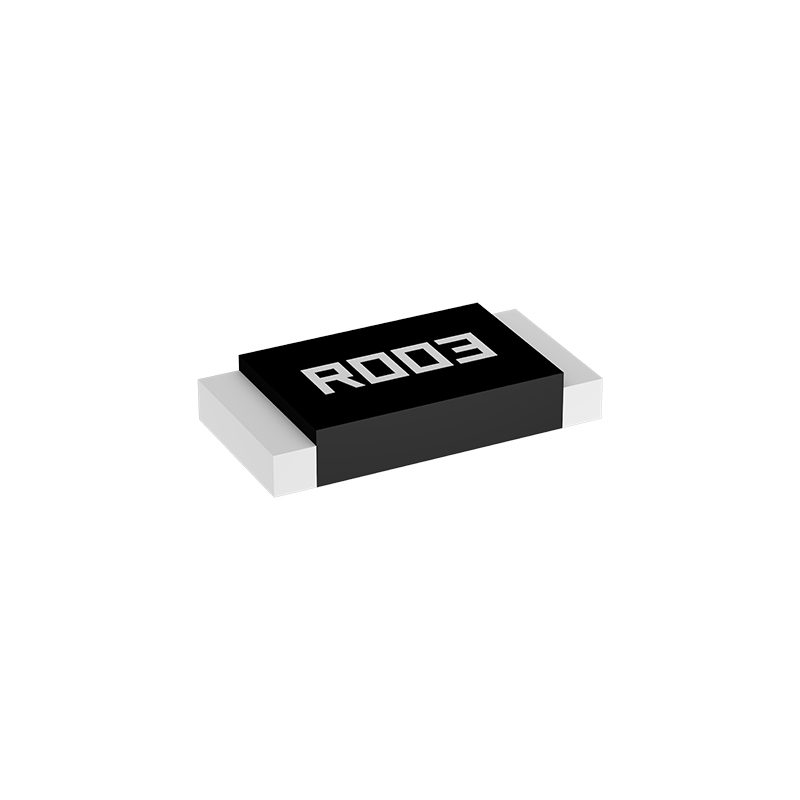
Thermal drift—the gradual shift in device performance as temperatures change—has long been a thorn in the side of precision engineering. Whether in microelectronic circuits, optical systems, or nanoscale positioning stages, even a few degrees of fluctuation can throw off alignment, distort signals, or shorten component lifetimes. The root cause lies in the natural tendency of most materials to expand, contract, or alter their electrical properties when heated or cooled. Rather than simply adding bulky cooling systems or relying on temperature-compensation algorithms that introduce latency, cutting-edge research is now rethinking the problem at the atomic level. By designing materials that inherently resist thermal disturbance, engineers can create components that remain stable across wider temperature ranges without the need for external intervention.
Advanced materials such as low-CTE (coefficient of thermal expansion) composites, zero-expansion ceramics, and shape-memory alloys are moving from lab curiosities into practical applications. For example, certain lithium aluminosilicate glass-ceramics can be tailored to exhibit near-zero expansion over hundreds of degrees, making them ideal for telescope mirrors and semiconductor lithography stages. In the realm of electronics, graphene and other two-dimensional materials show not only exceptional thermal conductivity but also tunable thermal expansion when combined with polymer matrices. These hybrid systems can whisk heat away from hotspots while mechanically decoupling sensitive components from the surrounding structure. Meanwhile, additive manufacturing techniques now allow engineers to print complex geometries with functionally graded materials—structures that transition smoothly from one thermal characteristic to another—effectively channeling stress and strain away from critical interfaces.
The payoff goes beyond just maintaining performance under fluctuating conditions. By taming thermal drift at the material level, designers can shed the weight and complexity of active thermal management, opening the door to lighter, more energy-efficient systems. In aerospace, for instance, satellite optics that don't require heaters or complicated thermal blankets can reduce launch mass and power budgets. In precision metrology, vacuum-compatible stages made from these materials can hold nanometer-scale accuracy without the acoustic noise of cooling fans. As the toolbox of advanced materials expands, the old approach of battling drift with brute force is giving way to an elegant engineering philosophy: let the material itself handle the heat.
Low Noise Performance for Sensitive Analog Frontends
In sensitive measurement systems, even minuscule noise levels can swamp the signals of interest, making low noise design a non-negotiable requirement. Precision analog frontends—whether they’re amplifying microvolt-level sensor outputs or conditioning photodetector currents—must minimize both intrinsic device noise and external interference. Every femtoamp of input bias current or nanovolt of voltage noise directly erodes the effective resolution, so designers obsess over component selection, grounding topologies, and supply decoupling to preserve signal fidelity at the very first stage.
Achieving genuinely low noise operation goes far beyond just picking a quiet op-amp. Thermal noise from passive components, flicker noise in semiconductors, and even board-level parasitics become dominant when you’re working with high-impedance sources or wide bandwidths. Thoughtful PCB layout, such as guarding high-impedance nodes and optimizing return paths, often makes the difference between a usable frontend and one that’s completely swamped by 50/60 Hz hum. Many designs also benefit from active shielding or chopper-stabilized architectures that push 1/f noise below the frequency band of interest.
The pursuit of low noise is ultimately a balancing act against other constraints like power consumption, cost, and physical size. For battery-powered or portable instruments, trimming a few more nanovolts per root hertz might force unacceptable increases in supply current. Creative circuit techniques—such as paralleling multiple amplifiers to reduce voltage noise or using transformer coupling for impedance matching—can sidestep some of these trade-offs, but they bring their own complexities. In the end, the most successful analog frontends are those where the designer has carefully mapped out the noise budget early and iterated relentlessly, knowing that every decibel of signal-to-noise ratio gained at the frontend pays dividends through the entire signal chain.
Longevity Under Harsh Operating Conditions
Equipment designed for rugged environments often faces extreme temperatures, corrosive substances, and relentless vibration. Achieving reliable performance isn't just about selecting durable materials—it's about anticipating how stresses accumulate over time. Engineers test components under accelerated life cycles, exposing prototypes to conditions far worse than any normal deployment. This rigorous process reveals hidden weaknesses, allowing for refinements that turn fragile prototypes into robust assets capable of decades-long service in mines, offshore platforms, or desert outposts.
Thermal management often becomes the decisive factor. In arctic cold, standard lubricants turn to sludge, while desert heat can soften seals and warp casings. Specialized coatings, smart fluid circulation, and materials with matched thermal expansion coefficients prevent micro-fissures from growing into critical failures. Equally important is defense against fine particulates and moisture, which can corrode electronics or abrade moving parts. Multi-stage sealing and positive air pressure systems are now standard in designs meant to outlast the machinery they power.
Maintenance is engineered into the very architecture. Modular designs allow rapid field replacement of wear items, reducing downtime to hours instead of weeks. Built-in health monitoring uses vibration sensors and oil analysis to predict bearing fatigue long before catastrophe strikes. By shifting from reactive repairs to proactive intervention, operators maximize uptime in isolated locations. This blend of material science, intelligent system design, and practical maintenance philosophy ensures that longevity is not a hope but a calculated outcome.
Matching Pulse Handling with Minimal Inductance
When you’re dealing with fast-rising pulses, even a tiny bit of stray inductance can ruin your signal integrity. The key is to keep the current loop area as small as possible, because inductance scales with the physical size of that loop. This means routing pulse lines directly over a solid ground plane and minimizing any gaps or slots that could force current to take a longer path. Engineers who overlook this often see rounded edges on their pulses or, worse, ringing that corrupts timing margins.
Component placement is just as critical. You want the pulse source, any series termination, and the load all bunched together—no long traces that act as antennas. In high-speed designs, using low-inductance capacitor packages (like reverse-geometry or multi-terminal types) for local decoupling keeps the supply rails quiet during rapid switching. Simple layout tweaks, such as routing return vias right next to signal vias, can shave off significant inductance without extra cost.
Balancing Precision and Cost in Modern Designs
Striking the right balance between precision and cost often starts with a clear-eyed assessment of what the design truly demands. Tight tolerances can drive up manufacturing expenses dramatically, but not every surface or feature requires micron-level accuracy. By isolating the areas where precision directly impacts performance and relaxing constraints elsewhere, teams can trim unnecessary spending without undermining the product’s core functionality. This selective approach demands both engineering insight and a willingness to challenge inherited specifications that may no longer align with real-world use.
Advances in simulation and iterative prototyping have made it easier to explore trade-offs early in the development cycle. Instead of over-engineering from the start, designers can test how different tolerance stacks affect durability, assembly, and user experience, then adjust accordingly. Material selection plays a quiet but pivotal role here—sometimes a slightly less rigid alloy or a more forgiving polymer can maintain required performance at a fraction of the cost of exotic alternatives. The goal is not to cut corners but to align technical ambition with practical budgets through informed decision-making.
Ultimately, the sweet spot between precision and cost is shaped by a product’s intended market and the expectations it sets. A luxury timepiece and a mass-market appliance operate under vastly different definitions of acceptable deviation. Over-specifying can lead to bloated budgets and diminishing returns, while under-specifying risks field failures and eroded trust. The most thoughtful designs emerge when teams treat precision not as an absolute ideal but as a variable to be tuned—balancing technical elegance with a sustainable bottom line.
FAQ
Alloy resistors are crafted from specialized metal blends that deliver exceptionally low temperature coefficients and tight tolerances. This means their resistance stays nearly constant even as the environment changes, which is critical for circuits demanding high accuracy.
They use materials with inherent structural stability and minimal drift. Advanced manufacturing processes, like electron-beam welding and bulk metal foil construction, eliminate stresses that cause value shifts, ensuring long-term performance without degradation.
Any situation where precision and reliability are non-negotiable favors alloy resistors. Think precision current sensing in power management, feedback networks in instrumentation, or audio circuits where noise and distortion must be kept to an absolute minimum.
Common options include Manganin, Zeranin, and Evanohm. Each offers distinct advantages: Manganin is great for low thermal EMF, Zeranin provides ultralow temperature coefficients, and Evanohm excels in high-temperature stability, letting designers match the alloy to the challenge.
Yes, many are designed with low ohmic values and robust heat sinking. Bulk metal foil resistors, for instance, combine low resistance with high current capacity, allowing accurate measurement even under significant load. Proper thermal management is still essential, though.
The construction directly affects parasitic inductance and capacitance. Bulk metal foil designs, for example, use a planar structure that minimizes these reactive effects, resulting in excellent high-frequency behavior and predictable impedance across a wide bandwidth.
They're usually overkill for basic consumer gadgets where a few percent tolerance is fine. But in premium audio gear, medical devices, or metrology equipment, the added cost is justified by the unmatched precision and reliability that can't be achieved with cheaper alternatives.
Focus on the temperature coefficient of resistance (TCR), tolerance, power rating, and long-term stability specs. Also consider any special requirements like low thermal EMF for DC applications or high-frequency characteristics. Asking for sample kits and testing under real conditions is always a smart move.
Conclusion
When circuit designers chase precision and long-term stability, alloy resistors emerge as the go-to components. Their intrinsic material properties make them excel where tight tolerance is non-negotiable—often achieving ±0.01% or better, which keeps sensitive circuits calibrated without constant trimming. Unlike thin or thick film alternatives, advanced alloys like Evanohm or Manganin resist thermal drift with remarkable ease, thanks to finely controlled temperature coefficients. This tames output fluctuations in precision voltage references and instrumentation amplifiers. In analog front-ends where every microvolt counts, the low noise floor of bulk metal elements preserves signal integrity, letting tiny sensor outputs emerge cleanly. Together, these traits push alloy resistors into the front line of applications that demand unwavering accuracy.
Beyond static precision, alloy resistors handle dynamic stress convincingly. Their rugged construction thrives under harsh operating conditions—extreme temperatures, humidity, and vibration do little to erode lifetime performance. The low inductance inherent in their resistive element design enables them to absorb energy pulses without adding parasitic artifacts, a critical factor in power supplies and snubber circuits. Modern designs also face relentless cost pressure; here, alloy resistors strike a practical balance. While more expensive upfront than generic chip resistors, their long-term drift resistance and reduced need for calibration or replacement lower total system cost. This blend of pulse-handling confidence, environmental toughness, and fiscal sense makes alloy resistors a solid strategy for engineers seeking stable precision that lasts.
Contact Us
Contact Person: Yuying Gao
Email: [email protected]
Tel/WhatsApp: +86 18926013721
Website: https://en.milliohm.net/