
Alkyl Polyglycoside Industry Trends: The Rise of Green Surfactants
2026-08-12
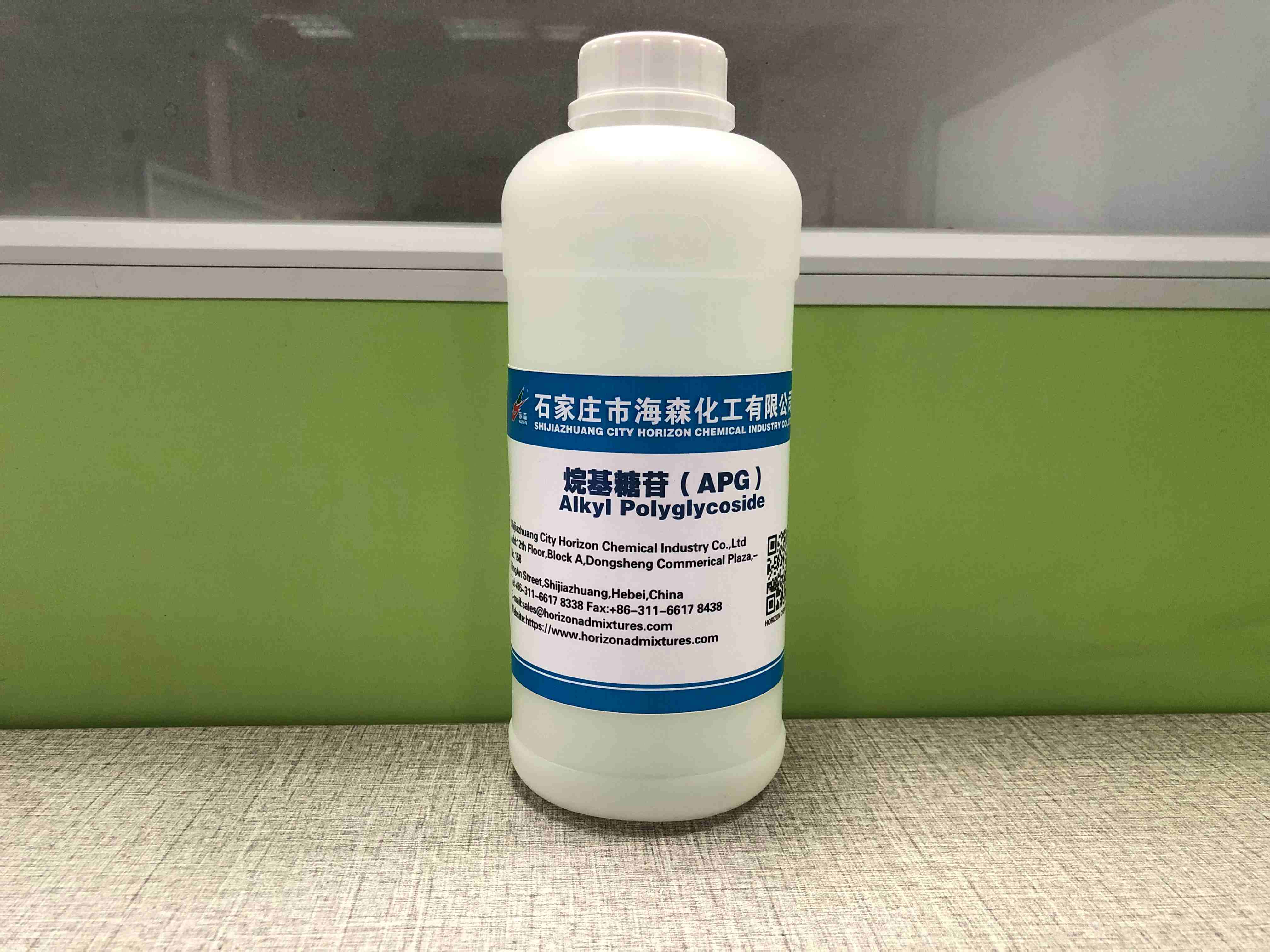
Green chemistry is reshaping the surfactant landscape, and alkyl polyglycosides (APGs) are leading this eco-friendly charge. While many companies talk sustainability, few deliver ingredients that balance performance with planetary responsibility. Enter HAISEN—pioneering APG solutions that challenge the status quo. But what truly sets these sugar-derived surfactants apart in an industry racing toward net-zero? The answer lies not just in their biodegradability, but in a quiet revolution happening across supply chains and consumer expectations.
Brands pivot to plant‑derived ingredients as consumer scrutiny intensifies
In response to mounting demands for transparency, major brands are overhauling their ingredient lists with plant-derived alternatives. This shift isn't just about swapping one component for another; it requires rethinking entire supply chains to ensure consistency and performance match or surpass synthetic predecessors. Companies are tapping into fermentation science and green chemistry to extract potent actives from sources like algae, sugarcane, and fruit enzymes, crafting formulas that retain high efficacy without the chemical baggage that consumers now routinely question.
The move toward botanicals is driven as much by innovation as by necessity. Regulatory pressure and viral social media scrutiny have made legacy ingredients untenable, prompting R&D teams to dive deep into underutilized botanicals. From bakuchiol as a retinol alternative to squalane harvested from olives, these ingredients offer proof that nature can deliver results. Brands that openly communicate their sourcing and processing methods are building a new kind of loyalty, one rooted in the belief that what's left out is just as important as what's put in.
Yet the transition isn't seamless. Formulators face hurdles in stability, preservation, and cost, as plant ingredients can vary with harvest cycles and geographic origin. To counter this, some companies are investing in vertical farming and closed-loop extraction systems to standardize output. The resulting products often carry a compelling story—one that resonates with eco-conscious shoppers who view their purchases as votes for a cleaner, more accountable industry. As this scrutiny intensifies, the brands that prioritize genuine reformulation over quick marketing fixes are poised to stand out in a crowded market.
Cost barriers erode as fermentation technology matures
For years, the promise of precision fermentation was tempered by the harsh reality of production costs. Early iterations required expensive feedstocks and energy-intensive processes, keeping parity with animal-derived ingredients out of reach. But as the technology matured, those once-steep cost curves started to flatten. Advances in microbial engineering, streamlined downstream processing, and economies of scale are steadily chipping away at the premium, bringing functional proteins and flavor compounds into a more competitive range.
Much of this shift comes from improved strain efficiency. Engineered microbes now pump out target molecules at titers that were unthinkable a decade ago, slashing the cost per kilogram. Simultaneously, the supply chain has adapted—bulk sugar sources have become more affordable, and fermentation infrastructure is increasingly shared across multiple companies, reducing capital expenditure per unit. These compounding gains mean that for several applications, fermentation-derived ingredients are no longer a luxury R&D curiosity but a viable commercial option.
The erosion of cost barriers isn’t happening uniformly, though. Products with simpler molecular structures reached price competitiveness faster, while complex proteins still demand more process refinement. Still, the direction is clear: as fermentation platforms reach industrial maturity, the cost conversation is shifting from “if” to “when” for a growing list of ingredients.
Home and personal care formulations drive rapid volume growth
The quiet engine behind the latest surge in production volumes isn't a flashy tech gadget—it's the humble soap, shampoo, and surface cleaner. As consumers double down on hygiene routines and self-care rituals, manufacturers are scrambling to keep up with demand. The real growth lies not just in basic products, but in advanced formulations that promise added benefits like skin microbiome balance, long-lasting fragrance, and eco-friendly ingredients. Suddenly, what was once a commodity category is behaving more like premium skincare, driving batch after batch out of mixing facilities.
Behind the scenes, chemical suppliers are reporting shortages in specialty surfactants and botanical extracts, pointing to an industry that's rapidly moving beyond simple commodity chemicals. Contract manufacturers are expanding their high-shear mixing lines and filling installations to accommodate complex emulsions and serums that wouldn't look out of place on a cosmetics shelf. The once-stable ratio of active to filler ingredients has shifted dramatically, with milder, bio-based actives now dominating formula cards, all while margins tighten due to the costly raw materials. Yet the volume keeps climbing—in some categories, by double digits year-on-year.
What's particularly striking is the role of emerging markets, where the jump from basic soap to body wash or laundry liquid to unit-dose pods happens seemingly overnight. These formulations require entirely different supply chains and production technologies, and their rapid adoption is creating local manufacturing booms. It's a hinge moment where volume growth isn't just about selling more units, but about delivering entirely new product forms that reshape how people clean, care, and refresh—and that shift isn't slowing down anytime soon.
Regulatory pressure turns green chemistry from option to default
For years, green chemistry remained a niche pursuit—a moral choice for forward-thinking companies, but rarely the path of least resistance. That dynamic is dissolving under a thickening web of regulations. From the EU’s REACH restrictions to the EPA’s updated TSCA rules and emerging PFAS bans, governments are systematically outlawing legacy substances and processes. The message to industry is unambiguous: the chemistry of yesterday is becoming illegal. What was once a voluntary sustainability badge is rapidly hardening into a compliance requirement, leaving companies with little room to maneuver.
This regulatory wave is reshaping entire supply chains. Procurement teams that once prioritized cost and performance now face mandates to pre-screen substances against restricted lists, while R&D departments must design within ever-narrower chemical spaces. The shift is particularly jarring in sectors like electronics, textiles, and packaging, where familiar solvents, flame retardants, and plasticizers are being phased out on tight deadlines. Firms that delay find themselves scrambling—retrofitting processes at a premium or losing market access entirely. The default is no longer business-as-usual; it’s a continuous scramble toward inherently safer chemistries.
The smartest players are treating this not as a burden, but as a catalyst. They are embedding green chemistry principles into early-stage R&D, making benign-by-design molecules their baseline. In practice, this means computational toxicology screening before synthesis, bio-based feedstocks as a starting assumption, and catalytic processes that sidestep hazardous intermediates. The result isn’t just compliance—it’s faster innovation, lower liability, and a durable license to operate. Regulatory pressure, once seen as a threat, is now the engine pushing green chemistry from the margins to the mainstream, making safe and sustainable chemistry the new normal.
Bio‑refineries unlock new feedstock flexibility for surfactant makers
The shift toward bio-based feedstocks is reshaping how surfactant manufacturers approach raw material sourcing. Traditional dependence on petrochemicals or a limited set of crops like palm oil and coconut is giving way to a more diverse spectrum of inputs, ranging from agricultural residues to algae and microbial oils. Bio‑refineries sit at the heart of this transformation, converting these varied feedstocks into consistent, high‑quality intermediates that surfactant producers can seamlessly integrate into existing processes. This flexibility not only hedges against commodity price swings but also opens doors to regional supply chains, reducing logistical complexity and enabling more responsive production planning.
Advanced processing capabilities within bio‑refineries allow for the tailoring of feedstock chemistry to meet specific surfactant performance requirements. For instance, the fatty acid profiles derived from different biomass sources can be tuned to achieve desired chain lengths, branching patterns, or unsaturation levels—attributes that directly impact foaming, emulsification, and mildness. Such precision empowers formulators to design next‑generation surfactants that don't compromise on efficacy while meeting sustainability targets. In markets where consumer expectations are rapidly evolving, having the ability to dial in these properties without being locked into a single raw material source is becoming a competitive differentiator.
Moreover, this feedstock flexibility strengthens the business case for integrating circular economy principles into surfactant production. Bio‑refineries can process side streams from other industries, such as used cooking oils or forestry residues, turning potential waste into valuable inputs. This not only lowers the carbon footprint but also isolates surfactant makers from the geopolitical and environmental risks associated with conventional feedstocks. As regulatory pressures mount and brand owners push for cleaner ingredient labels, the collaborative model between surfactant manufacturers and bio‑refinery operators is emerging as a practical pathway to scale up bio‑based products without sacrificing reliability or cost competitiveness.
Regional manufacturing surges outside Europe as demand globalizes
Manufacturing outside Europe has seen a sharp uptick as businesses diversify supply chains and tap into rising consumer markets across Asia, Africa, and the Americas. This shift isn't just about chasing lower costs; it's driven by a need to produce closer to where demand is growing fastest. Countries like India, Vietnam, and Mexico are becoming production hubs for everything from electronics to automotive components, leveraging younger workforces and improving infrastructure to meet global orders.
The globalization of demand has reshaped traditional industrial patterns, with companies increasingly building production capacity in multiple regions to reduce reliance on any single market. Political tensions, shipping disruptions, and the lessons of recent supply chain shocks have accelerated this decentralization. As a result, regional manufacturing clusters are thriving, often supported by local government incentives that prioritize industrial growth and export competitiveness.
This surge is creating a more distributed manufacturing landscape, where goods are designed, sourced, and assembled across continents in ways that were uncommon a decade ago. While European manufacturing remains strong in high-tech and specialized sectors, the sheer volume of new industrial activity elsewhere signals a permanent change. The ability to respond quickly to local tastes and deliver without long lead times is giving these non-European regions an edge that goes beyond cost alone.
FAQ
Alkyl polyglycosides (APGs) are non-ionic surfactants synthesized from renewable raw materials—typically fatty alcohols derived from coconut or palm kernel oil and glucose from corn starch. Unlike petrochemical-based surfactants that rely on ethylene oxide or propylene oxide chains, APGs feature a hydrophilic head built from polymerized glucose units. This structure provides both excellent solubility and a unique combination of mildness and foaming performance not easily replicated by synthetics.
The shift stems from tightening environmental regulations, corporate net-zero pledges, and a genuine consumer pull for bio-based products. APGs have moved from a specialty ingredient to a strategic one because they deliver on multiple fronts: high renewable carbon content, ready biodegradability, and compatibility with sensitive-skin formulations. Major brands are now incorporating APGs into mass-market lines, which has accelerated supply chain scaling and price normalization.
Home care remains the largest volume driver, particularly dishwashing liquids and laundry detergents where APGs boost grease-cutting and anti-redeposition. However, the fastest growth is in personal care—facial cleansers, baby shampoos, and micellar waters—because of APG’s ultra-mild profile. Industrial & institutional cleaning and agricultural adjuvants are also emerging as significant niches, thanks to APG’s tank-mix compatibility and low aquatic toxicity.
The primary roadblock is viscosity building in formulations; APGs tend to produce low-viscosity solutions, requiring careful thickening strategies. Color stability can also be a concern—some grades darken over time unless protected from light. Additionally, cost parity with bulk anionic surfactants like sodium lauryl ether sulfate has not yet been achieved, although the gap is narrowing as production technology matures and feedstock integration improves.
In many formulations, APGs match or outperform alcohol ethoxylates on oily soils because their polyglucose headgroup acts as a hydrotrope, preventing soil redeposition. They also generate less foam height but more stable foam, which can be an advantage in automatic scrubber applications. The trade-off is a slightly lower cloud point in high-salinity solutions, which is manageable with short-chain APGs or blend optimization.
The EU Ecolabel and the U.S. EPA’s Safer Choice program have been powerful catalysts by explicitly listing APGs as preferred ingredients and setting strict aquatic toxicity thresholds. In Asia, South Korea’s K-REACH and China’s green certification push are also favoring bio-surfactants. These frameworks effectively create non-tariff barriers for conventional surfactants with poor environmental profiles, giving APG producers a defensible market access advantage.
It’s a fair concern. The sustainability credential is strongest when sourced from non-food-grade glucose such as corn starch sourced from by-product streams or cellulosic sugars. Leading producers are increasingly transparent about their supply chains—some are now using palm oil certified under RSPO’s mass balance model. The carbon lifecycle analysis still favors APGs over petrochemical alternatives, but the industry acknowledges that continuous improvement in feedstock sourcing is necessary to avoid the ‘food vs. chemicals’ debate.
Current R&D is focused on tailoring alkyl chain length distribution and degree of polymerization to create performance-matched APGs for specific applications—for example, ultra-short chain versions for hard surface wetting, or long-chain types for enhanced emulsification. Enzymatic synthesis pathways are being explored to lower energy input during production. In parallel, APG-based sophorolipid hybrids are appearing in premium personal care, signaling a trend toward combining APGs with biosurfactants for synergistic effects.
Conclusion
The alkyl polyglycoside (APG) market is undergoing a transformative shift as brands increasingly pivot to plant-derived ingredients, driven by intensifying consumer scrutiny over product safety and environmental impact. This push for natural, mild surfactants is eroding traditional cost barriers, thanks to advances in fermentation technology that have streamlined production and improved yields, making APGs more competitive with petrochemical alternatives. Home and personal care formulations are now the primary engine of volume growth, as shampoos, body washes, and household cleaners embrace APGs for their gentle cleansing profile and compatibility with sensitive skin. Meanwhile, regulatory pressure is turning green chemistry from a niche option into an industry default, with stricter VOC limits and biodegradability requirements pushing formulators away from sulfates and ethoxylates.
On the supply side, the rise of bio-refineries is unlocking new feedstock flexibility, enabling surfactant makers to utilize diverse renewable raw materials such as corn, sugar beet, and even agricultural wastes, thereby reducing dependence on palm kernel oil and mitigating price volatility. As demand globalizes, regional manufacturing is surging outside Europe—the historical stronghold—with significant capacity expansions in Asia and the Americas to shorten supply chains and cater to local preferences. This geographic diversification is reshaping the competitive landscape, fostering innovation and collaboration along the value chain. In essence, the APG industry is at a tipping point where sustainability, performance, and economics are converging, positioning these surfactants as a cornerstone of the broader green chemistry movement.
Contact Us
Contact Person: Sam Lee
Email: [email protected]
Tel/WhatsApp: 86-311-6617 8338
Website: https://www.horizonadmixtures.com/