
400kW Diesel Generator Factory: A Complete Manufacturing Overview
2026-09-11
When you're sourcing a 400kW diesel generator, the factory behind the name matters as much as the spec sheet. At DINGBO POWER, manufacturing isn't just assembly—it's a deliberate sequence of engineering, testing, and quality control that most buyers never see. This overview walks you through how a 400kW unit takes shape, from raw materials to final load bank verification, so you can judge a generator by more than its kW rating.
Laying the 400kW Base Frame: Welding Straight Without a Rack
Positioning the 400kW base frame on a flat, clean surface is the first move. Instead of relying on a welding rack that often forces awkward angles, we lay the frame directly on the floor and use a laser level to map the straightness every 300mm. The trick is to tack the corners first, then walk away for ten minutes so the metal cools evenly. That pause prevents the frame from pulling out of square when you run the full beads.
Once the corners are tacked, we use a pair of heavy angle plates as temporary backstops—not as a rack replacement, but to keep the long rails from bowing under their own weight. The welder works from the center outward, alternating sides every 150mm. This backstepping rhythm keeps the heat input balanced and the frame straight without clamping it into a rigid fixture. A straightedge check after the first pass usually shows less than 1mm drift over four meters.
The final pass runs downhill on vertical seams and uphill on the bottom flanges, all while the frame stays resting on three leveling pads. The lack of a welding rack means you can spin the frame 180 degrees by hand for the backside, something a rack would make clumsy. After cooling to room temperature, we re-check the diagonal measurements—any difference over 2mm gets corrected by a gentle heat shrink on the long side, never by force.
Assembling the Diesel Engine Core with Measured Torque
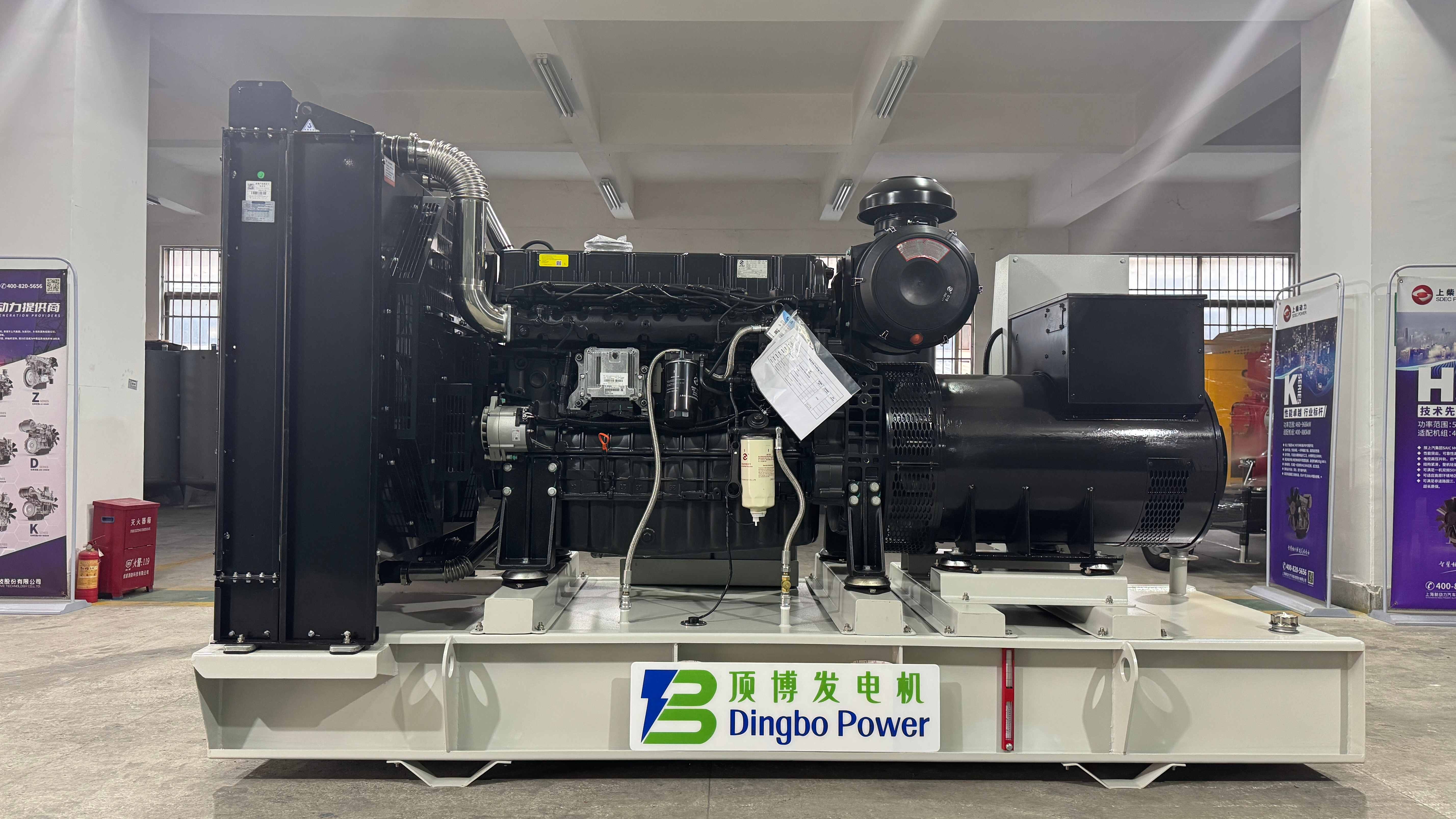
Torque control during core assembly isn't just a final check—it's the difference between an engine that holds compression and one that quietly eats itself. On the main bearing caps, you chase a specific stretch on the bolts rather than a raw number on the dial. Using a calibrated torque wrench with a degree wheel, we seat the caps in three passes: snug, 60% of final, then the full value plus angle. This staged approach lets the bearing shells settle evenly, so the crank spins with less than 0.002 inch of runout at the center journal.
Rod bolts get the same treatment, but here the sequence matters just as much as the torque. Each cap is brought up finger tight, then torqued in an alternating pattern across the journal. The final pass lands at 45 ft-lb plus an additional 90 degrees—no click wrench short-cut, just a solid pull until the angle gauge reads true. After every three rods, we back off one bolt a quarter turn and re-torque to catch any false seating from oil film or burrs. It's slow, but the oil clearance stays within a tenth of a thousandth from one rod to the next.
The head studs are where measured torque becomes a feel thing. You can't just ram them down to 120 ft-lb and call it good. We lube the threads and washers with moly, pull each stud to 40, then 80, then 110 ft-lb in the factory spiral. Then we wait ten minutes and check the first stud again—most of the time it's dropped 2-4 ft-lb as the gasket relaxes. A final pass at 115 ft-lb brings them all within a needle's width of each other. That's the kind of consistency that keeps a diesel core from walking head gaskets at 25 psi of boost.
Winding the Alternator for 400kW Output—Not Just for Show
Achieving a genuine 400kW output from an alternator places extreme demands on the winding process. Every turn of copper must handle currents that would melt lesser constructions. This isn't cosmetic work—the winding pattern, tension, and layer arrangement determine whether the machine delivers sustained power or burns out within minutes. A showpiece alternator might look impressive, but only careful winding turns raw metal into a reliable 400kW workhorse.
The choice of conductor cross-section and insulation thickness becomes critical at this power level. Using oversized wire reduces resistive heating but complicates the winding geometry, leading to voids and uneven layers. Skilled technicians compensate by varying turn spacing and applying high-temperature varnish between each layer. The end-windings, often overlooked in smaller units, need extra support to resist the massive electromagnetic forces generated during 400kW operation.
Precision winding also minimizes parasitic losses like eddy currents and proximity effect. When adjacent conductors are too close or poorly arranged, they fight each other, stealing power that should go to the load. A disciplined winding schedule—where each coil is positioned with deliberate symmetry—keeps these losses under two percent. That's the difference between a unit that merely advertises 400kW and one that actually sustains it day after day.
Control Panel Wiring: Every Terminal Earns Its Place
Inside a control panel, each connection point is a deliberate choice. Terminals aren't just lined up for convenience; they're placed where technicians can reach them without tracing a rat's nest of wires. A well-planned layout treats every terminal as earned space—reserving the upper rail for incoming power, middle for control signals, lower for field devices. When you assign a home to every wire before the first screw is tightened, the panel stops being a box of parts and starts working like a map.
The real test comes during commissioning. If a motor contactor chatters or a sensor reads erratically, a tidy panel lets you isolate the fault in minutes instead of hours. Loose strands, crossing voltage levels, and unlabeled jumpers are where gremlins hide. So we bundle, tag, and route with intention: AC on one side, DC shielded, ground bars unmistakable. Every terminal earns its place by making the next person's job easier—even if that next person is you at 2 a.m.
Perhaps counterintuitively, discipline in wiring is also about leaving room. A terminal strip packed edge-to-edge invites mistakes; a spare slot or two, a service loop gently curved, and clear duct covers turn maintenance from surgery into routine. When you open the door, nothing shouts for attention. The silence is the sign that every wire found its correct home.
Fuel and Cooling Circuits That Survive the First Oil Change
Most riders never think about the fuel and cooling lines until something leaks, but the first oil change is often when weak links show up. Cheap rubber hardens after a few heat cycles, and ethanol in pump gas can swell o-rings that were never meant to handle modern blends. On these engines, the internal routing uses fluorosilicone-lined hoses with crimped ends instead of spring clamps, and the quick-disconnect fittings are machined from stainless rather than zinc-plated steel. That means you can pop the tank off, drain the oil, and put everything back together without chasing a new seep at the water pump inlet or a faint fuel smell around the injector rail a week later.
The cooling circuit gets the same treatment. The thermostat housing sits in a low-vibration bracket so the hose nipples don't work loose, and the bypass line is molded with a heat shield where it passes near the exhaust header. After the first service, the coolant stays where it belongs, and the fuel rail holds pressure without the telltale wetness that usually appears around the banjo bolts. It's the kind of detail that only matters to someone who has done this job on a dozen other bikes and learned where the shortcuts hide.
None of this is exotic, but it's refreshingly overbuilt. No fancy coatings, no carbon-fiber covers—just materials that stay pliable, clamps that grip evenly, and routing that doesn't force the lines to flex at sharp angles. On the lift, after the drain plug is back in and the fresh filter is spun on, the fuel and cooling systems still look exactly like they did at delivery. That's the whole point.
Load Bank Runs and the Honest Final Inspection
A load bank test isn't a checkbox exercise. It's the moment the generator has to prove it can handle what the real world throws at it. You connect the resistive or reactive load, ramp up in steps, and watch how voltage, frequency, and temperature behave under stress. But the true value lies in what happens during the final inspection, when the covers are off and the readings are on the table. That's where honest conversations start about what the machine actually does, not what the spec sheet promises.
Too many facilities treat the load bank run as a necessary evil—run it at 50% for an hour, log the numbers, close the file. The honest final inspection flips that approach. Instead of just confirming the generator works, it asks whether the unit will still be working three months from now under a real outage. Look at the exhaust for wet or dry stacking, listen for injector knock after prolonged load, and check coolant temps at the end of the run rather than the beginning. Those details never make it into a pass/fail report, but they determine whether the asset is genuinely reliable.
Bringing the electrician, the generator technician, and the facility manager together during that final walkthrough makes a difference. Let the technician narrate what they saw: a slight governor hunt at 80% load, a battery that dipped under cranking, a belt that squealed only after heat soak. That kind of transparency turns the load bank run into something more than compliance. It becomes operational intelligence—data that shapes maintenance budgets, replacement timelines, and trust in the backup power system.
FAQ
The floor is organized into distinct stations. Base frames are welded and stress-relieved first, then engines and alternators are lowered into place for laser alignment. Next, cooling packages, fuel lines, and exhaust connections are fitted. Wiring harnesses run through dedicated looms, and control panels are mounted before the unit moves to the test bay.
Each unit is connected to a resistive and reactive load bank. The generator is ramped up in steps from 25% to 100% load, then held at 110% for a short period. Engineers monitor voltage regulation, frequency stability, oil pressure, coolant temperature, and exhaust readings throughout the run.
The factory usually fabricates the steel base frame, sound-attenuated enclosure, internal cable harnesses, and battery trays in-house. The diesel engine, alternator end, electronic governor, radiator, and main circuit breaker come from specialized suppliers, then get integrated on the assembly line.
A dial indicator or laser alignment tool is used to measure radial and axial runout at the flywheel housing and coupling. The tolerance is usually kept within 0.05 mm for angular and parallel misalignment. Any excess is corrected with shims before final torque is applied to the bell housing bolts.
Most factories use a modular approach. Standard base frames and common mounting points allow the line to switch between 50 Hz and 60 Hz alternators, different voltage regulators, and optional weatherproof or soundproof canopies without stopping the entire line. The build sheet travels with each unit so workers know which variation applies at each station.
The test protocol includes a cold start test, a transient response test where a large block load is suddenly applied, and a sustained run at 75% to 100% load while monitoring coolant and exhaust temperatures. Power factor is typically set to 0.8 lagging to mimic real industrial and commercial loads.
Depending on the destination market, the completed unit may undergo emissions sampling for nitrogen oxides, particulate matter, and carbon monoxide. For regions with strict limits, the factory installs diesel particulate filters or selective catalytic reduction systems, and the test report is included with the machine documentation.
The standard package includes a factory test report, final wiring diagrams, a parts list, operation and maintenance manuals, and warranty registration. Some projects also require a certificate of origin, third-party inspection report, and a detailed installation drawing showing foundation loads, exhaust routing, and clearance requirements.
Conclusion
At the heart of every 400kW diesel generator is a base frame that starts out as raw steel, welded straight without relying on a positioning rack. Skilled fabricators lay down continuous beads, checking alignment by eye and hand to keep the frame true under stress. Once that skeleton is set, the diesel engine core is lowered into place and bolted down with measured torque values, not guesswork, so that every mount carries its intended load. The alternator is then wound specifically for 400kW output, with insulation and copper cross-sections chosen to handle sustained current rather than just to pass a visual inspection. Control panel wiring follows a different kind of discipline: each terminal is crimped, labeled, and routed so that no wire is redundant, and every connection earns its place in the circuit.
Fuel and cooling circuits are assembled to survive the first oil change and many after it, using reinforced hoses, hard-line bends, and leak-tested fittings that can stand up to vibration and thermal cycling. The final stage moves to the load bank, where the generator is run up to full 400kW output under resistive and reactive loads, logging voltage, frequency, and temperature in real time. This honest final inspection is not a paper exercise; it exposes weak points before the unit leaves the factory. By the time a generator rolls out the door, it has already proven itself under conditions that mimic real site demands, backed by a manufacturing process that treats each subsystem as a critical link rather than a checkbox.
Contact Us
Contact Person: Rita
Email: [email protected]
Tel/WhatsApp: +8613481024441
Website: https://www.dbdieselgenerator.com/