
3-Tier Wire Shelving Unit Wholesale: What Buyers Should Know Before Ordering
2026-11-16
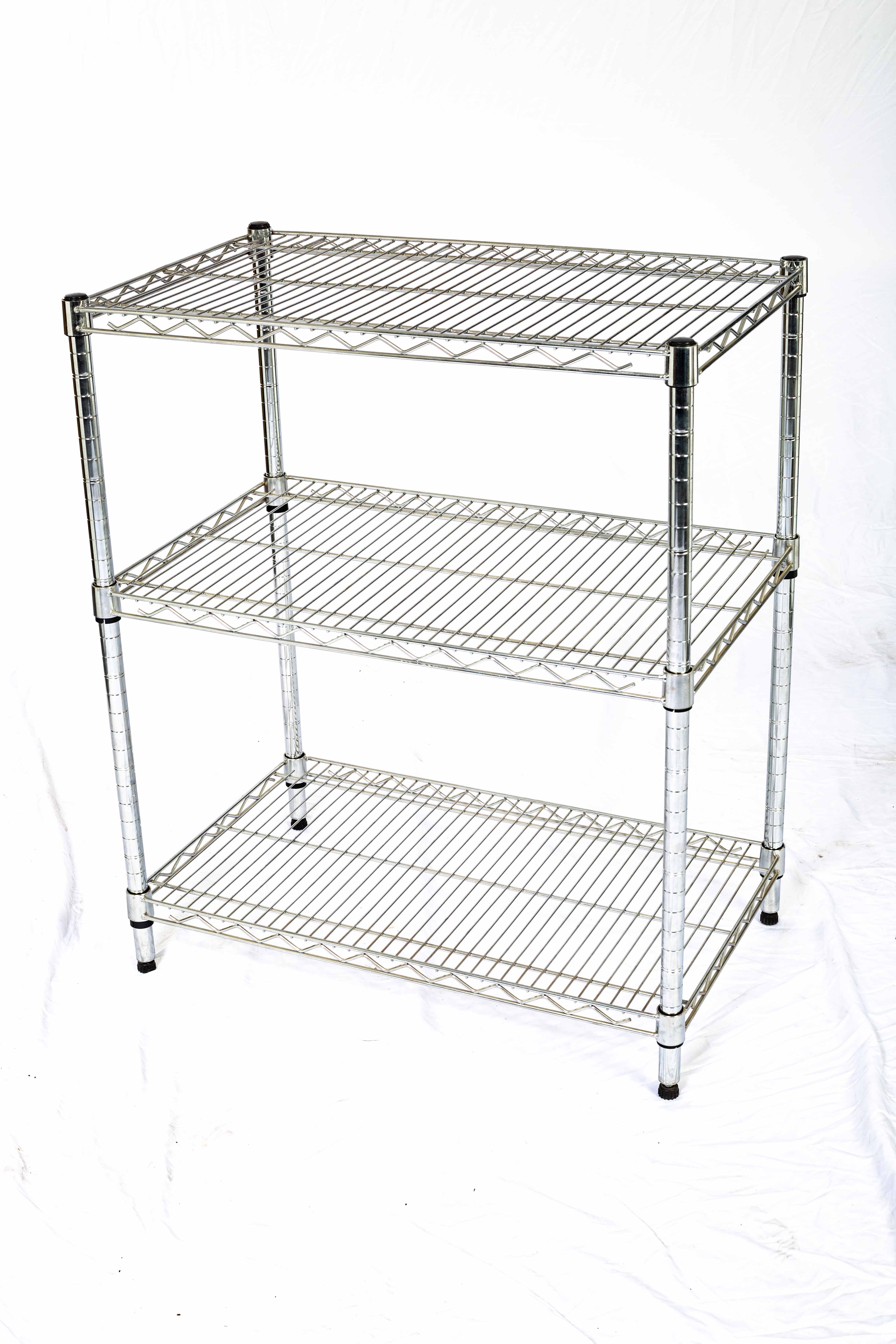
Ordering 3-tier wire shelving units at wholesale shouldn't feel like a gamble. While most listings look identical on the surface, hidden differences in wire gauge, finish durability, and load capacity can quietly decide whether you're stocking a fast-selling staple or a buyer's remorse refund request. If you're ready to move beyond generic spec sheets and avoid the common pitfalls that plague first-time importers, ZEOU has put together the exact checklist you need before committing to a container. From coating types that survive humid warehouses to retail-ready packaging that saves you repacking labor, here's what actually separates professional-grade shelving from the rest.
Load Capacity Claims Deserve a Hard Second Look
A spec sheet might list a towing figure that looks reassuring, but the number rarely tells you how the vehicle behaves when the trailer is loaded unevenly, the bed is full of tools, and the route includes a long grade in summer heat. Manufacturers arrive at their headline ratings under controlled conditions that can be very different from the way trucks are actually used day to day.
Payload and towing numbers also depend on configuration choices such as axle ratio, cab style, and optional equipment, so two trucks that appear similar can carry very different loads without exceeding their limits. It is worth digging into the door jamb sticker and the owner’s manual rather than relying on a rounded marketing figure.
A harder look at load capacity means accounting for passengers, aftermarket accessories, tongue weight, and the safety margin you want to keep for braking and emergency maneuvers. Once those real-world factors enter the picture, a claimed maximum can feel less like a promise and more like a starting point.
Coating and Wire Gauge Dictate Real-World Durability
The lifespan of a chain link fence rarely hinges on a single factor, but few details shape real-world performance as quietly as coating type and wire gauge. A fence that looks identical in a catalog can behave very differently once exposed to coastal salt spray, heavy rainfall, or the scuffs of daily use. Thicker wire resists bending and impact, while a well-applied coating keeps oxidation at bay. Together they determine whether a fence remains rigid and clean for decades or starts showing rust blooms and sagging sections within a few seasons.
Gauges are often misunderstood because the numbering runs opposite to intuition: the lower the number, the thicker the steel. A 9-gauge wire carries more mass than an 11-gauge wire, and that difference shows up under pressure from leaning equipment, animals, or falling branches. Coating adds another layer of defense. Zinc-based galvanization bonds to the steel and sacrifices itself slowly to corrosion, while vinyl and polyester coatings seal the surface against moisture and add a buffer against scratches. Some products combine both, using a galvanized core beneath a colored polymer shell.
In practice, a coastal installation may call for a heavier gauge paired with a thick, UV-stabilized coating to handle salt fog and intense sun. An inland residential yard might do fine with a lighter gauge and standard galvanization, but skimping on either detail often shortens the fence's useful life. Builders and homeowners who match the coating and gauge to the local environment usually spend less time on repairs and more time enjoying a straight, clean property line.
Packaging and Knockdown Design Shift Your Freight Bill
Freight invoices rarely tell the whole story, but packaging choices often do. Dimensional weight, carrier minimums, and pallet configuration quietly set the floor for what you pay before negotiations even begin. A product shipped fully assembled can swallow space that a knocked-down version would leave open for other cargo. That unused cube is not just air; it is a recurring surcharge hidden in plain sight.
Reworking the knockdown design does not have to mean compromising the customer experience. Simple changes such as shorter leg sets, removable hardware, flat-packed frames, or nested components can shift a shipment from oversized to standard classification. The savings compound when the same carton then fits more units per pallet and fewer pallets per container. In many cases, the cost to redesign packaging is recovered within the first few production runs, after which the lower freight baseline becomes part of the product margin.
Customization Requests Often Hide Unspoken Costs
When someone asks for a small color change or an extra field on a form, the request usually sounds harmless. But behind that single tweak sits a chain of assumptions about data structure, validation rules, and interface states that nobody wrote down. The real expense isn't the code edit itself; it's the quiet rework that surfaces weeks later when an edge case breaks or an integration starts sending unexpected values.
Custom work also tends to age poorly. A bespoke feature built for one client or one internal workflow rarely stays isolated. It gets copied, patched, and extended until the original logic is almost unrecognizable. Each new customization borrows from that fragile foundation, which means the cost isn't paid once. It shows up again in slower onboarding, longer debugging sessions, and documentation that no longer matches what the product actually does.
There is also the negotiation cost that never appears in a project estimate. Teams argue over whether the request is part of the original scope, who owns the edge cases, and how much should be charged for a minor adjustment. Those conversations consume attention and trust. A clear boundary around what counts as standard configuration and what counts as true customization can save more money than any clever technical shortcut.
Supplier Vetting Goes Beyond the Product Catalog
A polished product catalog can hide more than it reveals. Savvy sourcing teams treat it as a starting point, not a verdict. They pull apart the claims behind each SKU—looking at production floor conditions, raw material traceability, and whether the supplier's stated capacity matches what their equipment and workforce can actually deliver. The catalog says what a factory hopes to sell; vetting uncovers what it is truly capable of sustaining under real deadlines.
That means asking uncomfortable questions early. Does the facility hold current certifications that align with the target market's legal requirements? Are there recurring quality disputes buried in shipment records or audit histories? A supplier can photograph a flawless sample and still struggle with batch-to-batch consistency once volume increases. Direct conversations with technical staff often reveal more than any brochure, especially around defect rates, rework processes, and how they handle sudden order changes.
Financial health matters just as much as machinery. A catalog may show innovation, but invoices, payment terms, and references from past clients show whether the business can absorb raw material price swings without cutting corners. Vetting extends into logistics, packaging standards, and after-sales accountability—areas that rarely appear in a product lineup. The catalog might open the door, but the deeper review determines whether it is safe to walk through.
A Pilot Order Reveals What Spec Sheets Cannot
Spec sheets love round numbers and clean tolerances. A pilot order has no such manners. It shows how a material behaves after the third shift, when tooling has warmed and operators are tired. The printed values rarely mention that the adhesive changes character at 40 percent humidity, but the first small batch will reveal it within a day.
There is also the quiet work of fit and handling. A drawing can promise a 0.2 millimeter gap, yet only a real assembly tells you whether that gap feels intentional or like a flaw. Pilot units expose the awkward alignment, the fastener that needs a second hand, the surface that marks too easily under fingernails. These details never make it into a comparison table.
Perhaps the harder truth is consistency. Five prototypes can look perfect and still hide variance. A pilot run forces the process to repeat itself under commercial pressure, with incoming stock, jigs, and shift changes. What fails at twenty units usually has nothing to do with the headline specifications, and everything to do with whether the design can survive ordinary production.
FAQ
The listed capacity usually assumes an evenly spread load and a perfectly level floor. In practice, a standard chrome-finished unit with 0.16-inch wire might handle 250 to 300 pounds per shelf, while heavier 0.20-inch wire with welded cross braces can get closer to 450 pounds. Cheap plastic split sleeves are often the first thing to crack, so check whether the shelves lock with metal clamps or plastic collars before you trust the spec sheet.
Chrome looks clean but can pit once the coating gets scratched in a damp environment. Zinc or epoxy-coated wire holds up better, and stainless steel is worth the jump only if the shelves will sit near salt, acids, or constant moisture. Ask for a salt spray test result if the supplier offers a rust-resistant finish; without one, assume the unit will need replacement within a couple of years.
No, and the differences are usually in depth more than width. A 48-inch by 18-inch unit fits against a wall, but a 48-inch by 24-inch unit eats up floor space and gives you much more usable storage. Make sure the depth you are comparing is the actual shelf surface, not the carton dimension, and check whether the posts are stamped or welded into the base because that changes whether the footprint stays square over time.
Most suppliers knock them down into flat cartons, which keeps freight costs low but transfers risk to the buyer if the boxes are handled roughly. Look for suppliers who strap the post sets together and separate the wire decks with cardboard or foam sheets. If you are ordering a full container, ask about load-bracing photos and request that the factory add edge protectors to each pallet rather than paying later for bent corners and scratched chrome.
You can usually order extra shelves, but only if the supplier still carries the same post diameter and groove spacing. A lot of buyers get caught when a factory changes its tooling and the new shelves no longer snap onto old posts. A safer approach is to order replacement shelves at the same time as the main order and negotiate a small overrun allowance so you are not stuck with mismatched parts.
Many factories quote a low per-unit price at one MOQ, then push you toward higher tiers once you ask for mixed sizes or custom finishes. If you want three different sizes in one 20-foot container, expect the unit price to rise because the factory has to switch production more often. Get the MOQ for each size and finish before comparing quotes, not just the headline number for one standard model.
Most of them use a tapered post and split-sleeve system, so no tools are needed in theory. In reality, the sleeves are often undersized or brittle, and workers end up using a rubber mallet to get them seated. That is not necessarily a dealbreaker, but it slows down setup. Ask the supplier how many units can be assembled per hour by one person, and if the answer sounds too smooth, request a video of the actual assembly.
Conclusion
Ordering a three-tier wire shelving unit at wholesale volume looks straightforward until you start pulling apart the specs. A listed capacity of 350 pounds per shelf often assumes a perfectly distributed load on a level floor, not the uneven boxes or damp stockroom conditions buyers actually deal with. Ask how the number was tested, and whether the shelves bow before the frame fails. The coating matters just as much as the gauge: a thin chrome flash over light wire can look identical in a photo but will chip at the first cart impact and rust in cold storage. Knockdown construction also cuts both ways. It saves space, but if the diagonal braces arrive loose in a shared carton, repacking and damage claims can erase the freight savings fast.
Custom changes tend to sound cheaper than they are. A non-standard depth or an extra coat of epoxy often means a separate production run, longer lead time, and a setup fee buried in the unit price. If the supplier cannot explain exactly where that cost lands, treat it as a red flag. Vet the people behind the catalog, not just the product images: ask about their own warehouse, their replacement parts policy, and whether they have shipped to your region before. Before committing to a full container, run a small pilot order. A sample reveals finish consistency, how well the cartons hold up, and whether the shelves seat securely without a mallet—details no spec sheet captures.
Contact Us
Contact Person: Alin
Email: [email protected]
Tel/WhatsApp: +86 15015291051
Website: https://zeoumetal.com/